Albert Camus
1913–1960
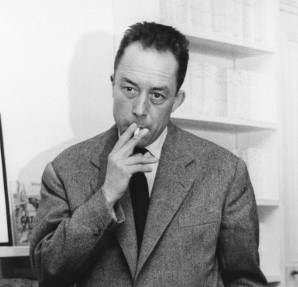
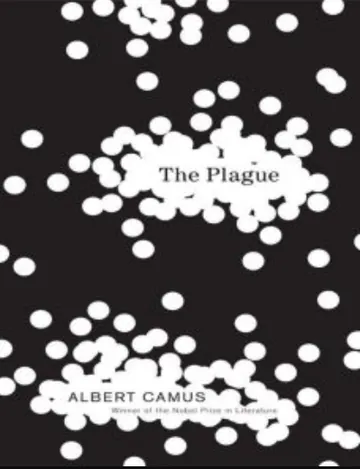
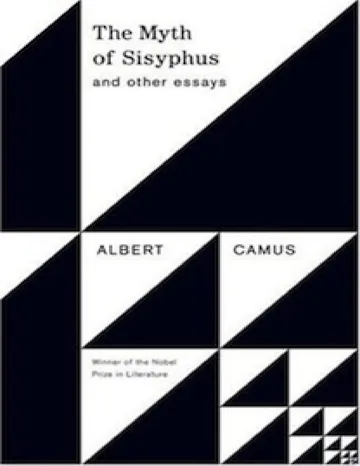
The Myth of Sisyphus, published in 1942, laid out the terms Camus kept for the rest of his life: nothing hands us a meaning, and the honest answer is neither despair nor a leap of faith but carrying on, so the man rolling his stone uphill forever is to be imagined happy. The English collection sets it beside shorter essays in Justin O'Brien's translation. The Plague (1947) turns the same argument into a story, with Oran sealed behind its gates and Dr Rieux simply continuing with the work in front of him; Stuart Gilbert made the first English version in 1948. Camus was born in 1913 in Mondovi, in French Algeria, into a household with no money and no books, his father lost in the First World War and his mother deaf and unable to read. He studied philosophy at the University of Algiers, reported for Alger républicain, and edited the underground paper Combat during the German occupation. He refused the existentialist label, took the Nobel Prize in 1957 at forty-four, and was killed in a car crash on 4 January 1960.
- Books
- 2