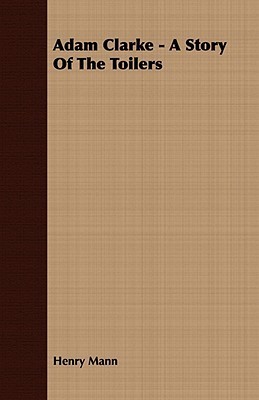
Adam Clarke: A Story of the Toilers
Adam Clarke, A Story of the Toilers is a novel by Henry Mann, the American writer and journalist who produced fiction and journalism in the late nineteenth and early twentieth centuries. The book belongs to the substantial body of late nineteenth century American social and labour fiction that addressed the conditions of industrial and agricultural workers in the rapidly industrialising American economy of the period.
The toilers of the title refers to the broad category of working class Americans whose labour created the substantial wealth that the Gilded Age industrial economy was generating. The substantial gap between the conditions of working class life and the wealth being accumulated by the owners and managers of the new industrial enterprises was one of the central themes of late nineteenth century American social and political debate, with various reform movements including the Populists, the Knights of Labor, and the early American Federation of Labor all addressing the question from different angles.
The novel uses the character Adam Clarke as the central protagonist through whom the various dimensions of working class American life are presented to the reader. The novel typically combines romantic plot with substantial social observation and reformist commentary in the manner that the late nineteenth century American social novel tradition had developed under the influence of writers including William Dean Howells, Hamlin Garland, and the various American writers who were adapting the European social realist tradition for American conditions.
The broader American social novel tradition of the period included substantial work on industrial workers, on the conditions of agricultural labourers in the West and South, on the new immigrant communities that the period’s substantial immigration was creating in American cities, and on the various reform movements that were attempting to address the social problems that the industrial economy was generating. Mann’s novel belongs to this broader tradition and represents one of the substantial body of secondary novels in the genre that have not survived in the active canon of American literary history but that documented and contributed to the broader social and political discussion of the period.
The book is of interest now to readers of American social and labour fiction of the late nineteenth and early twentieth centuries, to historians of the American labour movement, and to specialists in the broader American social novel tradition. It pairs naturally with the work of Howells, Garland, Frank Norris, and the various other American social realist novelists of the period.