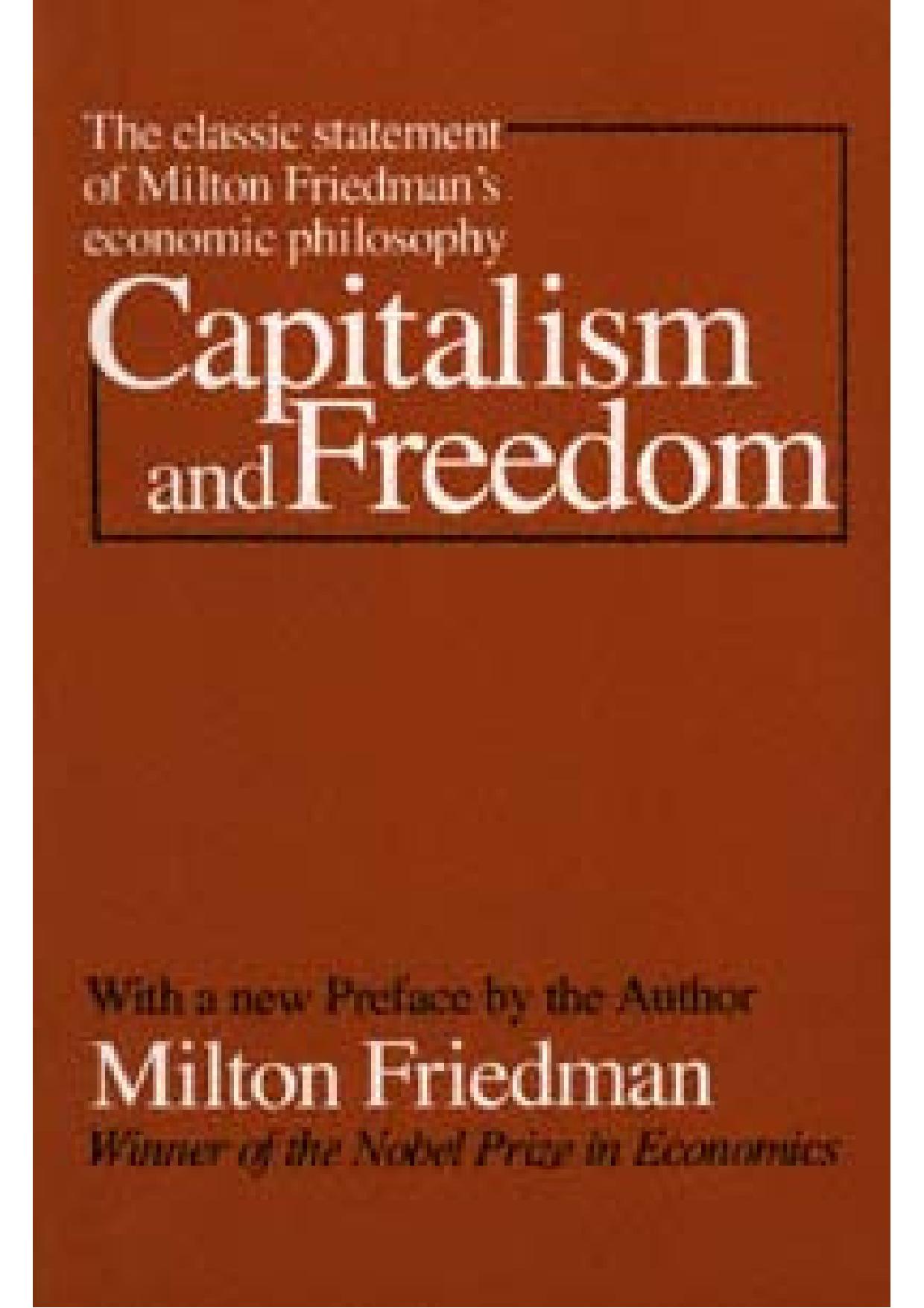
Capitalism and Freedom
Milton Friedman published Capitalism and Freedom in 1962, drawn from a series of lectures he had given a few years earlier. The book became one of the most influential conservative economic texts of the twentieth century, and many of the policy ideas that became standard in the 1980s have their early articulations here.
Friedman argues that economic freedom and political freedom are linked, and that government intervention in markets, even when well-intentioned, tends to produce results worse than the problems it aimed to solve.
The book covers monetary policy, education vouchers, occupational licensing, the negative income tax, and other ideas that have since worked their way through actual policy debates.
Readers on the right find it foundational. Readers on the left tend to take it as the clear statement of the position they want to argue against. Either way, the arguments are made with clarity that the secondary literature often loses.