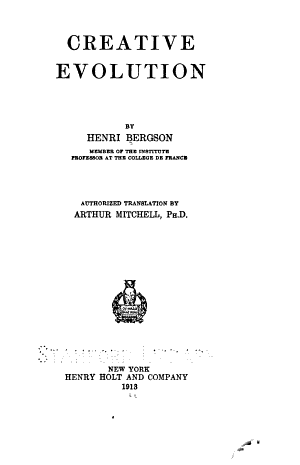
Creative Evolution
First published in French in 1907 as L’Évolution créatrice, this landmark of process philosophy sets out to explain how life changes and grows over time. Bergson rejects both mechanistic Darwinism and the notion that evolution follows a fixed, predetermined goal, arguing instead for the élan vital: a creative impulse that pushes living matter into ever new and unforeseeable forms. Central to the argument is durée, or lived duration, real time as it is actually felt, which he holds the analytic intellect flattens and only intuition can grasp. The book made Bergson one of the most widely read thinkers of his era and helped earn him the 1927 Nobel Prize in Literature. Its influence reached well beyond philosophy, leaving a lasting mark on modernist literature and on later thinking about time, mind, and creativity.
About the Author
Download free books by Henri Bergson on BDeBooks. Read Henri Bergson’s works online or download as PDF/EPUB · part of our growing free eBook collection.
See all books by Henri Bergson →