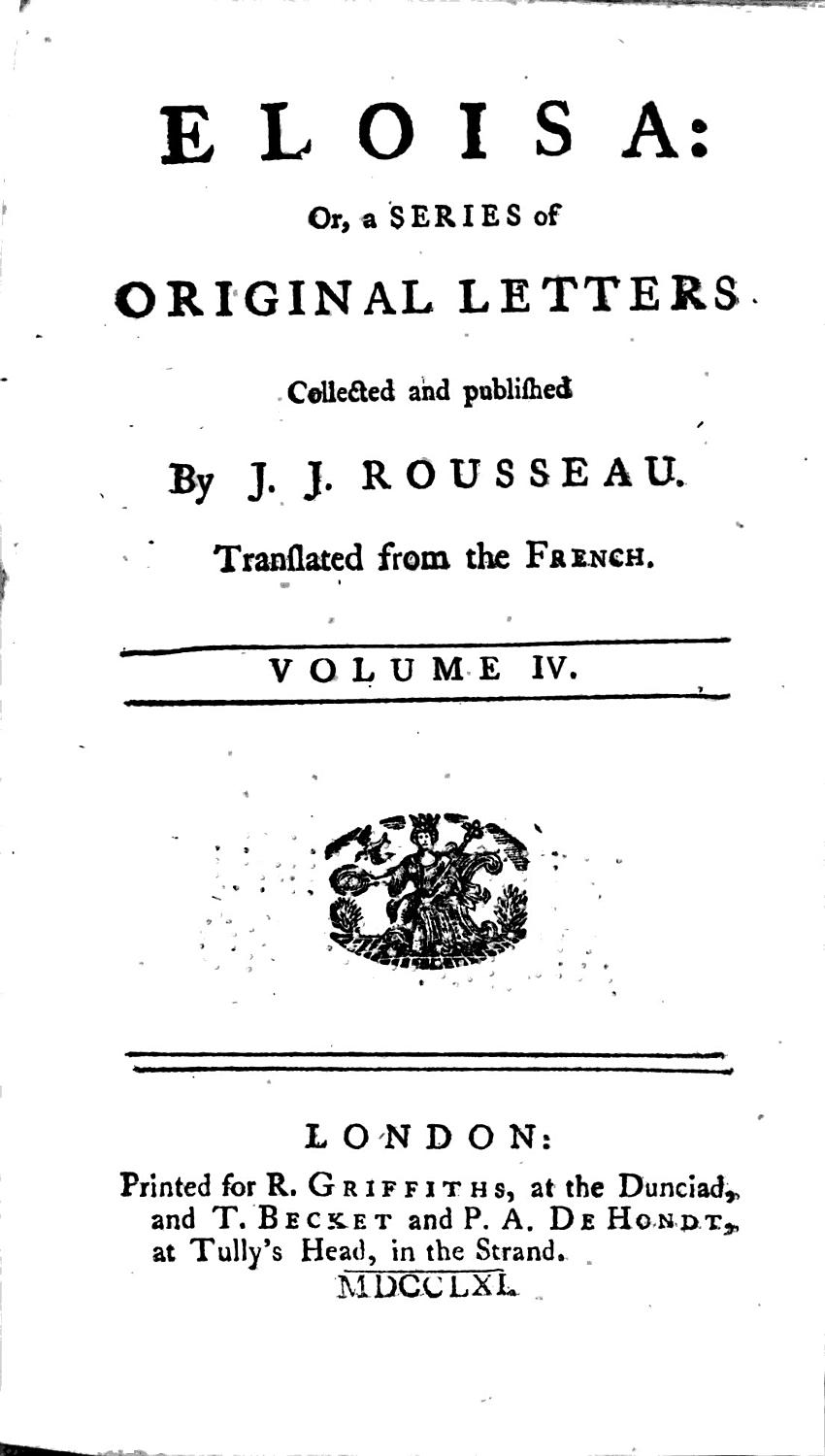
Eloisa
Rousseau published this in 1761, and it may have been the eighteenth century’s best-selling novel. The story arrives almost entirely in letters, most passing between Julie d’Étange, daughter of a proud Vaudois baron, and Saint-Preux, the commoner hired to tutor her. Their love collides with rank: the baron long ago promised Julie to Wolmar, a comrade who once saved his life, and a tutor of no birth is unthinkable. Julie submits and marries, and the book settles at Clarens on Lake Geneva, where Wolmar, who knows the whole history, invites Saint-Preux back to raise his sons. What follows is less plot than a long argument about virtue, feeling, and how much people can trust their own hearts. The Alpine setting works as a moral force rather than backdrop. This is William Kenrick’s 1761 translation, which renamed Julie as Eloisa.
About the Author
Jean-Jacques Rousseau (1712-1778) was a Genevan philosopher and writer whose ideas on nature, education, and society helped shape the Enlightenment and the Romantic movement. His Confessions pioneered modern autobiography.
See all books by Jean-Jacques Rousseau →