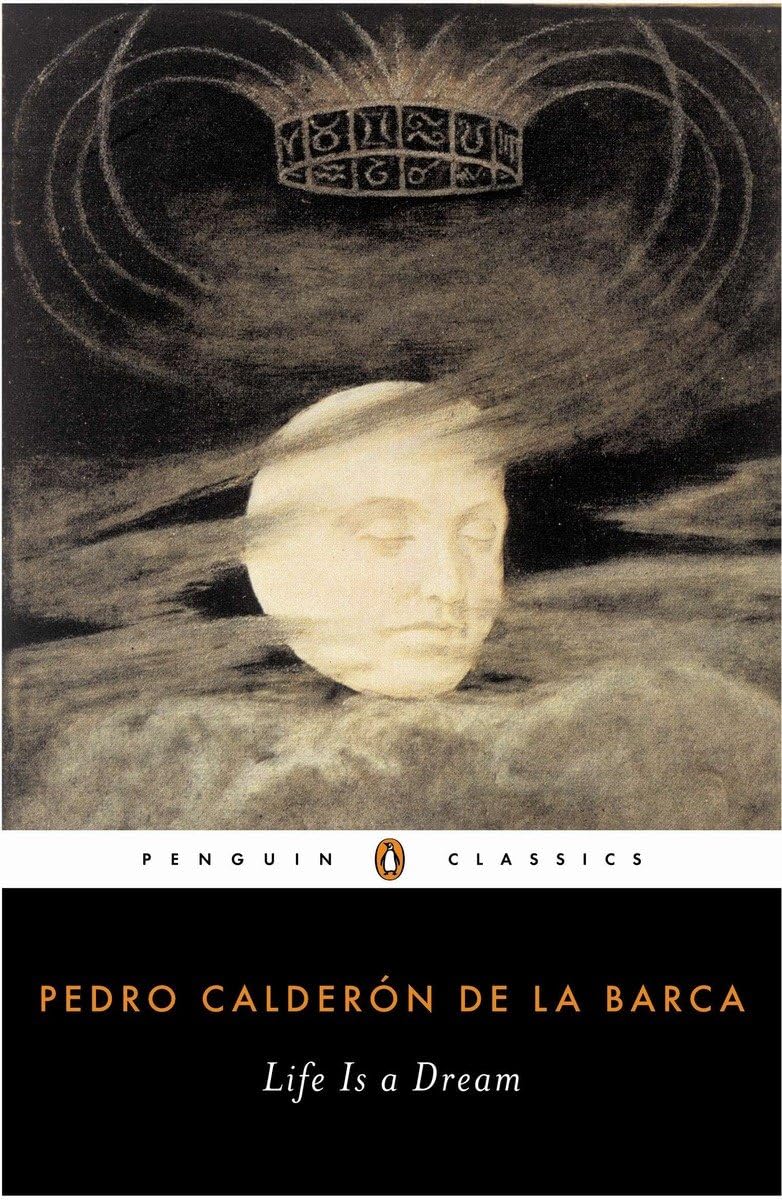
Life Is a Dream
Life Is a Dream, originally La Vida es Sueño, is a play by Pedro Calderón de la Barca (1600-1681), the major Spanish dramatist of the Golden Age period. The play was first performed around 1635 and is generally considered Calderón’s masterpiece and one of the supreme achievements of seventeenth century European drama.
The play follows Prince Segismundo, who has been imprisoned in a tower since birth by his father King Basilio of Poland because of a prophecy that the prince would grow up to be a tyrant. The king eventually decides to test the prophecy by drugging Segismundo and bringing him briefly to the court to see how he behaves with power. The first day at court goes badly. Segismundo is returned to the tower and told that the court experience was only a dream. The rest of the play works through what Segismundo does when he is eventually freed and faces the question of how to act in a world where the distinction between dream and reality has become uncertain.
The play has been continuously performed and translated since the seventeenth century and is one of the central documents of Spanish Golden Age literature.
About the Author
Download free books by Pedro Calderón de la Barca on BDeBooks. Read Pedro Calderón de la Barca’s works online or download as PDF/EPUB · part of our growing free eBook collection.
See all books by Pedro Calderón de la Barca →