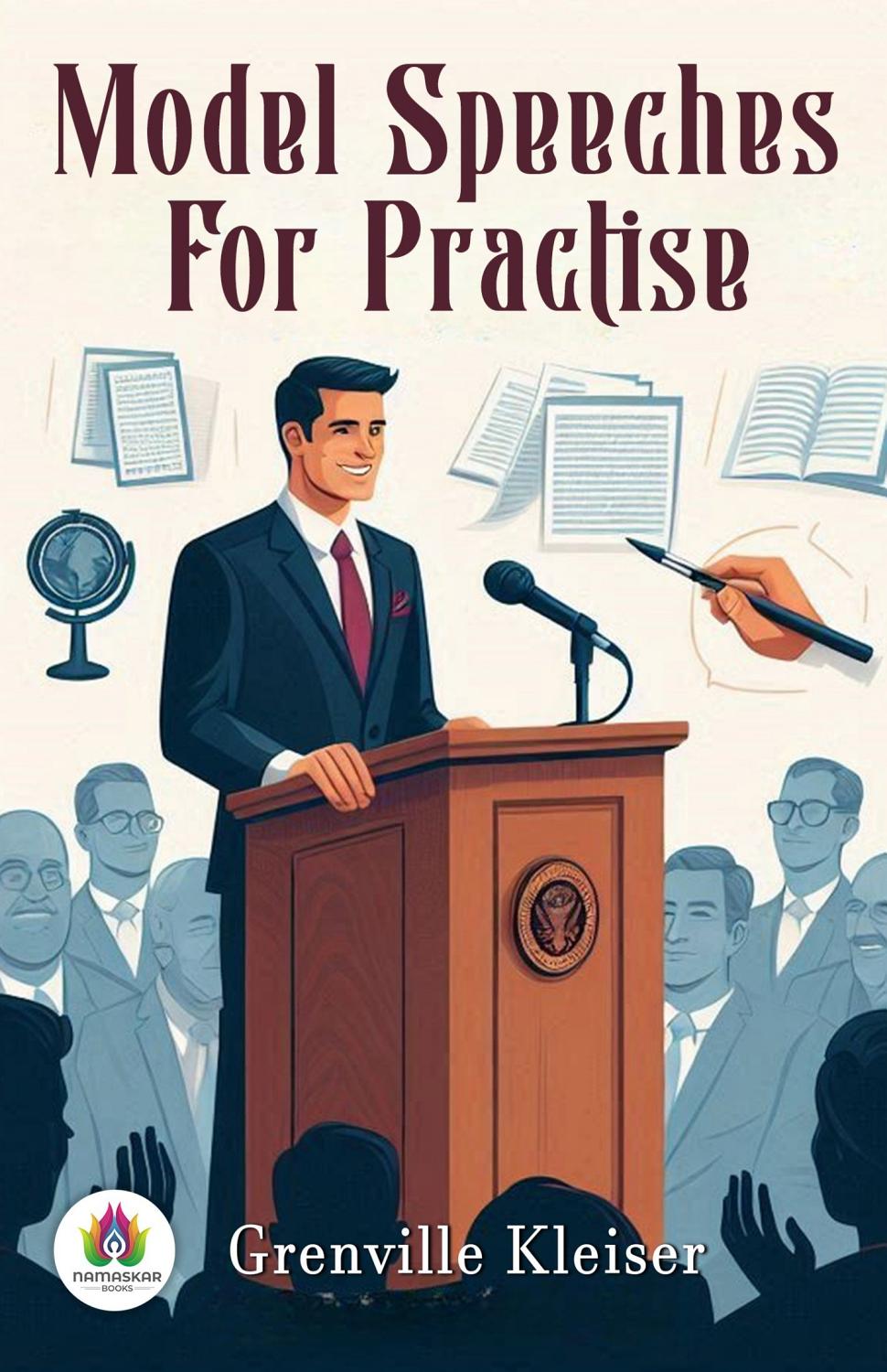
Model Speeches for Practise
Model Speeches for Practise is a collection of model speeches by Grenville Kleiser, the Canadian American writer on rhetoric and self improvement who lived from 1868 to 1935. The book was published in 1920 and belongs to Kleiser’s substantial body of practical instruction books for students of public speaking who wanted concrete examples to study and to use as the basis for their own speaking practice.
The practice of using model speeches as the basis for the training of public speakers has a long history in Western rhetorical education going back to the classical tradition of declamation in ancient Roman education. Students of public speaking from antiquity through the nineteenth century had typically learned their craft partly by studying, memorizing, and performing speeches written by others, with the model speeches providing both technical examples of effective speaking and a body of substantive content that the student could absorb across the years of training.
Kleiser’s collection brings the model speech tradition into early twentieth century American public speaking education. The book presents a selection of speeches across various types and occasions that the working public speaker of the period might be called upon to deliver. There are speeches for ceremonial occasions including weddings, anniversaries, and various civic events. There are political speeches in various styles. There are after dinner speeches with the characteristic mixture of humor and serious content that the form required. There are business and professional speeches for various occupational contexts. There are inspirational and motivational speeches in the broadly motivational mode that the American self improvement tradition favoured.
Each speech is presented with brief notes on the occasion, the speaker, and any particular technical features that students of public speaking might want to attend to. The speeches are meant to be studied, analyzed, practiced, and used as models for the student’s own composition of speeches for similar occasions. The collection presupposes the broader public speaking instruction that Kleiser’s other books provided and is best used in conjunction with works like Successful Methods of Public Speaking that set out the general principles the model speeches illustrate.
The book runs about three hundred pages and is best used as a reference rather than read straight through. For readers interested in early twentieth century American public speaking education, this is a useful primary resource. It pairs naturally with Kleiser’s other books on public speaking and rhetoric.
About the Author
Read and download 4 free books by Grenville Kleiser on BDeBooks. Browse the complete collection of Grenville Kleiser’s works available as free PDF and EPUB downloads. Discover novels, fiction, and other writings by Grenville Kleiser in our online eBook library.
See all books by Grenville Kleiser →