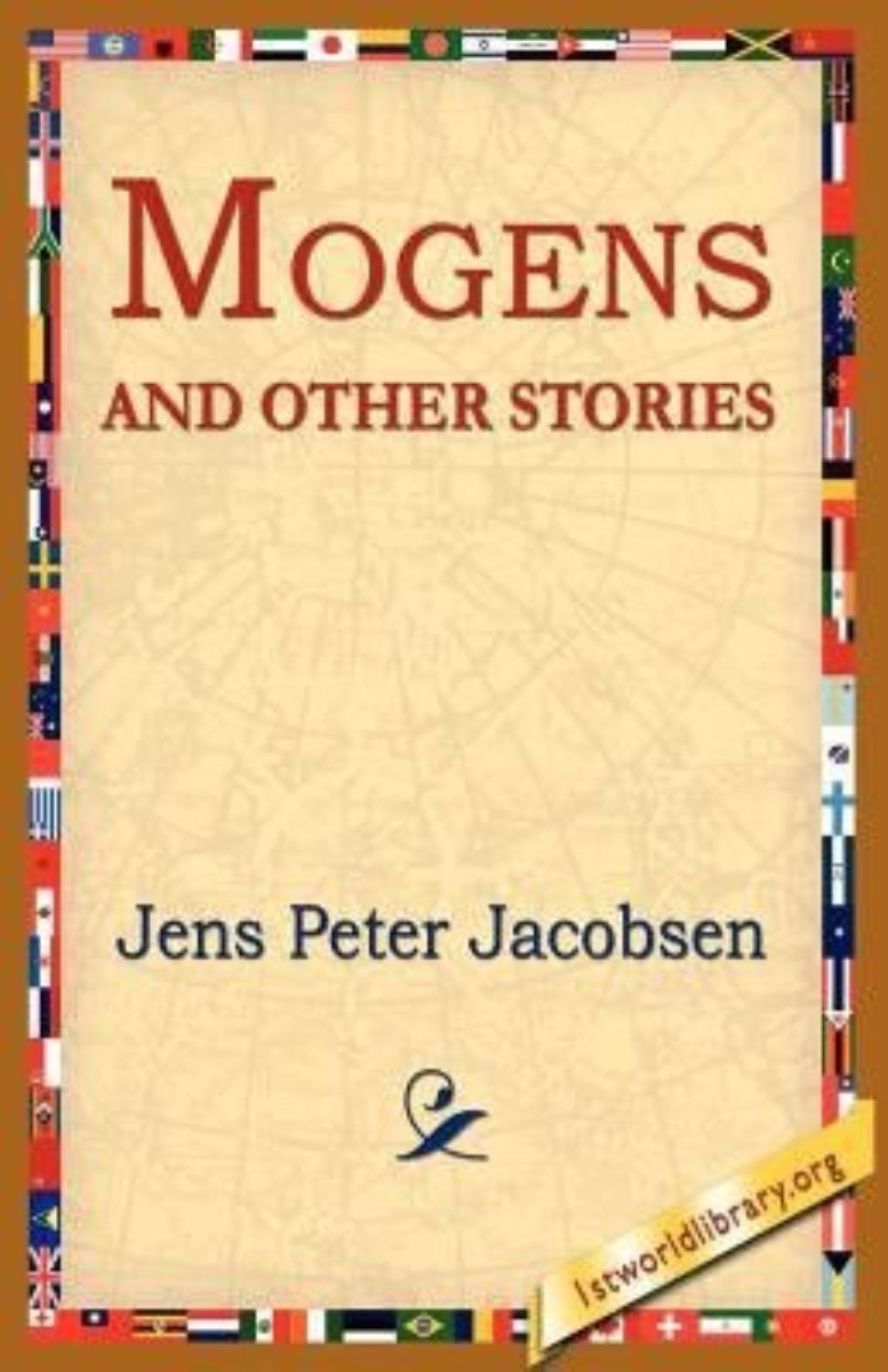
Mogens and Other Stories
Mogens and Other Stories collects the short fiction of Jens Peter Jacobsen, the Danish writer who lived from 1847 to 1885 and who is one of the central figures of Scandinavian literary modernism. Jacobsen produced relatively little during his short working life, since he was diagnosed with tuberculosis in 1873 and spent his remaining years working slowly against declining health, but the small body of work he completed had substantial influence on subsequent European literature.
The title story Mogens was Jacobsen’s first published fiction, appearing in 1872 when he was twenty five and just beginning his serious literary career. The story is a love narrative set in the Danish countryside, with substantial natural description that drew on Jacobsen’s serious scientific background. He had studied botany at the University of Copenhagen and had been planning a scientific career before turning to literature, and the precise attention to natural detail that distinguishes his prose throughout reflects this training. The story established the basic Jacobsen method of combining careful naturalistic observation with intense psychological attention to inner states of feeling.
The other stories in the collection include various pieces produced across Jacobsen’s short career, including Two Worlds, There Should Have Been Roses, Doctor Faust, and several other shorter works. Jacobsen was working in the developing tradition of European literary modernism that was emerging in the 1870s and 1880s in response to the earlier realist and naturalist movements. His fiction combines the rigorous attention to physical and psychological reality that the realist tradition had established with a more lyrical attention to inner emotional states that anticipates the later symbolist and modernist developments.
Jacobsen had substantial influence on subsequent European writers. Rainer Maria Rilke acknowledged Jacobsen as one of the two great formative literary influences on his own work and wrote substantially about Jacobsen in his Letters to a Young Poet. Stefan Zweig wrote a substantial essay on Jacobsen in his Master Builders book. Thomas Mann and various other German modernist writers also acknowledged debts to Jacobsen’s example. He occupies a particular position as one of the writers whose work helped shape the broader European modernist sensibility that emerged in the early twentieth century.
The collection runs about two hundred pages in English translation. For readers of Scandinavian literary modernism or interested in the European writers whose work Jacobsen shaped, it is essential reading. It pairs naturally with his novel Niels Lyhne of 1880 and with his shorter novel Marie Grubbe of 1876.
About the Author
Read and download 2 free books by Jens Peter Jacobsen on BDeBooks. Browse the complete collection of Jens Peter Jacobsen’s works available as free PDF and EPUB downloads. Discover novels, fiction, and other writings by Jens Peter Jacobsen in our online eBook library.
See all books by Jens Peter Jacobsen →