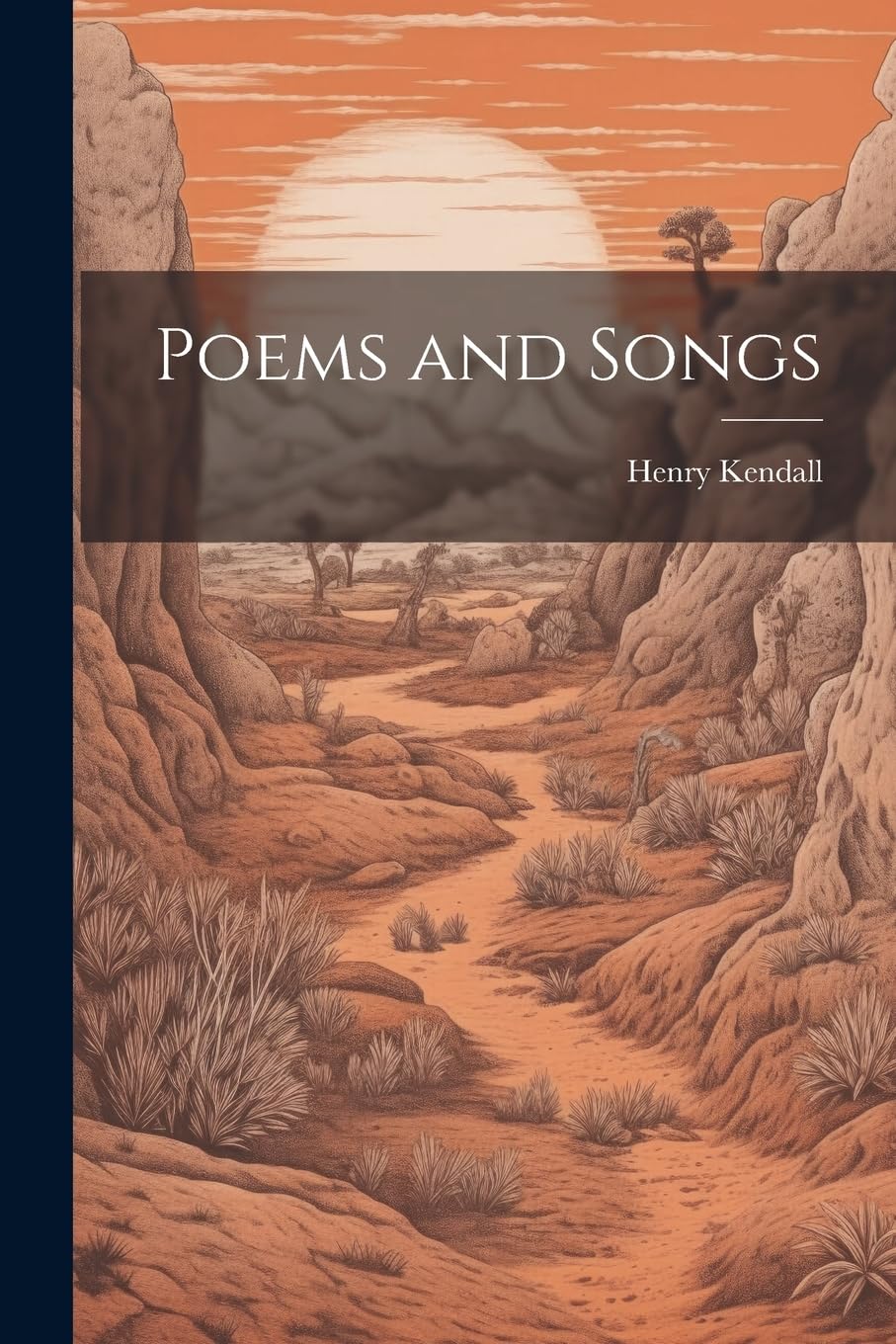
Poems and Songs
Poems and Songs is a collection of poetry by Henry Kendall, the Australian poet who lived from 1839 to 1882 and who is one of the central figures of nineteenth century Australian literature. The book was published in 1862 and was Kendall’s first major collection, appearing when he was still in his early twenties and serving as the foundation on which his subsequent literary reputation would be built.
Kendall grew up in the bushland of New South Wales and spent most of his adult life in the Sydney area, working at various clerical positions while pursuing his serious vocation as a poet. The Australian landscape of forests, rivers, mountains, and coastal regions provided the central material for his mature poetry, and several of his most enduring poems are set in particular locations he had known intimately since childhood. Bell Birds, perhaps his most famous single poem, captures the song of the Australian bellbirds in the forest valleys of the New South Wales coast in some of the most musical verse produced by any nineteenth century Australian poet.
The Poems and Songs collection of 1862 brings together the work Kendall had been producing during his early twenties. The poems show the influence of the English Romantic and Victorian poets that Kendall had grown up reading, particularly Wordsworth, Tennyson, and Swinburne, but the Australian setting gives the poetry a distinctive quality that the English models could not provide. The eucalyptus forests, the long Australian summers, the particular birds and animals of the Australian bush, all appear in Kendall’s poetry as fresh material requiring the development of a new poetic vocabulary.
Kendall is generally considered the first major Australian poet to find a fully realized voice for the Australian landscape, alongside Adam Lindsay Gordon who was working in the same period in a different mode. The Poems and Songs collection established the tradition of Australian nature poetry that later writers including A B Paterson and the various twentieth century Australian poets would extend.
The collection runs to about two hundred pages and is best read in selected pieces rather than straight through. For readers interested in nineteenth century Australian literature, Kendall is essential reading. It pairs naturally with his later collection Leaves From Australian Forests of 1869 and with the work of Adam Lindsay Gordon.
About the Author
Download free books by Henry Kendall on BDeBooks. Read Henry Kendall’s works online or download as PDF/EPUB · part of our growing free eBook collection.
See all books by Henry Kendall →
Listen to Poems and Songs Audiobook Free
Listen to Poems and Songs by Henry Kendall free online. The full audiobook (2 hr 30 min, 46 chapters, read by volunteer narrators) streams free on this page.
Poems and Songs (1903) is a public domain work.
| # | Chapter | Length | |
|---|---|---|---|
| 1 | Biographical Note | 22:17 | |
| 2 | The Muse of Australia | 0:56 | |
| 3 | Mountains | 5:32 | |
| 4 | Kiama | 2:33 | |
| 5 | Etheline | 1:53 | |
| 6 | Aileen | 2:36 | |
| 7 | Kooroora | 2:03 | |
| 8 | Fainting by the Way | 5:40 | |
| 9 | Song of the Cattle-Hunters | 1:06 | |
| 10 | Footfalls | 3:20 | |
| 11 | God Help Our Men at Sea | 2:33 | |
| 12 | Sitting by the Fire | 3:57 | |
| 13 | Bellambi's Maid | 1:57 | |
| 14 | The Curlew Song | 2:48 | |
| 15 | The Ballad of Tanna | 2:16 | |
| 16 | The Rain Comes Sobbing to the Door | 3:00 | |
| 17 | Urara | 2:57 | |
| 18 | Evening Hymn | 2:20 | |
| 19 | Stanzas | 1:10 | |
| 20 | The Wail in the Native Oak | 6:02 | |
| 21 | Harps We Love | 1:07 | |
| 22 | Waiting and Wishing | 1:59 | |
| 23 | The Wild Kangaroo | 2:57 | |
| 24 | Clari | 1:19 | |
| 25 | Wollongong | 4:37 | |
| 26 | Ella with the Shining Hair | 3:28 | |
| 27 | The Barcoo | 1:45 | |
| 28 | Bells Beyond the Forest | 3:57 | |
| 29 | Ulmarra | 1:58 | |
| 30 | The Maid of Gerringong | 9:01 | |
| 31 | Watching | 3:24 | |
| 32 | The Opossum-Hunters | 3:11 | |
| 33 | In the Depths of a Forest | 1:18 | |
| 34 | To Charles Harpur | 1:28 | |
| 35 | The River and the Hill | 1:44 | |
| 36 | The Fate of the Explorers | 6:31 | |
| 37 | Lurline | 1:47 | |
| 38 | Under the Figtree | 2:17 | |
| 39 | Drowned at Sea | 2:55 | |
| 40 | Morning in the Bush | 3:43 | |
| 41 | The Girl I Left Behind Me | 2:32 | |
| 42 | Amongst the Roses | 1:36 | |
| 43 | Sunset | 2:00 | |
| 44 | Doubting | 2:46 | |
| 45 | Geraldine | 1:29 | |
| 46 | Achan | 1:55 |
Prefer reading? Read Poems and Songs online free or download the PDF and EPUB above.