
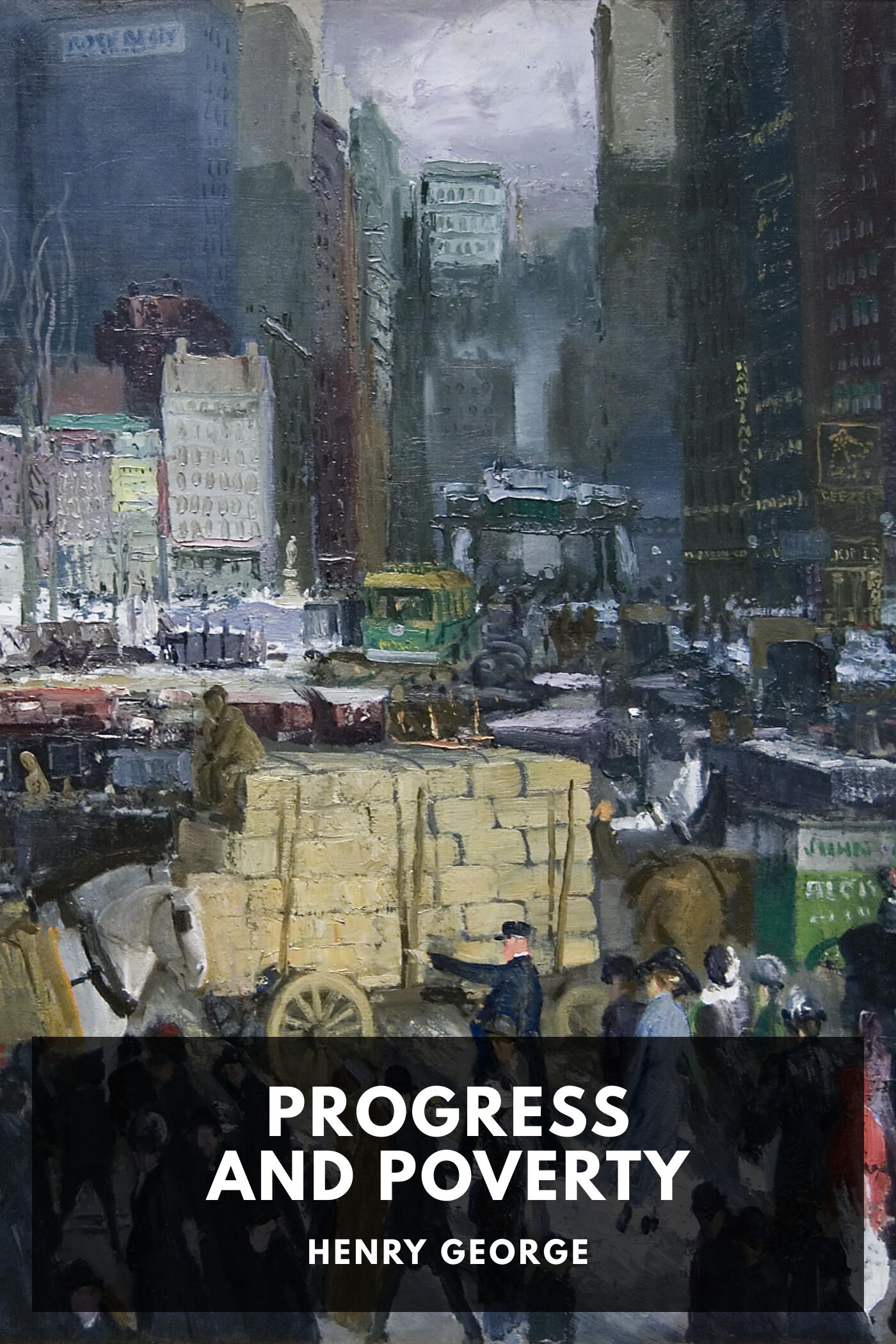
Progress and Poverty
- Downloads
- Under 100
- First published
- 1879
- Pages
- 441
Listen to Progress and Poverty Audiobook Free
-
00 - Frontmatter, How the Book Came To Be Written, and Preface
23:48 -
01 - Introductory
22:04 -
02 - Book I, Chapter 1: The Current Doctrine of Wages - Its Insufficiency
26:42 -
03 - Book I, Chapter 2: The Meaning of the Terms
37:49 -
04 - Book I, Chapter 3: Wages Not Drawn from Capital, but Produced by the Labor - paragraphs 1-25
28:19 -
05 - Book I, Chapter 3: Wages Not Drawn from Capital, but Produced by the Labor - paragraphs 26-38
14:20 -
06 - Book I, Chapter 4: The Maintenance of Laborers Not Drawn from Capital
18:03 -
07 - Book I, Chapter 5: The Real Functions of Capital
17:44 -
08 - Book II, Chapter 1: The Malthusian Theory, Its Genesis and Support
25:28 -
09 - Book II, Chapter 2: Inferences from Facts - paragraphs 1-19
21:30 -
10 - Book II, Chapter 2: Inferences from Facts - paragraphs 20-40
34:42 -
11 - Book II, Chapter 3: Inferences from Analogy
21:14 -
12 - Book II, Chapter 4: Disproof of the Malthusian Theory
22:51 -
13 - Book III, Chapter 1: The Inquiry Narrowed to the Laws of Distribution - The Necessary Relation of These Laws
23:37 -
14 - Book III, Chapter 2: Rent and the Law of Rent
16:25 -
15 - Book III, Chapter 3: Of Interest and the Cause of Interest
31:43 -
16 - Book III, Chapter 4: Of Spurious Capital and of Profits Often Mistaken for Interest
12:08 -
17 - Book III, Chapter 5: The Law of Interest
17:01 -
18 - Book III, Chapter 6: Wages and the Law of Wages
26:09 -
19 - Book III, Chapter 7: The Correlation and Co-ordination of These Laws
4:24 -
20 - Book III, Chapter 8: The Statics of the Problem Thus Explained
7:21 -
21 - Book IV, Chapter 1: The Dynamics of the Problem Yet to Seek
6:11 -
22 - Book IV, Chapter 2: The Effect of Increase of Population Upon the Distribution of Wealth
27:51 -
23 - Book IV, Chapter 3: The Effect of Improvements in the Arts upon the Distribution of Wealth
21:45 -
24 - Book IV, Chapter 4: Effect of the Expectation Raised by Material Progress
11:25 -
25 - Book V, Chapter 1: The Primary Cause of Recurring Paroxysms of Industrial Depression
38:53 -
26 - Book V, Chapter 2: The Persistence of Poverty Amid Advancing Wealth
29:17 -
27 - Book VI, Chapter 1: Insufficiency of Remedies Currently Advocated - paragraphs 1-22
23:11 -
28 - Book VI, Chapter 1: Insufficiency of Remedies Currently Advocated - paragraphs 23-54
37:34 -
29 - Book VI, Chapter 2: The True Remedy
4:52 -
30 - Book VII, Chapter 1: The Injustice of Private Property in Land
30:10 -
31 - Book VII, Chapter 2: The Enslavement of Laborers the Ultimate Result of Private Property in Land
22:35 -
32 - Book VII, Chapter 3: Claim of Land Owners to Compensation
20:53 -
33 - Book VII, Chapter 4: Property in Land Historically Considered
35:24 -
34 - Book VII, Chapter 5: Of Property in Land in the United States
20:38 -
35 - Book VIII, Chapter 1: Private Property in Land Inconsistent with the Best Use of Land
12:33 -
36 - Book VIII, Chapter 2: How Equal Rights to the Land May Be Asserted and Secured
11:12 -
37 - Book VIII, Chapter 3: The Proposition Tried by the Canons of Taxation
28:44 -
38 - Book VIII, Chapter 4: Indorsements and Objections
16:15 -
39 - Book IX, Chapter 1: Of the Effect Upon the Production of Wealth
13:36 -
40 - Book IX, Chapter 2: Of the Effect Upon Distribution and Thence Upon Production
14:06 -
41 - Book IX, Chapter 3: Of the Effect Upon Individuals and Classes
13:50 -
42 - Book IX, Chapter 4: Of the Changes That Would Be Wrought in Social Organization and Social Life
37:43 -
43 - Book X, Chapter 1: The Current Theory of Human Progress - Its Insufficiency
29:35 -
44 - Book X, Chapter 2: Differences in Civilization - To What Due
33:47 -
45 - Book X, Chapter 3: The Law of Human Progress - paragraphs 1-21
16:27 -
46 - Book X, Chapter 3: The Law of Human Progress - paragraphs 22-47
29:36 -
47 - Book X, Chapter 4: How Modern Civilization May Decline
36:12 -
48 - Book X, Chapter 5: The Central Truth
18:53 -
49 - Conclusion: The Problem of Individual Life
22:43
Progress and Poverty (1879) is a public domain work.
The audio edition streams in the page. There is no audio file to download.
About this book
Why does grinding poverty deepen in step with industrial wealth? Henry George set out to answer that paradox in 1879, and the book that resulted became one of the best selling works of economics of its century. George argues that the value created by a growing society flows not to workers or businesses but to those who own land, whose rents rise simply because others build and labor around them. His remedy, a single tax on the value of land, aimed to fund government while ending speculation and freeing wages. Written in clear, forceful prose that reached ordinary readers, it launched a worldwide reform movement and still shapes debates over land, rent, and inequality. Free PDF and EPUB editions are available here.
Contents
About the author
More from this genre
See all


Books like this one
Discussion
No comments yet. Share a thought, a question or a favourite passage.
Copyright concern? Read our DMCA policy
Read or download
Public domain book This work is in the public domain and free of copyright. Anyone may read, download and share it.
- PDF 2.1 MB
- EPUB 896 KB
Downloads start right away. How to open EPUB on your phone
Book facts
- Author
- Henry George
- First published
- 1879
- Reading time
- About 12 hours
- Pages
- 441
- Language
- English
- Genre
- Political Philosophy
- Formats
- PDF, EPUB, Read online, Audiobook
- Audio read by
- Tim Makarios