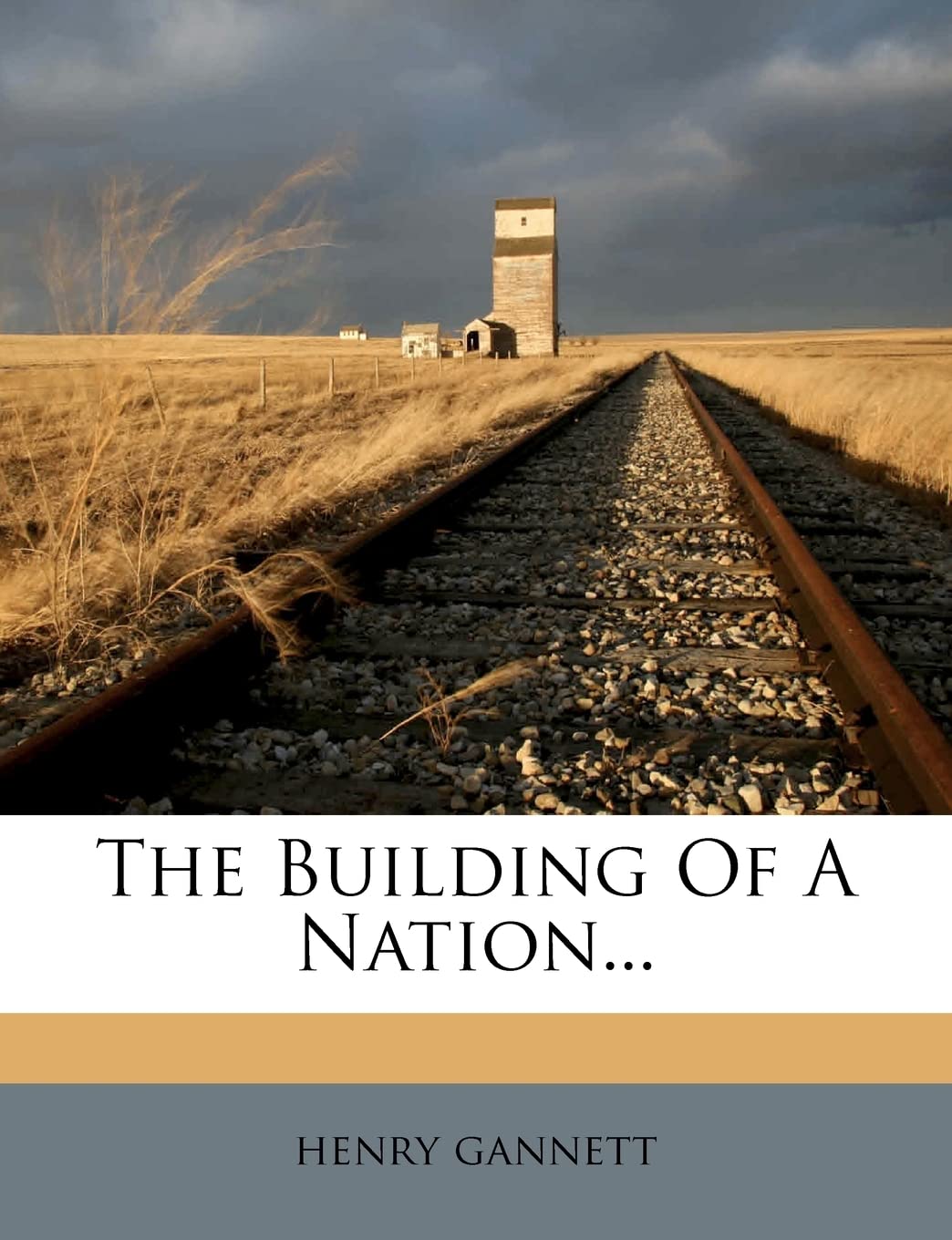
The Building of a Nation
The Building of a Nation is a work of American geographical and historical description by Henry Gannett, the prominent late nineteenth century American geographer who served for many years as chief geographer of the United States Geological Survey and who has been called the father of American government mapmaking. Gannett, who lived from 1846 to 1914, produced a substantial body of popular and technical writing on American geography and statistics during a long career in federal service.
The book belongs to the genre of popular national description that was common in late nineteenth century America. The aim of such works was to present, in a single accessible volume, an account of the physical geography, the population, the natural resources, the industries, and the historical development of the United States as a single national entity. Gannett’s contribution to the genre brings to the task his particular expertise in geographical and statistical method, with substantial attention to the quantitative dimensions of national life that were beginning to be tracked systematically by federal agencies during the period.
The book covers the standard subjects in chapters organized partly by region and partly by topic. There are chapters on the physical geography of the various regions of the country, on the climate and natural resources, on the distribution of population by ethnic origin and occupation, on the principal industries and their geographical distribution, on the transportation and communications networks that bound the nation together, and on the long historical development of the country from colonial times through to the late nineteenth century. The treatment is generally clear and informative, with the kind of confident progressive tone characteristic of late Victorian American national description.
Gannett was one of the central figures in the development of American government statistics and mapping. He worked on the Census of 1880 and helped develop the methods used for the population and economic counts that became increasingly important in American policy debate during the late nineteenth and early twentieth centuries. The book reflects the institutional context within which he worked and the kind of synthetic national vision that the federal scientific bureaus were producing during the period.
The book is mostly of interest now to readers of late nineteenth century American history and to those interested in the development of American geographical and statistical method. It pairs naturally with the official reports of the Census Bureau and the Geological Survey of the same period.
About the Author
Read and download 2 free books by Henry Gannett on BDeBooks. Browse the complete collection of Henry Gannett’s works available as free PDF and EPUB downloads. Discover novels, fiction, and other writings by Henry Gannett in our online eBook library.
See all books by Henry Gannett →