The Charm Of Fine Manners
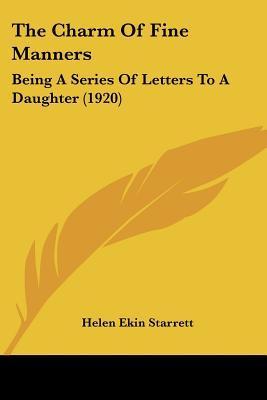
The Charm of Fine Manners is a book on manners and personal conduct by Helen Ekin Starrett, the American writer and editor who lived from 1840 to 1920. Starrett produced a substantial body of writing on women’s education, on the practical conduct of life for young women, and on the broader social and cultural questions that the late nineteenth and early twentieth century American middle class addressed in its substantial body of advice and conduct literature.
Starrett was the founder and principal teacher of the Starrett School for Girls in Chicago, the private girls’ school she ran for several decades during the late nineteenth and early twentieth centuries. Her educational work gave her substantial direct experience of the questions facing young American women in the developing American middle class culture of the period, and her various books drew on this practical educational background to provide the kind of accessible counsel that the substantial market for women’s advice literature called for.
The Charm of Fine Manners belongs to the substantial American conduct book tradition that flourished in the second half of the nineteenth century and the first decades of the twentieth. The genre had a long history going back to the eighteenth century European conduct books for young gentlemen and ladies, and the American versions developed across the nineteenth century to address the particular needs of an expanding middle class American audience whose social mobility required them to learn the rules of refined social conduct that they had not necessarily absorbed from their family backgrounds.
Starrett’s book combines the practical instruction that the genre required with the broader cultural and ethical framework that the American Protestant middle class understood as the proper foundation for genuinely fine manners. The position throughout is that genuine fine manners cannot be reduced to a set of arbitrary external rules but must arise from a deeper personal cultivation of consideration, kindness, and respect for other people. The book works through the practical applications of this position across the various situations that young American women would encounter in their daily lives.
The book is of interest now to historians of American women’s education, of late nineteenth and early twentieth century American middle class culture, and of the substantial American conduct book tradition. It pairs naturally with the various other American conduct books of the period and with Starrett’s other writings on women’s education and conduct.