
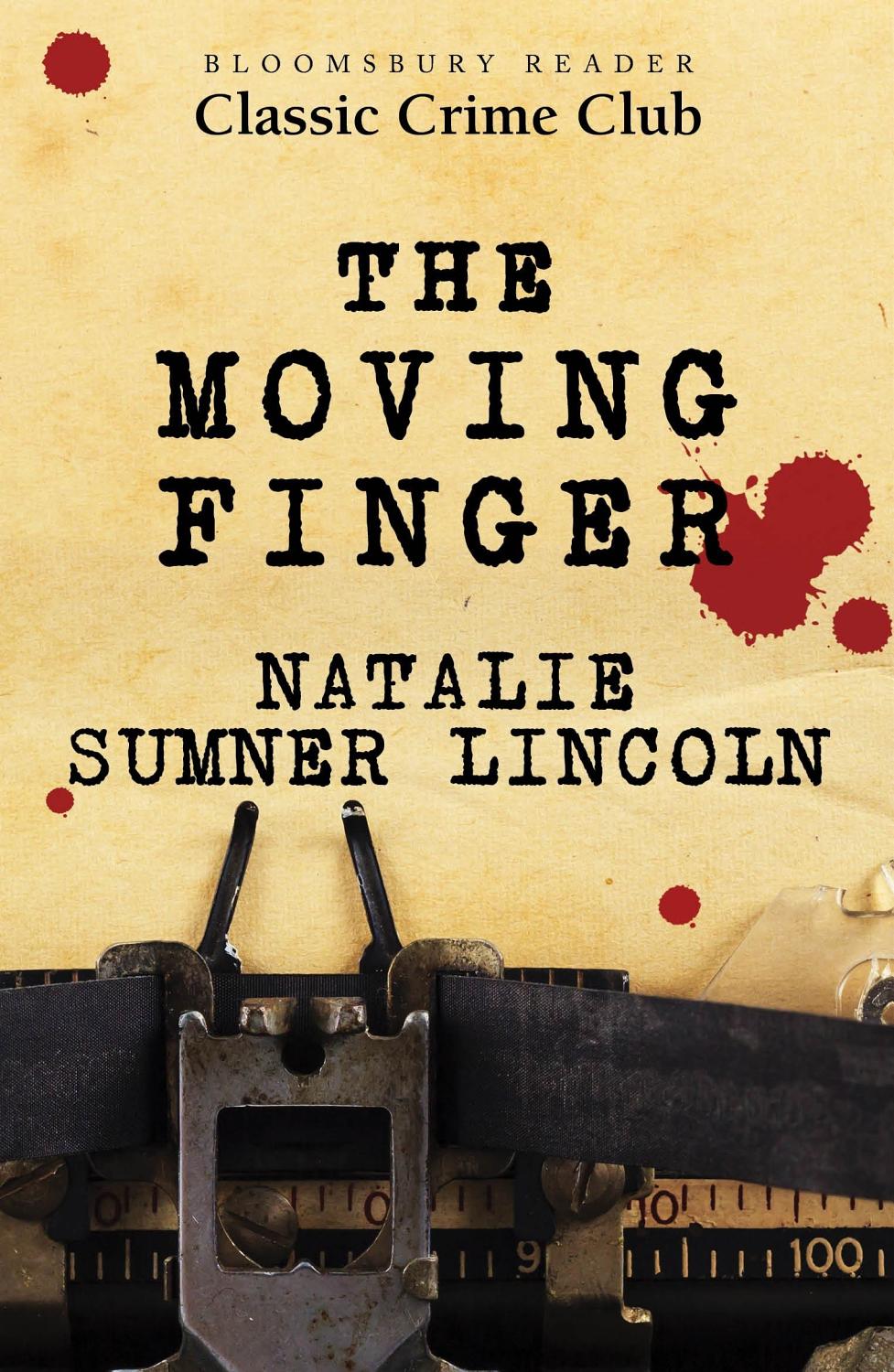
The Moving Finger
- Downloads
- Under 100
- First published
- 1918
- Pages
- 207
Listen to The Moving Finger Audiobook Free
-
Visions
7:54 -
Tragedy
16:20 -
Testimony
18:06 -
More Testimony
28:21 -
Dorothy Deane, ''Society Editor''
15:54 -
The Wall Between
18:14 -
At Thornedale Lodge
16:36 -
Many Inventions
27:07 -
In the Attic
18:50 -
The Black-Edged Card
17:57 -
Mrs. Porter Grows Inquisitive
19:10 -
Detective Mitchell Asks Questions
21:23 -
The Red Herring
21:23 -
Pro and Con
20:56 -
Edged Tools
18:55 -
Hare and Hounds
23:20 -
Vera Receives a Letter
15:57 -
The Counterfeit Bank Note
21:51 -
The First Shot
9:38 -
KA
7:38 -
Blind Man's Buff
16:26 -
''The Moving Finger Writes — ''
9:52 -
Out of the Maze
14:34
The Moving Finger (1918) is a public domain work.
The audio edition streams in the page. There is no audio file to download.
About this book
The Moving Finger is a mystery novel by Natalie Sumner Lincoln, originally published in 1918. The novel belongs to Lincoln's substantial body of early twentieth century American mystery fiction set largely in Washington DC and drawing on her detailed knowledge of the social and political world of the American capital.
The title alludes to the famous quatrain from Edward FitzGerald's translation of the Rubaiyat of Omar Khayyam, the moving finger writes and having writ moves on. The phrase was widely quoted in early twentieth century English language literature and was frequently used as the title of mystery novels and other fiction in which a written message or document plays a central role in the plot. Agatha Christie would later use the same title for one of her more famous Miss Marple novels in 1942, although the two books are entirely unrelated.
Lincoln's The Moving Finger combines mystery plot with the kind of Washington social setting that characterized most of her work. The plot involves the investigation of a death or disappearance in circumstances that point to various suspects within the social circle that surrounds the central characters. The investigation works through the various complications, false leads, and dramatic revelations that the genre conventions of the period required, with the resolution arriving in a final scene that ties together the various threads of evidence into a coherent explanation.
Lincoln was working within the well established American mystery tradition of the period and her novels share the basic conventions of the genre as it had developed since the 1870s. Her particular contribution was the Washington setting and her ability to bring to her fiction the kind of insider knowledge of the actual social and political world of the capital that gave her work a distinctive quality. The various government officials, military officers, diplomats, journalists, and society figures who populate her novels are drawn from the world she had grown up in and knew at first hand.
The novel runs about three hundred pages and reads quickly. For readers interested in early twentieth century American mystery fiction with Washington settings, this is a representative example by one of the more capable women writers of the genre during the period. It pairs naturally with Lincoln's other mysteries and with the broader American mystery fiction of the early twentieth century.
Contents
About the author




More from this genre
See all- O Otherwise PhyllisOtherwise Phyllis
- O The Orchard of TearsThe Orchard of Tears
- L LizaLiza
- W WanderersWanderers
- N NostalgiaNostalgia
- M Magnhild; DustMagnhild; Dust
Books like this one



Discussion
No comments yet. Share a thought, a question or a favourite passage.
Copyright concern? Read our DMCA policy
Read or download
Public domain book This work is in the public domain and free of copyright. Anyone may read, download and share it.
- PDF 1.8 MB
- EPUB 875 KB
Downloads start right away. How to open EPUB on your phone
Book facts
- Author
- Natalie Sumner Lincoln
- First published
- 1918
- Reading time
- About 5 hours
- Pages
- 207
- Language
- English
- Genre
- Fiction Books
- Formats
- PDF, EPUB, Read online, Audiobook
- Audio read by
- James R. Hedrick