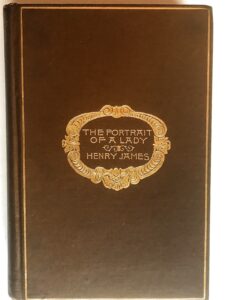



The Portrait of a Lady , Volume 2
Henry James

The Portrait of a Lady, Volume 2 is the second volume of Henry James’s major early novel, originally serialised in 1880 and 1881 and published in three volumes in the standard nineteenth century edition. Volume two takes the story from the midpoint, after Isabel Archer’s marriage to Gilbert Osmond, through the slow revelation of what her marriage actually is and to the famous chapter in which Isabel sits up alone through the night and works out her situation.
The first volume had followed Isabel from her arrival in England as a young American woman, through the proposals she had refused from Lord Warburton and Caspar Goodwood, the unexpected inheritance left to her by her uncle on her cousin Ralph’s suggestion, and the meeting in Florence with Gilbert Osmond and his elegant friend Madame Merle. The volume had ended with Isabel’s decision to marry Osmond. Volume two opens several years later, in Rome, with the marriage already in its declining middle phase.
What happens across volume two is the slow recognition by Isabel of who her husband actually is and of how he came to be in her life. The first half of the volume builds the picture through small social scenes, conversations, observations, the gradual accumulation of evidence about what the marriage has become. Osmond is revealed not as the refined connoisseur Isabel had thought she was marrying but as a small minded, vain, jealous man whose interest in her had always been mostly about her fortune. The slow disclosure of the actual history of Osmond, Madame Merle, and the young Pansy Osmond who Isabel had taken to be her husband’s child by a first marriage, gives the volume its tragic shape.
The famous chapter forty two, in which Isabel sits up through a night alone and reviews her marriage from the beginning, is one of the most extraordinary passages of interior monologue in nineteenth century English fiction. The novel ends with Isabel having to choose what to do with the recognition she has now acquired, and the choice she makes is the most controversial moment in James’s early work. The volume runs about three hundred pages. For readers who have completed volume one, this is the necessary continuation. The novel pairs naturally with the late period masterworks that take similar material further.