
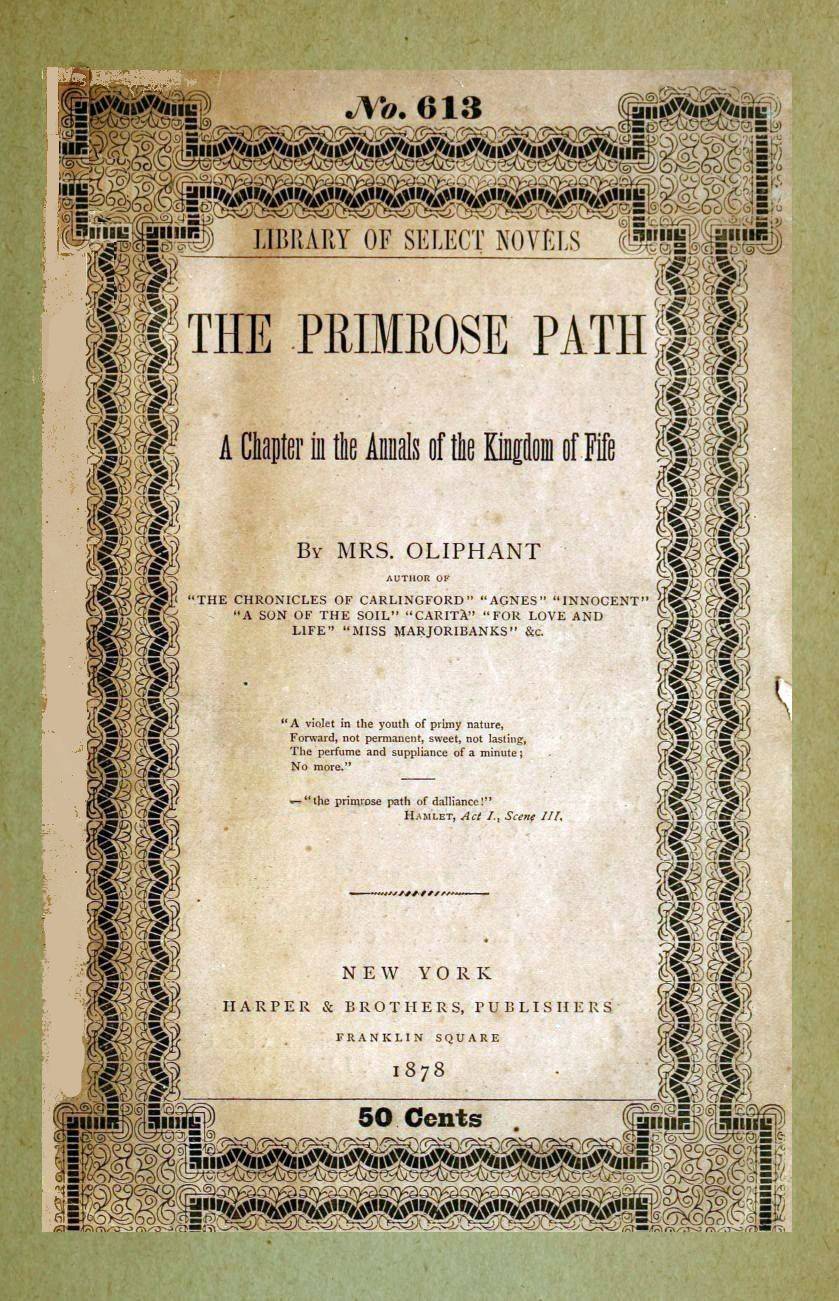
The Primrose Path
- Downloads
- Under 100
- First published
- 1878
- Pages
- 399
About this book
The Primrose Path is one of Margaret Oliphant's many Victorian novels, with the title drawing from the proverbial expression about the primrose path being the easy way that leads to ruin. The phrase comes originally from Shakespeare's Hamlet and has been used across the wider English literary tradition to point to the kind of comfortable but dangerous moral choices that lead characters away from the harder right path toward destruction. Oliphant's novel uses the title concept to anchor the moral framework of the wider plot.
Oliphant was one of the most prolific and respected writers of the Victorian era. Her novels often built around the slow developing relationships within and between specific Victorian middle class characters, with the rigid social codes and economic constraints of the period providing both the structural framework and the source of the various complications that her plots worked through. The primrose path framing suggests a novel that takes its moral concerns seriously, with the central characters facing the kind of choices between the comfortable wrong and the difficult right that the title concept points to.
What distinguishes Oliphant from many of her contemporaries is her unsparing eye for the limitations of the social world she was depicting. Her novels are sometimes funny, often moving, and almost always more morally complicated than their domestic settings would suggest.
For readers interested in Victorian fiction, in the wider catalogue of Margaret Oliphant, or in the women writers of the era, The Primrose Path is worth knowing.
About the author
More from this genre
See all- R RueRue
- B BluebellBluebell
- B Brother JacobBrother Jacob
- P PreludesPreludes
- A Aurora LeighAurora Leigh
- s The strange transfiguration of Hannah StubbsThe strange transfiguration of Hannah Stubbs
Books like this one
Discussion
No comments yet. Share a thought, a question or a favourite passage.
Copyright concern? Read our DMCA policy
Read or download
Public domain book This work is in the public domain and free of copyright. Anyone may read, download and share it.
- PDF 3.1 MB
- EPUB 649 KB
Downloads start right away. How to open EPUB on your phone
Book facts
- Author
- Margaret Oliphant
- First published
- 1878
- Reading time
- About 14 hours
- Pages
- 399
- Language
- English
- Genre
- Victorian Literature
- Formats
- PDF, EPUB, Read online