The Simple Life
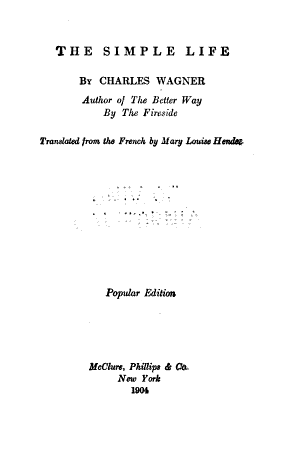
Charles Wagner, a liberal Protestant pastor in Paris, opens this 1895 book at the Blanchard house, where a wedding four days off has buried the family under callers, tradesmen, dinners and parcels. Only the grandmother’s room stays quiet, and her verdict, that the world has grown too complex without growing happier, becomes Wagner’s own. Fourteen short chapters follow it through thought, speech, duty, needs, pleasures, money and reputation. Simplicity, he insists, is not poverty or a costume of rustic manners but a state of mind: wanting less, saying what you mean, keeping first things first. Mary Louise Hendee’s English translation, copyrighted 1901, found a large American audience after Theodore Roosevelt praised the book and invited Wagner to the White House in 1904. It still reads as a humane argument against clutter, material and mental alike.