



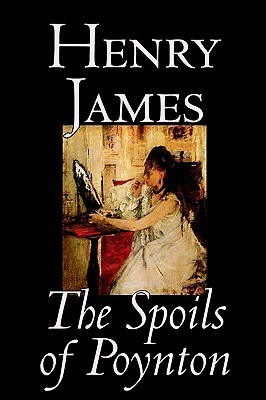
The Spoils of Poynton
Henry James

The Spoils of Poynton is a short novel by Henry James, first serialised in the Atlantic Monthly during 1896 and published in book form in 1897. It is one of his most tightly constructed middle period works, and one of the few James novels where the main characters and the reader are equally aware that the central question is, who gets the furniture.
Mrs Gereth has spent her widowhood at Poynton, an English country house that she has filled with carefully chosen antiques, paintings, and furnishings collected over decades. The collection is the great work of her life. By English law, when her son Owen inherits Poynton he gets everything in it as well, including her treasures. Owen is decent but limited and is about to become engaged to Mona Brigstock, a young woman from a family with terrible taste who Mrs Gereth knows will spoil everything. To save the spoils, Mrs Gereth befriends a thoughtful young woman named Fleda Vetch and tries to push Fleda toward Owen instead.
The novel is partly about the wrangle over the furniture and partly about Fleda, who is one of James’s most morally serious heroines. Fleda’s refusal to make the kind of cynical move Mrs Gereth wants her to make is the heart of the book, and her quiet integrity costs her almost everything she might have gained. The ending is one of James’s most painful, and the final image of Poynton stays with anyone who reads it.
The book runs about two hundred and fifty pages and is shorter than the later great novels. The compression suits the material. There is no waste in it, and the central image of a woman who loves objects more than she loves people is unforgettable. It pairs naturally with Washington Square and What Maisie Knew, two other James novels where a young woman’s moral life is what really matters and where the adults around her keep failing to notice.