The Three Hills, And Other Poems
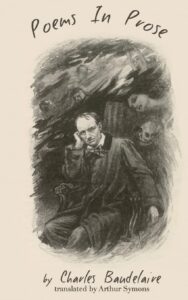
The Three Hills and Other Poems collects translations of work attributed to Charles Baudelaire, the French poet who lived from 1821 to 1867 and whose Les Fleurs du Mal of 1857 changed European poetry for good. Baudelaire scholars debate the boundaries of his canon because so much of his prose poetry and shorter verse appeared scattered across small magazines, anthologies, and posthumous collections.
If you know Baudelaire only through Les Fleurs du Mal you already know his central themes. Boredom and beauty sit beside each other on the same Paris street. The crowd is a place of solitude. A city of millions can feel like a single corrupted mind. The poems in this kind of collected selection extend the same preoccupations into shorter pieces and into prose poetry like the Petits Poèmes en Prose that he was working on at the end of his life.
Reading Baudelaire in English translation involves a permanent compromise. The dense formal craft of the French alexandrines never quite carries over. Different translators have made different bargains. The Victorian translators tried for strict metrical equivalence and often lost the menace. Later translators dropped the form and tried to keep the bite. Both choices have something to recommend them. A reader serious about Baudelaire eventually has to take up some French.
For most readers in English the natural entry point remains Les Fleurs du Mal in a modern translation by Richard Howard or James McGowan, followed by the prose poems collected as Paris Spleen. A short anthology like The Three Hills works as a sampler that points toward those larger collections. Baudelaire died at forty six from complications of syphilis and a stroke. The work he produced in his short life still feels current, partly because the urban modernity he was trying to describe became the dominant modern condition rather than disappearing.
About the Author
Download free books by Charles Baudelaire on BDeBooks. Read Charles Baudelaire’s works online or download as PDF/EPUB · part of our growing free eBook collection.
See all books by Charles Baudelaire →