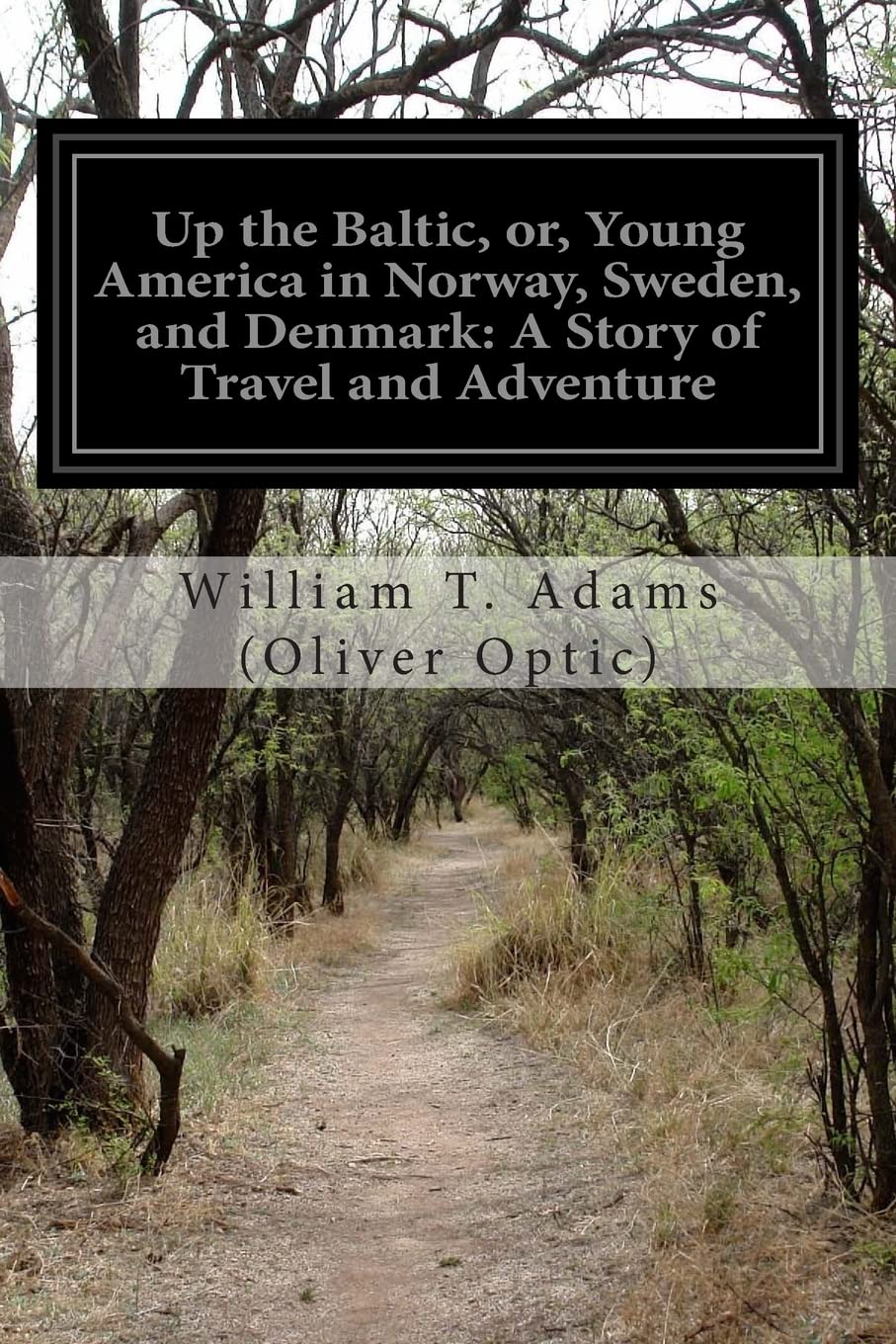
Up the Baltic
Up the Baltic is one of Oliver Optic’s many travel adventure novels for boys, working in the kind of educational travel writing combined with adventure plot that the author used across multiple connected series. Oliver Optic was the pen name of William Taylor Adams, a Massachusetts writer who became one of the most prolific producers of boys’ fiction in mid to late nineteenth century America. His total output runs into more than a hundred novels, and his various travel series took young protagonists across Europe, around the world, and to many specific regions that nineteenth century American readers were curious about.
Up the Baltic fits into Optic’s wider pattern of using travel as the framework for both adventure and informal education. The young protagonists, typically aboard a yacht or a chartered vessel, voyage to the Baltic Sea region and visit the various northern European countries that border its waters. Sweden, Denmark, Russia, Germany, the Baltic states, and the various other locations along the coastlines and the inland waters of the region. The educational content of the novel includes geography, history, customs, and the kind of cultural information that nineteenth century American readers wanted to absorb about parts of the world they were unlikely to visit themselves but that their commercial and political relationships were beginning to reach.
The adventure plot runs alongside the educational content, with the kind of escalating dangers, last minute deliverances, and moral testing that the genre demanded providing the narrative momentum that kept young readers turning pages. Optic was good at this kind of dual purpose writing, and his travel novels were popular both with the young readers who consumed them and with the parents and teachers who appreciated the educational dimension.
Optic’s prose is brisk and his action sequences move at the pace his young readers expected. The moral lessons are delivered through the narrative rather than imposed in lectures. Modern readers should be aware that the period assumptions about race, class, and the moral character of the various foreign peoples encountered in his travel novels are very much present in ways that have not aged well.
For scholars of nineteenth century American children’s literature, of the educational travel writing tradition, or of the wider career of Oliver Optic, Up the Baltic is a representative entry. Many of his books are now in the public domain.
About the Author
Oliver Optic was the pen name of William Taylor Adams, a hugely popular 19th-century American author of adventure and travel stories for young readers, who wrote well over a hundred books and edited several children’s magazines.
See all books by Oliver Optic →