
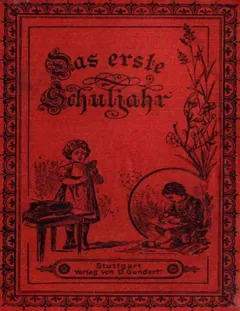
Das erste Schuljahr
Fünfzehntes Kapitel. Die alte Heimat.
Fünfzehntes Kapitel.
Die alte Heimat.
Am Montag morgens um 8 Uhr saß Gretchen im rosafarbenen Osterkleidchen neben ihrer Lene in der Bahn und beide waren in Gedanken versunken, als sie so der alten Heimat entgegenfuhren. Die Lene dachte: »Wie's wohl dem Vater und der Mutter geht und den Geschwistern? Ob unsere Kuh schon ein Kalb hat und wie die Wintersaat steht?« Und Gretchen dachte: »Wer wohl die Erste ist in der Schule und ob der Hans noch auf der letzten Bank sitzt? Ob der Felix Acosta noch so nette Kunststücke macht und wie es in unserer Wohnung aussieht?« Als der Zug aber näher an Föhrenheim kam, da sahen sie beide begierig zum Fenster hinaus und bald hieß es: »Weißt du noch, das ist die Wiese, auf der es immer so viel Schlüsselblumen gegeben hat?« und dann: »Siehst du den Kirchturm? Ich sehe ihn und auch schon das Storchennest auf dem Dach!« und jetzt war man am Bahnhof und ehe sich's Gretchen recht versah, hatte die Frau Apotheker sie schon an der Hand und die kleinen Geschwister von Emilie umringten sie; Emilie selbst aber war nicht da, sie hatte noch Schule.
An der Brücke, die über den Bach ins Städtchen führte, trennte sich Lene, denn da ging die Straße ab, die in ihr Dorf führte, und von dort kamen ihr auch schon ihre Geschwister entgegen. »Auf Wiedersehen in acht Tagen,« rief Gretchen, »aber daß du mich ja nicht früher holst!«
»Habe keine Angst, ich werde es schon so lang daheim aushalten können,« meinte Lene und so ging jedes seine Wege.
Gretchen mußte nun der guten Frau Apotheker viele Fragen beantworten über die Eltern und über die Wohnung in der Residenz, und so waren sie bis ans Schulhaus gekommen.
»Die Schule kann jeden Augenblick aus sein, dann kommt Emilie heim,« sprach die Frau Apotheker.
»O, ich gehe schnell hinauf in die Schule, ich möchte Emilie abholen und möchte sehen, wie sie sich alle verwundern, wenn ich hereinkomme, o bitte, lassen Sie mich hinauf!«
»Gehe du nur, wenn's dir Spaß macht, ich gehe einstweilen mit den Kleinen heim.«
So stieg denn Gretchen mit klopfendem Herzen die altbekannte Schultreppe hinauf. Eine Weile stand sie zögernd vor dem Schulzimmer, dann klopfte sie an. »Herein!« Gretchen machte die Türe auf und nun stand sie all ihren ehemaligen, wohlbekannten Schulkameraden gegenüber, und wohl hundert Augen richteten sich auf sie und von allen Bänken klang es in freudiger Überraschung: »Das Gretchen Reinwald!«
Am Katheder aber stand ein ganz fremder, junger Mann, den Gretchen gar nicht kannte und der nun, ganz erstaunt über die allgemeine Begrüßung, auf Gretchen zuging und fragte: »Was willst du, Kleine, wer bist du?« In diesem Augenblick aber trat der alte Herr Baumann ein, denn Frau Semmelmeier, die immer alles bemerkte, was im und ums Schulhaus herum vorging, hatte Gretchen ins Haus kommen sehen und es für gut befunden, ihren Besuch Herrn Baumann anzukündigen. So kam dieser gerade recht, um die Frage des neuen Lehrers zu beantworten. »Das ist Gretchen Reinwald, eine liebe frühere Schülerin von uns. Du bist wohl auf Besuch hier, Gretchen?« fragte er freundlich. – »Ja, bei Apothekers.«
»Nun, dann komm du heraus, Emilie, sage deiner kleinen Freundin: Grüß Gott!«
Schüchtern, wie immer, kam Emilie heraus und ließ sich von Gretchen begrüßen, während sie selbst nichts sagte, sondern ihre Kamerädin nur freundlich anstrahlte.
»Bei uns ist alles noch, wie es voriges Jahr war, nicht wahr?« sagte Herr Baumann, als er bemerkte, wie Gretchen sich im ganzen Zimmer umsah.
»Ja, nur sind die Fenster viel kleiner und das Zimmer niedriger geworden.« Die beiden Lehrer lachten. »Das glaube ich doch kaum,« meinte Herr Baumann, »eher denke ich, daß ihr in der Residenz höhere Fenster und Zimmer habt.«
»Die Kinder sitzen aber auch ganz anders als damals,« sagte Gretchen und musterte zuerst die Reihen der Mädchen, dann sah sie nach den Knaben. Ein lauter Ausruf des Erstaunens entfuhr ihr: »Der Schäfer-Hans ist der Erste geworden!« Dieser errötete über und über, als sich so die allgemeine Aufmerksamkeit auf ihn lenkte. Herr Baumann aber klopfte ihm freundlich auf die Schulter: »Ja, ja, bei uns heißt es: ›Die Ersten sollen die Letzten werden und die Letzten sollen die Ersten werden,‹ nicht wahr, Abenheim?« Der Abenheim, des Holzhackers Sohn, der der Erste gewesen war, saß jetzt nicht mehr vornen, er war aber auch sonst nirgends zu sehen. In den hintersten Reihen der Knaben aber erhob sich ein lautes Gelächter und auch der Lehrer lachte mit, denn der Abenheim, der sich nicht auf dem letzten Platz sehen lassen wollte, war unter die Bank geschlupft.
»Und wo sitzt denn Felix Acosta?« fragte jetzt Gretchen.
»Der Felix Acosta?« wiederholte Herr Baumann und wurde auf einmal ganz ernst und auch die anderen Kinder alle wurden still. »Liebes Kind, den suchst du vergeblich unter uns, hast du es nicht erfahren, daß er gestorben ist?«
»O nein, das habe ich nicht gewußt,« sagte Gretchen und es war ihr anzusehen, wie schmerzlich diese Nachricht sie ergriff.
»Ja, ja, mein Kind,« sprach der alte Herr ganz bewegt. »Gleich im Herbst, als die ersten kalten Winde kamen, wie er sie wohl in seiner Heimat nicht gewöhnt war, wurde er leidend. Er mußte viel husten und als der Winter kam, konnte er gar nicht mehr in die Schule gehen. Ich besuchte ihn oft bei seinen Verwandten, die ihn liebevoll verpflegten. Er ertrug seine Leiden geduldig und wenn man ihn fragte, wie es ihm gehe, sagte er immer: »Ganz gut,« und wurde dabei doch immer magerer und schwächer; gelt du weißt's auch noch, Hans?« sagte der Lehrer und als Gretchen nach dem Hans hinsah, bemerkte sie, daß er weinte.
»Ja, die beiden waren gar gute Freunde. So oft ich hinkam, traf ich den Hans am Bett und der Hans las ihm vor aus dem Buch, das du ihm gegeben hast, oder sie sahen die Bilder an aus dem Raubtierbuch. Seine Löwen mußte ich bewundern, so oft ich kam. Als ich wieder einmal zu ihm kam, standen seine Verwandten um sein Bett und klagten: ›Ach, daß das Kind so jung sterben muß!‹«
»Laßt ihn doch in Frieden ziehen,« sagte ich, »er will gewiß gerne in den Himmel kommen, wohin sein Mütterlein schon voraus gegangen ist.« Da schlug er seine Augen auf, sah mich mit einem leuchtenden Blick an und sprach: »So gerne, ach so gerne!«
»Noch am selben Abend ist er dahin geschieden, und so lieb ich ihn hatte, so kann ich doch nur sagen: ›Wohl ihm, dem kleinen Fremdling, daß er daheim ist!‹«
Gretchen hatte tief bewegt zugehört, jetzt sah sie wieder auf den Hans und sagte: »Aber für den Schäfer-Hans tut's mir leid!«
»Ja, der hat viel an seinem Felix verloren, aber so einsam, wie er früher war, ist er jetzt doch nimmer, sein Vater ist bei ihm, gelt Hans?« Und der Hans trocknete seine Tränen und sagte ordentlich stolz: »Ja, und er bleibt ganz bei mir.«
»Ist das wahr?« fragte jetzt der junge Lehrer, »geht er im Frühjahr nicht mit den Schafen fort?«
»Nein, er hat's aufgegeben und Arbeit im Städtchen gefunden,« sagte Herr Baumann und indem er sich an den jungen Lehrer wandte, fügte er halblaut hinzu: »Es ist merkwürdig, wie der Mann glücklich ist, seit er weiß, daß sein Bub tüchtig ist. Gar nicht glauben wollte er's, als er im Herbst heimkam mit seiner Herde und ich ihn antraf und zu ihm sagte, sein Bub sei der beste Schüler in der Klasse. Seinetwegen hat er nun die Schäferei aufgegeben und so viel er kann, ist er nun daheim und ich hab's selbst gesehen, wie Vater und Sohn an einander hängen und wie die alte Großmutter noch einmal auflebt über der Freude; es ist rührend zu sehen, man trifft's selten so!«
Auf der Turmuhr draußen schlug's 12 Uhr.
»Jetzt müssen wir schließen,« sprach Herr Baumann; alle Kinder erhoben sich und beteten das Schulgebet:
»Nun geh'n wir aus der Schule fort,
Ach bleib bei uns mit deinem Wort,
Mit deiner Gnad und Segen
Auf allen unsern Wegen.«
Gretchen sprach es mit ihnen und freute sich, daß sie's noch konnte, dann gab sie den beiden Lehrern die Hand und wollte mit Emilie gehen. Da zupfte jemand an ihrem Kleid. Sie wandte sich um; die kleine Luise Seiz stand hinter ihr, sah ihr vergnügt ins Gesicht, hielt ihre Tafel in die Höhe und rief: »Kennst du sie noch?«
»Ist's noch dieselbe?« fragte Gretchen.
»Ja freilich, die hält noch lang, das ist eine ganz gute!« Und nun fühlte sich Gretchen schon wieder am Ärmel gepackt, lachend sah sie sich um: es war der Hans. Der sprach die großen Worte: »Du, da!« und reichte ihr den spitzigsten Griffel hin, den er gerade vorrätig gehabt hatte, dann sprang er davon. Jetzt aber machte sich auch die kleine Emilie geltend: »Komm,« sagte sie, »wir wollen zum Essen gehen, daheim werden sie schon warten auf uns.« Nun machte sich Gretchen los und ging mit Emilie fort und bald darauf saß sie beim Mittagstisch in der Apotheke. Da ging's ihr nun nicht schlecht! Sie war die kleine Hauptperson bei Tisch und nicht nur beim Essen, sondern auch nachher und nicht nur den einen Tag, sondern auch alle die andern. Was sie nur wollte, das wurde getan, und Gretchen, die zum erstenmal zu Gast war, fand das ein herrliches Leben. Im ganzen Städtchen kam sie herum, suchte all die altbekannten, lieben Plätzchen auf und traf überall gute Bekannte, die sie freundlich anredeten.
Nur ins eigene Haus, wo sie ihre erste glückliche Kinderzeit verlebt hatte, kam sie nicht. Dort wohnten jetzt ganz fremde Leute. Gretchen hätte gar zu gerne die lieben, wohlbekannten Räume wieder gesehen, und als sie einmal an dem Hause vorbei kam, stand sie lange still und sah sehnsüchtig hinauf. Es war ihr, als müßte der Mutter liebes Gesicht heruntersehen, wie so oft, wenn Gretchen sich früher vor dem Haus getummelt hatte. Und richtig – da ging das Fenster auf, aber eine ganz fremde Frau sah heraus und schüttelte ihr Staubtuch aus, gerade über Gretchens Kopf. Da ging Gretchen weiter, jetzt wußte sie's, daß dies Haus kein Heim mehr für sie war. Von diesem Tag an kam's wie leises Heimweh über sie und ganz im Stillen und Geheimen freute sie sich, bis Lene wieder käme und sie holte.
Die acht Tage waren schnell vorüber und Gretchen war's wie ein Traum, als sie mit Lene in der Bahn saß und der Residenz zufuhr. Sie freute sich unbeschreiblich auf das Heimkommen, aber sie mochte es der Lene nicht sagen, die mußte ja nun von ihren Eltern fort und war wohl sehr traurig.
»Was siehst du mich so ernsthaft an?« fragte jetzt Lene.
»Hast du weinen müssen, wie du von deinen Leuten fort bist, Lene?« – »Diesmal nicht,« antwortete Lene, »denke nur, mein Bruder kommt aufs Frühjahr in die Lehre zu einem Meister in der Residenz und eine von meinen Schwestern soll das Nähen dort lernen, vielleicht gerade bei der Schneiderin, die dein Osterkleid gemacht hat. Dann habe ich zwei Geschwister in der Stadt und meinen Eltern ist's so recht, daß ich dort bin.«
»O das freut mich,« rief Gretchen ganz vergnügt und nun schauten die beiden ungeduldig zum Fenster hinaus, ob nicht bald in der Ferne die Türme der Residenz auftauchen würden.
Die Eltern standen beide am Bahnhof, Gretchen sah sie schon vom Zug aus und so groß auch das Menschengedränge war, so fanden sie sich doch gleich, denn einen solchen Jubelruf, wie ihn Gretchen beim Anblick der Eltern ausstieß, konnte man doch nicht überhören. Wie schön war's nun, zwischen Vater und Mutter heimzuwandern, und wie behaglich, mit ihnen am Tisch zu sitzen und von der alten Heimat erzählen zu dürfen!
»Und wo ist's denn nun am schönsten?« fragte der Vater, »in Föhrenheim oder in der Residenz?« Einen Augenblick besann sich Gretchen, dann rief sie so recht aus warmem Herzen: »Immer da, wo ihr seid!«
Es war ein glücklicher Abend für Gretchen und sie wäre gerne viel länger als sonst aufgeblieben. Aber die Mutter tröstete sie: »Morgen ist wieder ein Tag und noch dazu ein recht schöner, denn Hermine hat versprochen, dich zu besuchen, und Fräulein Treppner hat sagen lassen, du möchtest nur gleich morgen zu ihr kommen, die Kanarienvögel hätten Eier gelegt.« Mit diesen schönen Aussichten konnte man wohl zu Bette gehen!
Als an diesem Abend die Mutter noch zu ihrem Töchterchen kam, um mit ihr zu beten, sagte sie: »Weißt du auch, was heute für ein Jahrestag ist, Kind?« Gretchen wußte es nicht. »Ich will dir's sagen. Heute ist der 10. April, an diesem Tag bist du voriges Jahr zum erstenmal in die Schule gegangen, weißt du es noch?«
»O ja, Mutter, ganz gut!«
»Sieh, nun hast du schon dein erstes Schuljahr hinter dir. Ist's schön gewesen?«
»Zuerst war's schön, dann war's eine zeitlang nicht schön – du weißt schon, Mutter, welche Zeit ich meine – und zuletzt war's wieder schön.«
»Nun wollen wir dem lieben Gott heute Abend noch miteinander danken für die schönen Zeiten und ich meine auch für die schwere Zeit, denn die hat meinem Töchterchen am meisten Segen gebracht. Und dann wollen wir ihn bitten, daß auch das nächste Schuljahr recht schön wird, oder, wenn's auch wieder schwere Zeiten bringen sollte, recht segensreich! Wollen wir das?« Gretchen stimmte von ganzem Herzen mit ein in der treuen Mutter Gebet, und in dem süßen Bewußtsein, wieder daheim zu sein im Elternhaus, schlummerte sie bald ein und schlief ruhig hinüber – ins zweite Schuljahr.
Dekoration
Von derselben Verfasserin sind ferner erschienen:
Gretchen Reinwalds letztes Schuljahr.
Eine Erzählung für Mädchen von 13–16 Jahren.
272 Zeiten. Elegant gebunden. Mk. 2.80.
»Es ist mir kaum ein größeres pädagogisches Schriftstellertalent entgegengetreten, als es die Verfasserin in ihren Schriften überhaupt und speziell in dem hier angeführten Buche kundgibt. In gefälliger, nirgends aufdringlich moralisierender Form, in spannender Entwicklung versteht sie es meisterhaft, durch die Erzählung selbst zu lehren, zu unterweisen, krause Gedanken und Empfindungen junger Mädchenköpfe auf das rechte Maß zurückzuführen. Jede ihrer Gestalten lebt vor unserem inneren Auge. Es ist ein nicht warm genug zu empfehlendes Buch.«
Daheim 1901.
»Jede Mutter, die dieses Buch prüft, wird sagen, daß dies eine der gesündesten, frischesten Jung-Mädchengeschichten ist, die wir haben.«
Lit. Rundschau z. Kirchl. Korrespondenz 1901.
Beide Teile (Erstes und letztes Schuljahr) sind in Einem Band gebunden:
Gretchen Reinwald.
Erlebnisse eines Schulmädchens.
In Leinwandband ℳ. 4.–.
Für kleine Mädchen.
Zehn Erzählungen.
Gebunden ℳ. 1.20.
Die Mutter unter ihren Kindern.
Ein Büchlein für Mütter.
208 Seiten. In Leinwandband ℳ. 2.40.
Stuttgarter Vereins-Buchdruckerei
Sie haben Das erste Schuljahr zu Ende gelesen
Agnes Sapper
Bücher wie dieses
-
 Das kleine Dummerle und andere Erzählungen
-
 Ohne den Vater
-
 Felix und das kleine grüne Monster
-
 Schuljahre. Lebensjahre, Die Erziehung zum Durchschnittsmenschen
-
 Diesseits, Erzählungen
-
 Vollmond im Juni
Nach dem Buch
Seiten, die zu dieser Ausgabe gehören, hier zum Nachschlagen.
Hinweis von Project Gutenberg
End of the Project Gutenberg EBook of Das erste Schuljahr, by Agnes Sapper
*** END OF THIS PROJECT GUTENBERG EBOOK DAS ERSTE SCHULJAHR *** ***** This file should be named 58300-h.htm or 58300-h.zip ***** This and all associated files of various formats will be found in:
http://www.gutenberg.org/5/8/3/0/58300/
Produced by The Online Distributed Proofreading Team at http://www.pgdp.net
Updated editions will replace the previous one--the old editions will be renamed.
Creating the works from public domain print editions means that no one owns a United States copyright in these works, so the Foundation (and you!) can copy and distribute it in the United States without permission and without paying copyright royalties. Special rules, set forth in the General Terms of Use part of this license, apply to copying and distributing Project Gutenberg-tm electronic works to protect the PROJECT GUTENBERG-tm concept and trademark. Project Gutenberg is a registered trademark, and may not be used if you charge for the eBooks, unless you receive specific permission. If you do not charge anything for copies of this eBook, complying with the rules is very easy. You may use this eBook for nearly any purpose such as creation of derivative works, reports, performances and research. They may be modified and printed and given away--you may do practically ANYTHING with public domain eBooks. Redistribution is subject to the trademark license, especially commercial redistribution.
*** START: FULL LICENSE ***
THE FULL PROJECT GUTENBERG LICENSE
PLEASE READ THIS BEFORE YOU DISTRIBUTE OR USE THIS WORK To protect the Project Gutenberg-tm mission of promoting the free distribution of electronic works, by using or distributing this work (or any other work associated in any way with the phrase "Project Gutenberg"), you agree to comply with all the terms of the Full Project Gutenberg-tm License (available with this file or online at http://gutenberg.org/license).
Section 1. General Terms of Use and Redistributing Project Gutenberg-tm electronic works
1.A. By reading or using any part of this Project Gutenberg-tm electronic work, you indicate that you have read, understand, agree to and accept all the terms of this license and intellectual property (trademark/copyright) agreement. If you do not agree to abide by all the terms of this agreement, you must cease using and return or destroy all copies of Project Gutenberg-tm electronic works in your possession. If you paid a fee for obtaining a copy of or access to a Project Gutenberg-tm electronic work and you do not agree to be bound by the terms of this agreement, you may obtain a refund from the person or entity to whom you paid the fee as set forth in paragraph 1.E.8. 1.B. "Project Gutenberg" is a registered trademark. It may only be used on or associated in any way with an electronic work by people who agree to be bound by the terms of this agreement. There are a few things that you can do with most Project Gutenberg-tm electronic works even without complying with the full terms of this agreement. See paragraph 1.C below. There are a lot of things you can do with Project Gutenberg-tm electronic works if you follow the terms of this agreement and help preserve free future access to Project Gutenberg-tm electronic works. See paragraph 1.E below.
1.C. The Project Gutenberg Literary Archive Foundation ("the Foundation" or PGLAF), owns a compilation copyright in the collection of Project Gutenberg-tm electronic works. Nearly all the individual works in the collection are in the public domain in the United States. If an individual work is in the public domain in the United States and you are located in the United States, we do not claim a right to prevent you from copying, distributing, performing, displaying or creating derivative works based on the work as long as all references to Project Gutenberg are removed. Of course, we hope that you will support the Project Gutenberg-tm mission of promoting free access to electronic works by freely sharing Project Gutenberg-tm works in compliance with the terms of this agreement for keeping the Project Gutenberg-tm name associated with the work. You can easily comply with the terms of this agreement by keeping this work in the same format with its attached full Project Gutenberg-tm License when you share it without charge with others.
1.D. The copyright laws of the place where you are located also govern what you can do with this work. Copyright laws in most countries are in a constant state of change. If you are outside the United States, check the laws of your country in addition to the terms of this agreement before downloading, copying, displaying, performing, distributing or creating derivative works based on this work or any other Project Gutenberg-tm work. The Foundation makes no representations concerning the copyright status of any work in any country outside the United States.
1.E. Unless you have removed all references to Project Gutenberg: 1.E.1. The following sentence, with active links to, or other immediate access to, the full Project Gutenberg-tm License must appear prominently whenever any copy of a Project Gutenberg-tm work (any work on which the phrase "Project Gutenberg" appears, or with which the phrase "Project Gutenberg" is associated) is accessed, displayed, performed, viewed, copied or distributed:
This eBook is for the use of anyone anywhere at no cost and with almost no restrictions whatsoever. You may copy it, give it away or re-use it under the terms of the Project Gutenberg License included with this eBook or online at www.gutenberg.org/license 1.E.2. If an individual Project Gutenberg-tm electronic work is derived from the public domain (does not contain a notice indicating that it is posted with permission of the copyright holder), the work can be copied and distributed to anyone in the United States without paying any fees or charges. If you are redistributing or providing access to a work with the phrase "Project Gutenberg" associated with or appearing on the work, you must comply either with the requirements of paragraphs 1.E.1 through 1.E.7 or obtain permission for the use of the work and the Project Gutenberg-tm trademark as set forth in paragraphs 1.E.8 or 1.E.9.
1.E.3. If an individual Project Gutenberg-tm electronic work is posted with the permission of the copyright holder, your use and distribution must comply with both paragraphs 1.E.1 through 1.E.7 and any additional terms imposed by the copyright holder. Additional terms will be linked to the Project Gutenberg-tm License for all works posted with the permission of the copyright holder found at the beginning of this work. 1.E.4. Do not unlink or detach or remove the full Project Gutenberg-tm License terms from this work, or any files containing a part of this work or any other work associated with Project Gutenberg-tm.
1.E.5. Do not copy, display, perform, distribute or redistribute this electronic work, or any part of this electronic work, without prominently displaying the sentence set forth in paragraph 1.E.1 with active links or immediate access to the full terms of the Project Gutenberg-tm License.
1.E.6. You may convert to and distribute this work in any binary, compressed, marked up, nonproprietary or proprietary form, including any word processing or hypertext form. However, if you provide access to or distribute copies of a Project Gutenberg-tm work in a format other than "Plain Vanilla ASCII" or other format used in the official version posted on the official Project Gutenberg-tm web site (www.gutenberg.org), you must, at no additional cost, fee or expense to the user, provide a copy, a means of exporting a copy, or a means of obtaining a copy upon request, of the work in its original "Plain Vanilla ASCII" or other form. Any alternate format must include the full Project Gutenberg-tm License as specified in paragraph 1.E.1.
1.E.7. Do not charge a fee for access to, viewing, displaying, performing, copying or distributing any Project Gutenberg-tm works unless you comply with paragraph 1.E.8 or 1.E.9.
1.E.8. You may charge a reasonable fee for copies of or providing access to or distributing Project Gutenberg-tm electronic works provided that
- You pay a royalty fee of 20% of the gross profits you derive from
the use of Project Gutenberg-tm works calculated using the method
you already use to calculate your applicable taxes. The fee is
owed to the owner of the Project Gutenberg-tm trademark, but he
has agreed to donate royalties under this paragraph to the
Project Gutenberg Literary Archive Foundation. Royalty payments
must be paid within 60 days following each date on which you
prepare (or are legally required to prepare) your periodic tax
returns. Royalty payments should be clearly marked as such and
sent to the Project Gutenberg Literary Archive Foundation at the
address specified in Section 4, "Information about donations to
the Project Gutenberg Literary Archive Foundation."- You provide a full refund of any money paid by a user who notifies
you in writing (or by e-mail) within 30 days of receipt that s/he
does not agree to the terms of the full Project Gutenberg-tm
License. You must require such a user to return or
destroy all copies of the works possessed in a physical medium
and discontinue all use of and all access to other copies of
Project Gutenberg-tm works.
- You provide, in accordance with paragraph 1.F.3, a full refund of any
money paid for a work or a replacement copy, if a defect in the
electronic work is discovered and reported to you within 90 days
of receipt of the work.
- You comply with all other terms of this agreement for free
distribution of Project Gutenberg-tm works.
1.E.9. If you wish to charge a fee or distribute a Project Gutenberg-tm electronic work or group of works on different terms than are set forth in this agreement, you must obtain permission in writing from both the Project Gutenberg Literary Archive Foundation and Michael Hart, the owner of the Project Gutenberg-tm trademark. Contact the Foundation as set forth in Section 3 below.
1.F.
1.F.1. Project Gutenberg volunteers and employees expend considerable effort to identify, do copyright research on, transcribe and proofread public domain works in creating the Project Gutenberg-tm collection. Despite these efforts, Project Gutenberg-tm electronic works, and the medium on which they may be stored, may contain "Defects," such as, but not limited to, incomplete, inaccurate or corrupt data, transcription errors, a copyright or other intellectual property infringement, a defective or damaged disk or other medium, a computer virus, or computer codes that damage or cannot be read by your equipment.
1.F.2. LIMITED WARRANTY, DISCLAIMER OF DAMAGES - Except for the "Right of Replacement or Refund" described in paragraph 1.F.3, the Project Gutenberg Literary Archive Foundation, the owner of the Project Gutenberg-tm trademark, and any other party distributing a Project Gutenberg-tm electronic work under this agreement, disclaim all liability to you for damages, costs and expenses, including legal fees. YOU AGREE THAT YOU HAVE NO REMEDIES FOR NEGLIGENCE, STRICT LIABILITY, BREACH OF WARRANTY OR BREACH OF CONTRACT EXCEPT THOSE PROVIDED IN PARAGRAPH 1.F.3. YOU AGREE THAT THE FOUNDATION, THE TRADEMARK OWNER, AND ANY DISTRIBUTOR UNDER THIS AGREEMENT WILL NOT BE LIABLE TO YOU FOR ACTUAL, DIRECT, INDIRECT, CONSEQUENTIAL, PUNITIVE OR INCIDENTAL DAMAGES EVEN IF YOU GIVE NOTICE OF THE POSSIBILITY OF SUCH DAMAGE.
1.F.3. LIMITED RIGHT OF REPLACEMENT OR REFUND - If you discover a defect in this electronic work within 90 days of receiving it, you can receive a refund of the money (if any) you paid for it by sending a written explanation to the person you received the work from. If you received the work on a physical medium, you must return the medium with your written explanation. The person or entity that provided you with the defective work may elect to provide a replacement copy in lieu of a refund. If you received the work electronically, the person or entity providing it to you may choose to give you a second opportunity to receive the work electronically in lieu of a refund. If the second copy is also defective, you may demand a refund in writing without further opportunities to fix the problem.
1.F.4. Except for the limited right of replacement or refund set forth in paragraph 1.F.3, this work is provided to you 'AS-IS' WITH NO OTHER WARRANTIES OF ANY KIND, EXPRESS OR IMPLIED, INCLUDING BUT NOT LIMITED TO WARRANTIES OF MERCHANTABILITY OR FITNESS FOR ANY PURPOSE. 1.F.5. Some states do not allow disclaimers of certain implied warranties or the exclusion or limitation of certain types of damages. If any disclaimer or limitation set forth in this agreement violates the law of the state applicable to this agreement, the agreement shall be interpreted to make the maximum disclaimer or limitation permitted by the applicable state law. The invalidity or unenforceability of any provision of this agreement shall not void the remaining provisions. 1.F.6. INDEMNITY - You agree to indemnify and hold the Foundation, the trademark owner, any agent or employee of the Foundation, anyone providing copies of Project Gutenberg-tm electronic works in accordance with this agreement, and any volunteers associated with the production, promotion and distribution of Project Gutenberg-tm electronic works, harmless from all liability, costs and expenses, including legal fees, that arise directly or indirectly from any of the following which you do or cause to occur: (a) distribution of this or any Project Gutenberg-tm work, (b) alteration, modification, or additions or deletions to any Project Gutenberg-tm work, and (c) any Defect you cause.
Section 2. Information about the Mission of Project Gutenberg-tm Project Gutenberg-tm is synonymous with the free distribution of electronic works in formats readable by the widest variety of computers including obsolete, old, middle-aged and new computers. It exists because of the efforts of hundreds of volunteers and donations from people in all walks of life.
Volunteers and financial support to provide volunteers with the assistance they need, are critical to reaching Project Gutenberg-tm's goals and ensuring that the Project Gutenberg-tm collection will remain freely available for generations to come. In 2001, the Project Gutenberg Literary Archive Foundation was created to provide a secure and permanent future for Project Gutenberg-tm and future generations. To learn more about the Project Gutenberg Literary Archive Foundation and how your efforts and donations can help, see Sections 3 and 4 and the Foundation web page at http://www.pglaf.org.
Section 3. Information about the Project Gutenberg Literary Archive Foundation
The Project Gutenberg Literary Archive Foundation is a non profit 501(c)(3) educational corporation organized under the laws of the state of Mississippi and granted tax exempt status by the Internal Revenue Service. The Foundation's EIN or federal tax identification number is 64-6221541. Its 501(c)(3) letter is posted at http://pglaf.org/fundraising. Contributions to the Project Gutenberg Literary Archive Foundation are tax deductible to the full extent permitted by U.S. federal laws and your state's laws.
The Foundation's principal office is located at 4557 Melan Dr. S. Fairbanks, AK, 99712., but its volunteers and employees are scattered throughout numerous locations. Its business office is located at 809 North 1500 West, Salt Lake City, UT 84116, (801) 596-1887, email business@pglaf.org. Email contact links and up to date contact information can be found at the Foundation's web site and official page at http://pglaf.org
For additional contact information:
Dr. Gregory B. Newby
Chief Executive and Director
gbnewby@pglaf.org
Section 4. Information about Donations to the Project Gutenberg Literary Archive Foundation
Project Gutenberg-tm depends upon and cannot survive without wide spread public support and donations to carry out its mission of increasing the number of public domain and licensed works that can be freely distributed in machine readable form accessible by the widest array of equipment including outdated equipment. Many small donations ($1 to $5,000) are particularly important to maintaining tax exempt status with the IRS.
The Foundation is committed to complying with the laws regulating charities and charitable donations in all 50 states of the United States. Compliance requirements are not uniform and it takes a considerable effort, much paperwork and many fees to meet and keep up with these requirements. We do not solicit donations in locations where we have not received written confirmation of compliance. To SEND DONATIONS or determine the status of compliance for any particular state visit http://pglaf.org
While we cannot and do not solicit contributions from states where we have not met the solicitation requirements, we know of no prohibition against accepting unsolicited donations from donors in such states who approach us with offers to donate.
International donations are gratefully accepted, but we cannot make any statements concerning tax treatment of donations received from outside the United States. U.S. laws alone swamp our small staff. Please check the Project Gutenberg Web pages for current donation methods and addresses. Donations are accepted in a number of other ways including checks, online payments and credit card donations. To donate, please visit: http://pglaf.org/donate
Section 5. General Information About Project Gutenberg-tm electronic works.
Professor Michael S. Hart is the originator of the Project Gutenberg-tm concept of a library of electronic works that could be freely shared with anyone. For thirty years, he produced and distributed Project Gutenberg-tm eBooks with only a loose network of volunteer support.
Project Gutenberg-tm eBooks are often created from several printed editions, all of which are confirmed as Public Domain in the U.S. unless a copyright notice is included. Thus, we do not necessarily keep eBooks in compliance with any particular paper edition.
Most people start at our Web site which has the main PG search facility:
http://www.gutenberg.org
This Web site includes information about Project Gutenberg-tm, including how to make donations to the Project Gutenberg Literary Archive Foundation, how to help produce our new eBooks, and how to subscribe to our email newsletter to hear about new eBooks.