All Roads Lead to Calvary
All Roads Lead to Calvary is a novel by Jerome K. Jerome, published in 1919. It is one of the more serious of his late novels and was written in the immediate aftermath of the First World War, during which Jerome had served as a Red Cross ambulance driver on the French front despite being in his late fifties when the war began.
The novel follows Joan Allway, a young Englishwoman of substantial intelligence and seriousness who has trained as a journalist and is making her way through the London journalistic world in the years immediately before and during the war. Joan is one of the most fully developed female protagonists Jerome ever created, and the novel is essentially a study of her moral and intellectual development across the years that the book covers.
The central themes of the novel are the relationship between personal ambition and social responsibility, the moral and intellectual difficulties facing serious young women in the period when British women were just beginning to enter substantial professional life, and the broader questions about the meaning of the war that the immediate post-war years were forcing on serious British observers. The Calvary of the title refers to the moral and spiritual difficulty that all serious lives eventually have to confront and the impossibility of avoiding suffering in the pursuit of any meaningful purpose.
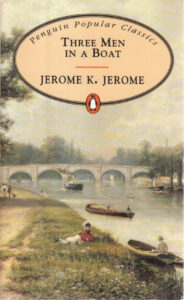
The novel reflects Jerome’s serious side rather than the comic mode that produced Three Men in a Boat and the various lighter works for which he is now better known. He had always had a serious side that occasionally surfaced in his comic books and that produced the few openly serious works including The Passing of the Third Floor Back and Paul Kelver. All Roads Lead to Calvary belongs to this serious strand and is one of the strongest examples of it.
The book runs about three hundred pages. Critical reception in 1919 was mixed, with some reviewers welcoming the seriousness and others finding the move away from comedy disappointing. The novel has been less read than the comic books since but rewards readers willing to see the other side of Jerome’s work. It pairs with Paul Kelver, with The Passing of the Third Floor Back, and with the late autobiographical My Life and Times of 1926.
About the Author
Jerome K. Jerome was an English writer and humorist, best remembered for the comic travelogue Three Men in a Boat, a much-loved classic of English humour.
See all books by Jerome K. Jerome →


Listen to All Roads Lead to Calvary Audiobook Free
Listen to All Roads Lead to Calvary by Jerome K. Jerome free online. The full audiobook (9 hr 34 min, 18 chapters, read by volunteer narrators) streams free on this page.
All Roads Lead to Calvary (1919) is a public domain work.
| # | Chapter | Length | |
|---|---|---|---|
| 1 | CHAPTER I | 18:49 | |
| 2 | CHAPTER II | 26:23 | |
| 3 | CHAPTER III | 25:05 | |
| 4 | CHAPTER IV | 23:52 | |
| 5 | CHAPTER V | 26:39 | |
| 6 | CHAPTER VI | 27:20 | |
| 7 | CHAPTER VII | 32:06 | |
| 8 | CHAPTER VIII | 31:53 | |
| 9 | CHAPTER IX | 39:46 | |
| 10 | CHAPTER X | 33:58 | |
| 11 | CHAPTER XI | 37:42 | |
| 12 | CHAPTER XII | 41:50 | |
| 13 | CHAPTER XIII | 28:12 | |
| 14 | CHAPTER XIV | 30:49 | |
| 15 | CHAPTER XV | 33:56 | |
| 16 | CHAPTER XVI | 42:12 | |
| 17 | CHAPTER XVII | 51:52 | |
| 18 | CHAPTER XVIII | 21:47 |
Prefer reading? Read All Roads Lead to Calvary online free or download the PDF and EPUB above.