Conversations On Natural Philosophy
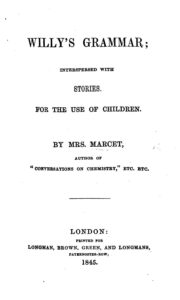
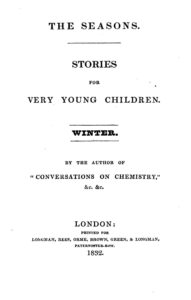
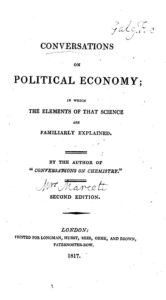
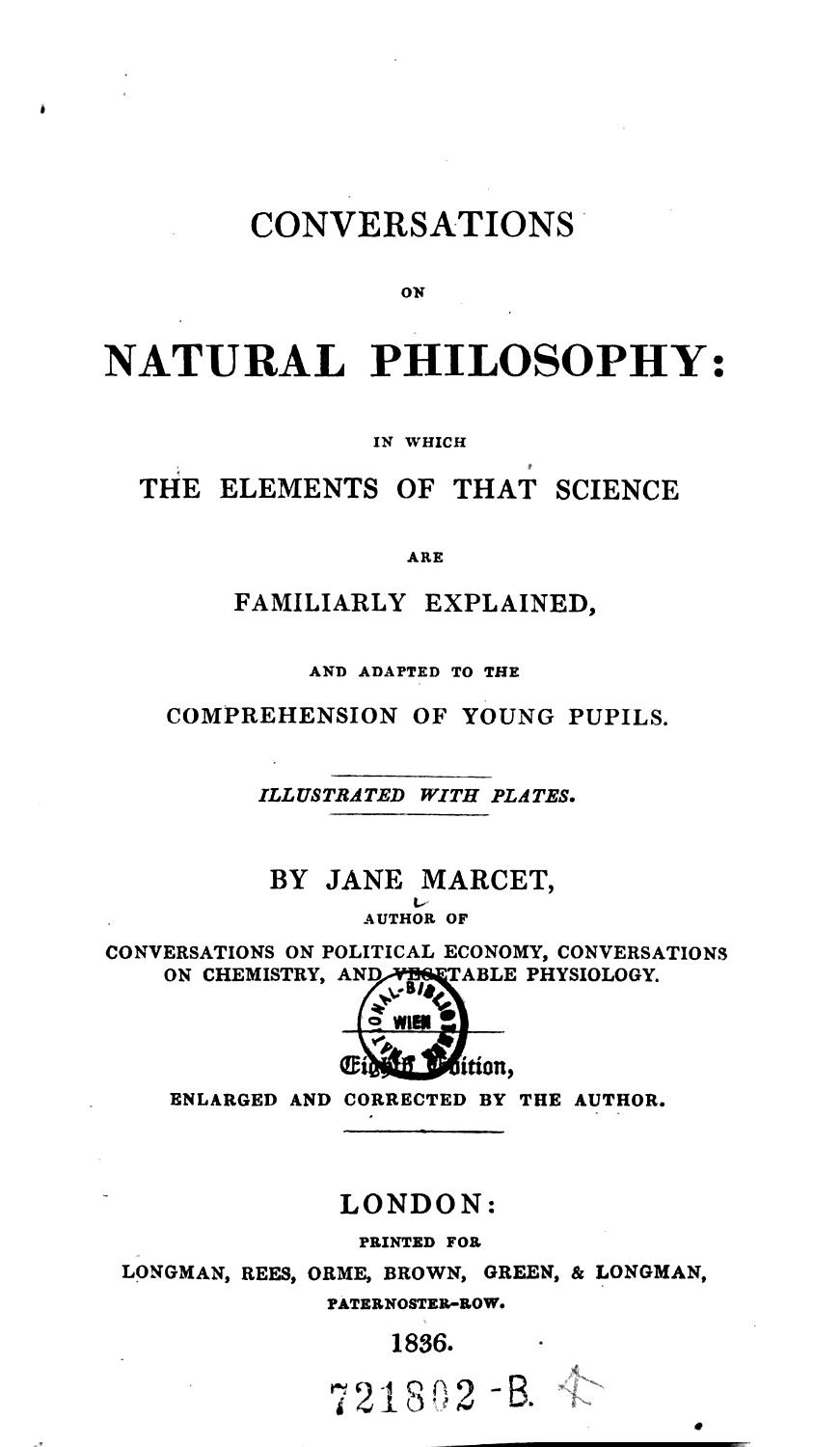
Conversations on Natural Philosophy is a popular science book by Jane Marcet, first published in 1819 and one of the most successful introductory science books of the nineteenth century. Marcet was a Swiss born English writer who had married the Genevan physician Alexander Marcet and who became one of the most successful science popularisers of her generation. Her earlier book Conversations on Chemistry, first published in 1805, had been a runaway success and had influenced Michael Faraday in his early scientific reading. Conversations on Natural Philosophy was meant to extend the same method to the broader subjects of physics.
The book takes the form Marcet had perfected in her chemistry book. There is a teacher named Mrs B and two young pupils, Emily and Caroline, who learn the principles of natural philosophy through a long series of conversations across many chapters. The subjects covered are the standard early nineteenth century physics curriculum. There is mechanics, with sections on motion, gravity, levers, pulleys, and inclined planes. There is hydrostatics and pneumatics, with experiments on water pressure and air. There is optics, with chapters on light, lenses, mirrors, and colour. There is heat and electricity, treated in the still developing terms of early nineteenth century physical theory.
What made the book so widely useful was Marcet’s method. She had a real gift for putting scientific ideas in plain language without losing accuracy, and the conversational form let her show how a beginning student would actually have to think through each new idea. The questions Emily and Caroline ask are exactly the questions a beginning student would ask, and the answers Mrs B gives are clear without being condescending. Generations of young people in Britain and America learned their first physics from this book.
The book runs about four hundred pages and is best read in chapter sized pieces. Some of the physics is now out of date, particularly the discussions of heat and electricity that predate the major nineteenth century unifications of those subjects, but the general method and the historical interest remain considerable. For readers interested in the history of science education in English, this is one of the most important early popular science books. It pairs naturally with Marcet’s own Conversations on Chemistry and with the popular science works of her contemporary Mary Somerville.
About the Author
Download free books by Jane Marcet on BDeBooks. Read Jane Marcet’s works online or download as PDF/EPUB · part of our growing free eBook collection.
See all books by Jane Marcet →