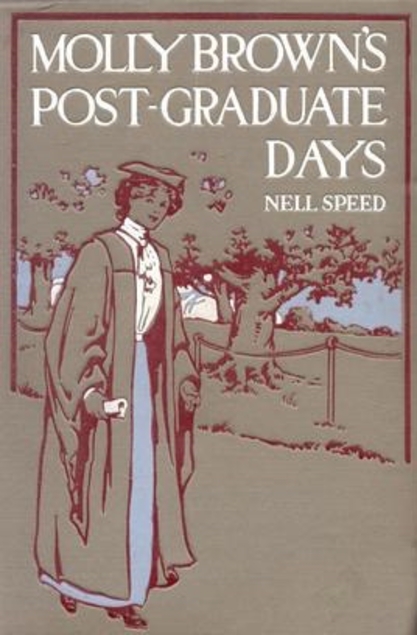
Molly Brown’s Post-Graduate Days
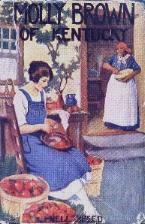
Molly Brown’s Post Graduate Days is one of the books in Nell Speed’s Molly Brown series, the long running girls’ college fiction sequence that continued the title character’s story past her Wellesley undergraduate years and into her early adult life. The Molly Brown books followed the title character from her Kentucky home through her years at Wellesley College and into the various stages of her early adult life, with the post graduate days entry covering the period immediately after Molly’s college graduation.
The post college transition was a recurring subject in early twentieth century girls’ series fiction, with the various series taking their heroines through the difficult adjustment from the structured world of the women’s college to the more open and uncertain world of adult life. For young women of the period, the options after college were limited but were beginning to expand. Marriage and family life remained the most common path, but graduate study, professional work, social reform activism, missionary service, and various other adult occupations were increasingly available to college educated women, and the post graduate fiction reflected this widening range of possibilities.
The novel follows Molly through the months and years immediately following her Wellesley graduation, with the various decisions about marriage, career, family responsibilities, and continuing education that the post college period required all unfolding across the page count. The wider cast of Wellesley friends that the earlier books in the series had established continues to develop, with each of the connected characters making their own choices about what comes after college and the friendships continuing to provide the recurring emotional anchor that the series is built around.
Nell Speed was the pen name of Emma Speed Sampson, an American author who wrote a number of long running series for young readers, particularly girls, in the period roughly 1909 through 1925. Her Molly Brown books captured the warmth and the seriousness of the college experience and of the early adult life of an educated American woman of the era with the kind of detail that her readers responded to. Speed writes in the breezy chapter book style typical of girls’ series fiction of the era, with brisk plotting, light moralizing, and a clear sense of who her audience is.
The Molly Brown books fit into the larger landscape of girls’ series fiction that became popular in the early twentieth century alongside the Stratemeyer Syndicate series and the various independent series. For scholars of children’s literature, of girls’ series fiction, or of early twentieth century American women’s experience, Speed’s work is part of the larger story of how the modern young adult genre developed.
About the Author
Download free books by Nell Speed on BDeBooks. Read Nell Speed’s works online or download as PDF/EPUB · part of our growing free eBook collection.
See all books by Nell Speed →