Patricia Brent, Spinster
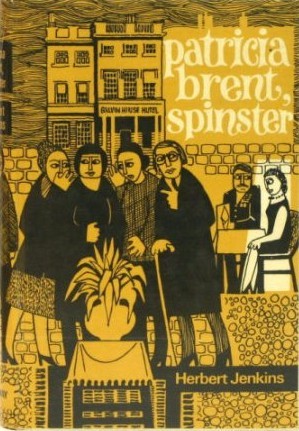
Patricia Brent, Spinster is a novel by Herbert George Jenkins, the English novelist and publisher who lived from 1876 to 1923. The novel was published in 1918 and became Jenkins’s most popular and most enduring work, going through many editions in Britain and the United States across the following decades.
The central character is Patricia Brent, a young Englishwoman of intelligence and spirit who lives in a London boarding house with various other unmarried women whose constant condescension about her single state has begun to wear on her patience. In a moment of provoked invention, Patricia announces to the other boarders that she is engaged to be married to a Major Brown and that she will be dining with him at a particular restaurant on a particular evening. The announcement is entirely fictional. The other boarders, suspecting Patricia of inventing the engagement, decide to go to the same restaurant to catch her in the lie.
Faced with the prospect of public humiliation, Patricia takes a desperate step at the restaurant. She approaches a young officer she has never met, explains her predicament, and asks him to play the part of Major Brown for the evening. The officer, recognizing the situation immediately and being himself amused by it, agrees. The dinner is a complete success and the boarders return defeated. Patricia and her fictional Major Brown go their separate ways assuming the matter is closed.
The rest of the novel works through the various complications that arise as the fictional engagement turns out to have unexpected consequences. The young officer, whose actual name turns out to be different from the Major Brown identity he assumed, finds himself becoming genuinely interested in the young woman who pulled him into the deception. Patricia, who has the strength of character to handle her own affairs but who is also clearly drawn to the man who helped her out of an embarrassing situation, must work out what she actually wants.
The novel is a romantic comedy with the kind of light social observation that English popular fiction of the period did particularly well. It runs about three hundred pages and reads quickly. For readers who enjoy classic English romantic comedy from the early twentieth century, this is one of the more pleasant examples. It pairs naturally with the work of Jenkins’s contemporaries Hugh Walpole and Anthony Hope.
About the Author
Download free books by Herbert George Jenkins on BDeBooks. Read Herbert George Jenkins’s works online or download as PDF/EPUB — part of our growing free eBook collection.
See all books by Herbert George Jenkins →