Pygmalion
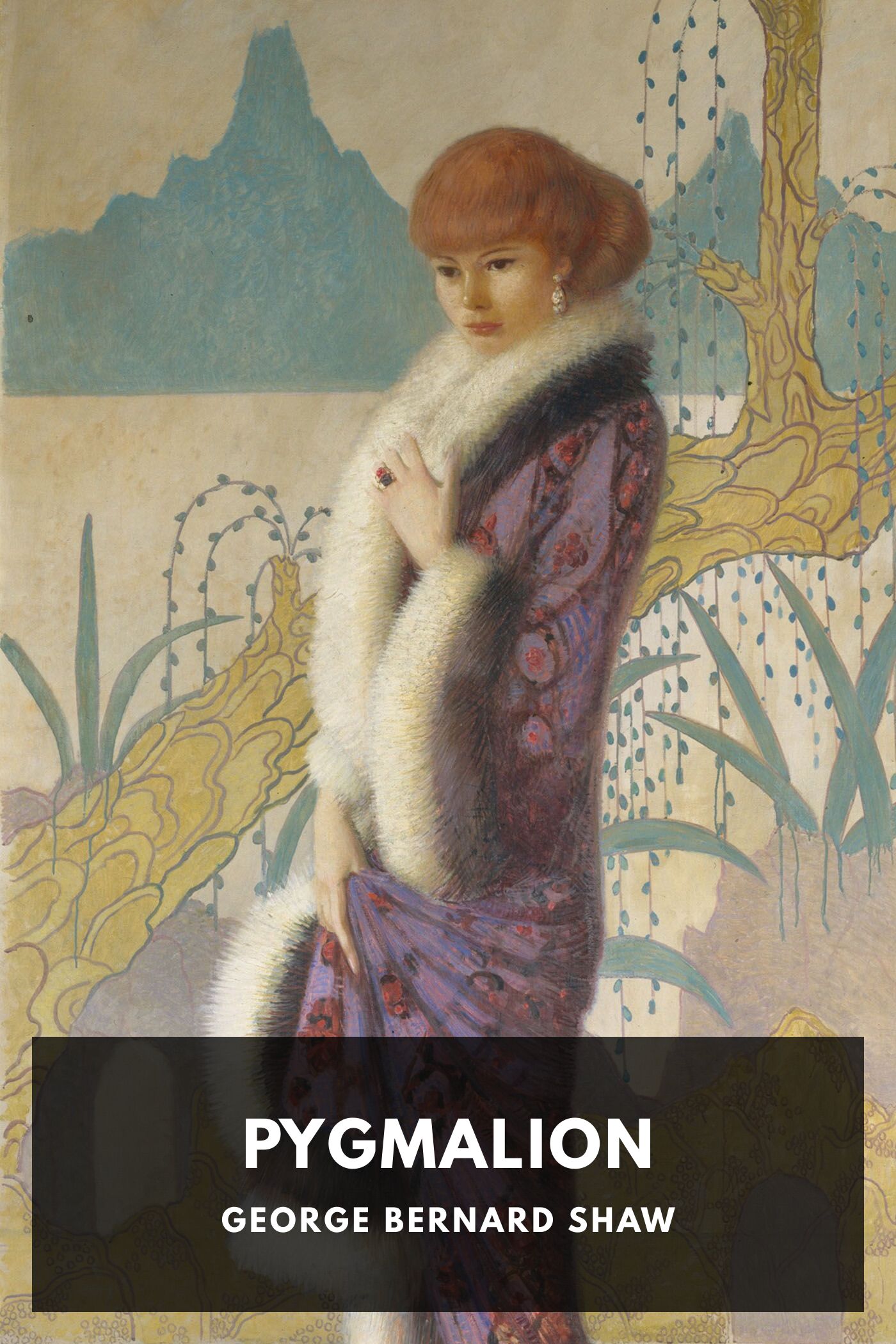
Henry Higgins, a professor of phonetics, wagers that he can pass off a Cockney flower girl as a duchess simply by correcting her vowels. Eliza Doolittle turns up on his doorstep wanting lessons so she can work in a proper shop, and the experiment that follows reshapes her far past anything Higgins intended. Shaw uses the transformation to needle English notions of class, showing that accent and manners, not birth, decide how a person is treated. He also refuses the tidy romance audiences kept expecting, insisting in his own afterword that Eliza does not belong to her teacher. The play later became the musical My Fair Lady, though Shaw’s sharper ending is the one worth reading. A free PDF and EPUB edition is available here.
About the Author
George Bernard Shaw (1856-1950) was an Irish playwright, critic, and socialist polemicist who became the leading English-language dramatist of his era. A co-founder of the Fabian Society, he used comedy to attack social hypocrisy and won the Nobel Prize in Literature in 1925.
See all books by George Bernard Shaw →