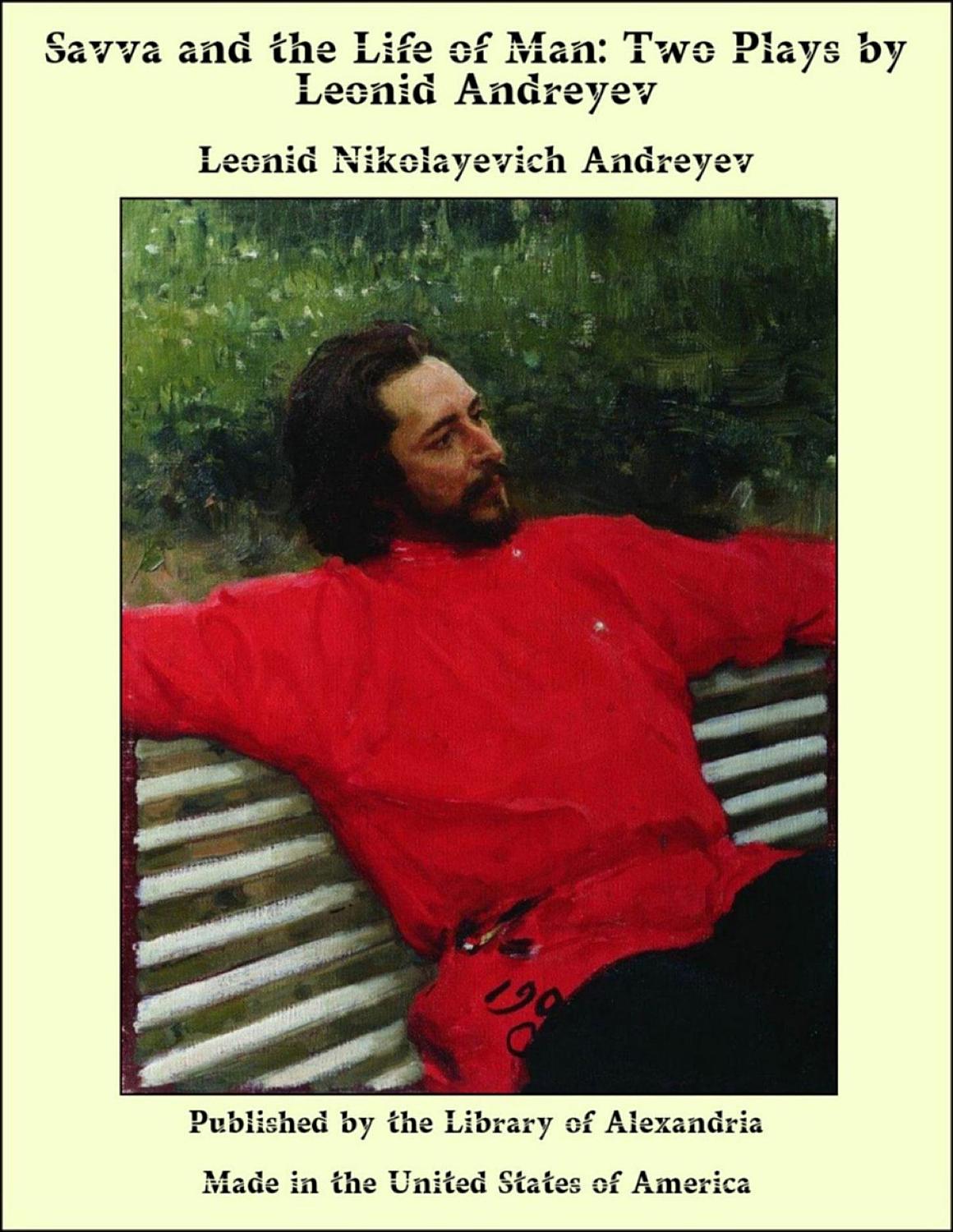
Savva and the Life of Man
Savva and The Life of Man collects two of the major plays by Leonid Andreyev in English translation. Andreyev was one of the most important Russian dramatists of the early twentieth century alongside his more famous reputation as a short story writer, and several of his plays were performed widely across Russia and Europe in the years before the First World War.
The Life of Man, originally Zhizn cheloveka, was first performed in 1907 and is generally considered Andreyev’s most ambitious and most successful play. It is an allegorical drama in five acts that follows the central character Man across the major stages of human life. Each act represents a different phase. The play opens with Man’s birth, follows him through poverty and love in his early adulthood, through wealth and success in middle age, through grief at the death of his son, and ends with his death as an old man. The central figure Someone in Gray observes the action throughout with a lighted candle that shortens across the play and finally burns out at Man’s death.
The Life of Man was performed by Konstantin Stanislavski at the Moscow Art Theatre in 1907 in one of the substantial productions of the early Russian symbolist theater. The play was widely performed across Europe in subsequent years and contributed substantially to Andreyev’s international reputation in the period before the First World War.
Savva, originally Savva, Ignis Sanat, was first performed in 1906. The play takes its central plot from a revolutionary plan to blow up a famous Russian Orthodox icon as part of a broader symbolic revolt against the Russian religious and political establishment. The play handles the moral and psychological complications of the plan with the kind of seriousness that Andreyev brought to his work on revolutionary violence in The Seven Who Were Hanged and elsewhere.
The plays belong to the developing European symbolist and expressionist theatrical tradition that was reshaping serious theater across the years before the First World War. They pair naturally with the work of Maeterlinck in French and Flemish, with Hauptmann in German, with Strindberg in Swedish, and with the broader continental European theatrical avant-garde of the period.
The book runs about two hundred pages. For readers of early-twentieth-century Russian and European theater, it is essential.
About the Author
Download free books by Leonid Andreyev on BDeBooks. Read Leonid Andreyev’s works online or download as PDF/EPUB · part of our growing free eBook collection.
See all books by Leonid Andreyev →