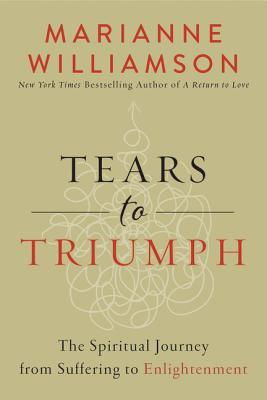
Tears to Triumph
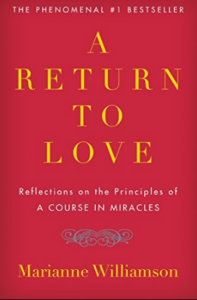
Tears to Triumph is a 2016 book by Marianne Williamson, the spiritual teacher and author best known for her interpretations of the metaphysical text A Course in Miracles and for her many years on the bestseller lists with books like A Return to Love. In this book Williamson takes on the modern relationship between sadness, depression, and spiritual practice. Her central argument is that contemporary culture has medicalized normal human grief, treating it as a problem to be eliminated rather than as an experience to be moved through, and that the consequences for individual lives and for the wider culture have been significant.
The book combines Williamson’s familiar themes around forgiveness, prayer, and spiritual surrender with a more direct critique of what she sees as the overuse of antidepressant medication and the underuse of older spiritual technologies for processing pain. She is careful to acknowledge that some people genuinely need clinical intervention and that her critique is aimed at the wider cultural pattern rather than at individual prescriptions. Even so, the book has been controversial in some clinical circles, and readers should approach it as a work of spiritual writing rather than as medical advice.
What Williamson does well is articulate the shape of an experience that many readers will recognize. The grief that is not depression but is being treated as if it were. The crisis of meaning that mid life often brings and that no medication can directly address. The role of religious tradition, particularly the contemplative streams within Judaism, Christianity, and Buddhism, in helping people make sense of suffering. Her writing is accessible and her tone is encouraging without being saccharine.
For readers who have followed Williamson through her earlier books, Tears to Triumph fits comfortably into her catalogue. For new readers, it is a useful introduction to her perspective, particularly for anyone interested in the conversation between contemporary mental health discourse and older spiritual traditions.
About the Author
Download free books by Marianne Williamson on BDeBooks. Read Marianne Williamson’s works online or download as PDF/EPUB · part of our growing free eBook collection.
See all books by Marianne Williamson →