The Adventures of Huckleberry Finn
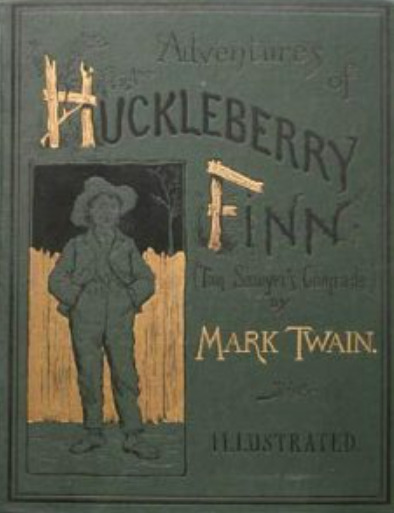
Twain published Huckleberry Finn in 1884, eight years after Tom Sawyer, and the difference between the two books is enormous. Huck tells this one himself, in his own voice, and that decision changed American writing. Hemingway said as much, and most critics since have agreed. The plot follows Huck as he fakes his death to escape his violent father, ends up on a raft floating down the Mississippi with Jim, an enslaved man trying to reach free territory. Along the way they get tangled up with the Duke and the Dauphin, two of the great American con artists. There is the Grangerford-Shepherdson feud, which Twain uses to skewer Southern honor culture. There is the Wilks family fraud, which somehow stays funny even when it should not.
The ending, where Tom Sawyer reappears and turns Jim’s escape into an elaborate game, has divided readers for over a century. Some call it a betrayal of the book’s seriousness. Others say it is the point: society reasserting its cruelty even after the river has taught us better. The language has not aged easily. Specific words land harder now than in 1884, and the book is regularly banned and regularly defended. Read it for the voice, read it for the moral weight, read it for the river itself.
About the Author
Samuel Langhorne Clemens, better known as Mark Twain, was born in 1835 in Florida, Missouri, and grew up in Hannibal on the banks of the Mississippi. Most of his fiction would later draw on that childhood, sometimes directly. He worked as a printer’s apprentice, then…
See all books by Mark Twain →