The Duty of Catechetical Instruction
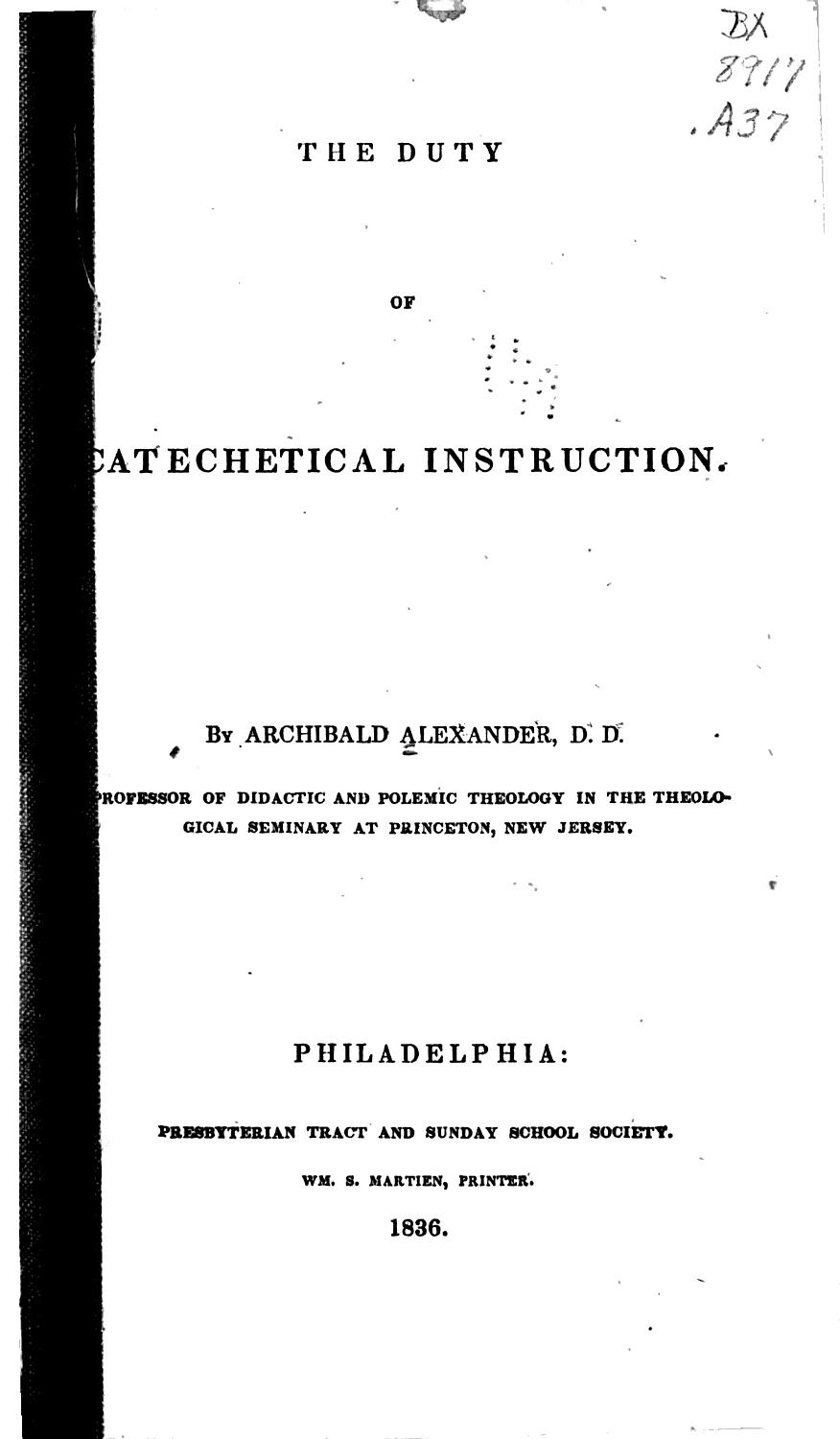
The Duty of Catechetical Instruction is a religious work by Archibald Alexander, the American Presbyterian theologian who lived from 1772 to 1851 and who was the founding professor of Princeton Theological Seminary. Alexander served at Princeton from 1812 until his death and was one of the central figures in the development of the conservative Presbyterian theological tradition that came to be known as Princeton Theology and that dominated American Reformed thought through much of the nineteenth century.
The work belongs to Alexander’s substantial body of writing on the practical and pastoral dimensions of the ministry. The duty of catechetical instruction refers to the traditional Reformed practice of teaching the basic doctrines and ethical principles of the Christian faith through the use of catechisms, the question and answer summaries of doctrine that had been used in Reformed churches since the sixteenth century. Alexander was deeply concerned that the practice of catechetical instruction was declining in nineteenth century American Presbyterian churches and the work is essentially an argument for its revival and a guide to its proper conduct.
The book covers the standard topics that a serious work on catechetical instruction would address. There are sections on the historical and biblical foundations of the practice, on the various catechisms available for use in American Presbyterian churches including particularly the Westminster Shorter Catechism, on the proper methods of instruction for children and adults at different stages of religious knowledge, and on the relationship between catechetical instruction and the other ordinary activities of pastoral ministry.
The work is mostly of interest now to readers of American Presbyterian theological history and to those interested in the historical practice of religious education within the Reformed tradition. Alexander was one of the major figures in nineteenth century American Reformed theology and his writings on practical theology have continued to find readers within the conservative Presbyterian denominations. It pairs naturally with his other writings on religious education and pastoral ministry.
About the Author
Download free books by Archibald Alexander on BDeBooks. Read Archibald Alexander’s works online or download as PDF/EPUB · part of our growing free eBook collection.
See all books by Archibald Alexander →