The economics of commerce
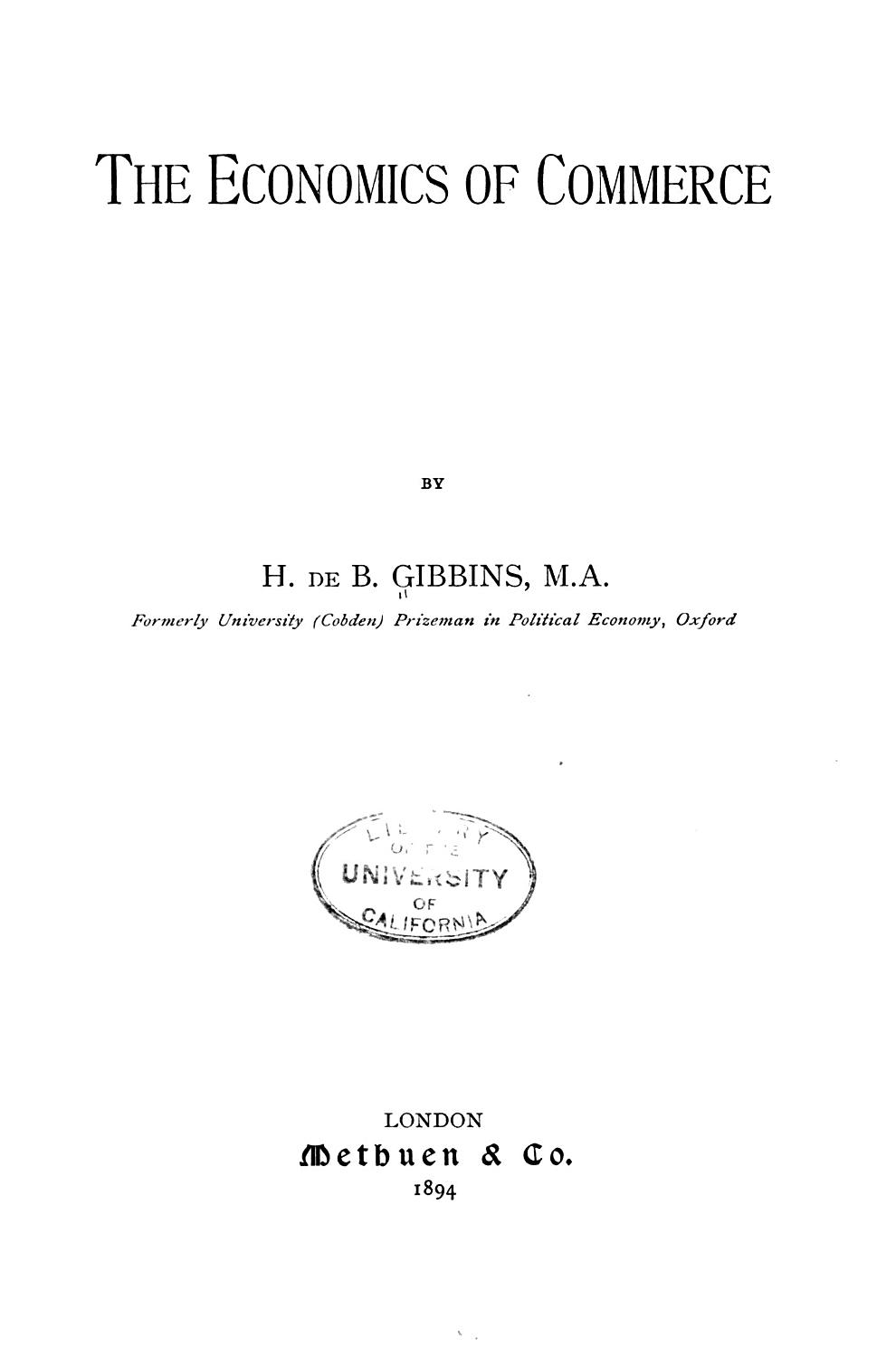
The Economics of Commerce is a textbook in commercial economics by Henry de Beltgens Gibbins, the late nineteenth and early twentieth century English educational writer who produced a substantial body of textbooks on economic and historical subjects for use in British schools and in the developing commercial education programs of the period.
Gibbins was associated with the movement for expanded commercial and economic education in British schools that gathered momentum in the late nineteenth century in response to the growing recognition that British commercial leadership was being challenged by the more systematic technical and commercial education programs of Germany, the United States, and other industrializing competitors. The various textbooks he produced were aimed at the developing audience of British students preparing for commercial careers and at the schools and night classes that were trying to provide them with the kind of systematic economic and historical background that was thought necessary for success in modern business.
The Economics of Commerce covers the standard topics of late Victorian commercial economics. There are chapters on the basic principles of supply, demand, and price formation in markets. There are chapters on money, banking, credit, and the international monetary system as it stood under the late nineteenth and early twentieth century gold standard. There are chapters on the major forms of business organization, on the structure of British and international trade, on the role of various intermediaries including merchants, bankers, and brokers, and on the broader institutional environment within which commercial activity took place. The treatment is generally clear and practical, aimed at giving students the basic conceptual vocabulary they would need to understand the commercial world they were preparing to enter.
The book reflects the assumptions of late Victorian and Edwardian British political economy. The treatment of free trade and protectionism is generally favourable to free trade in the orthodox classical liberal manner that dominated British economic teaching during the period. The treatment of monetary questions reflects the certainties of the gold standard era that would be substantially disrupted by the First World War. The treatment of business organization predates the developments in corporate law and management that would transform British business in the twentieth century.
The book is mostly of interest now as a document of late Victorian commercial education. It pairs naturally with Gibbins’s other educational works.
About the Author
Download free books by Henry de Beltgens Gibbins on BDeBooks. Read Henry de Beltgens Gibbins’s works online or download as PDF/EPUB · part of our growing free eBook collection.
See all books by Henry de Beltgens Gibbins →