The Lady With the Little Dog and Other
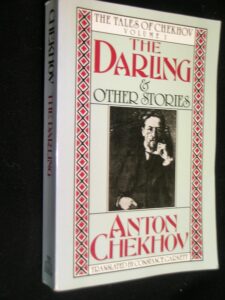
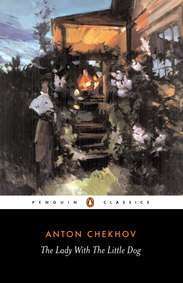
The Lady with the Little Dog and Other Stories is a collection of short fiction by Anton Chekhov in English translation, titled after his most famous short story. The Lady with the Little Dog was first published in Russian in 1899 and is widely considered one of the great short stories of any language. The selection volume builds around that story with other late and middle period pieces that show Chekhov at his most concentrated.
The title story is short, perhaps fifteen pages, and tells the story of a Moscow banker named Dmitri Gurov who is on holiday at the Black Sea resort of Yalta and who meets a young married woman named Anna Sergeyevna walking on the promenade with her small dog. The two begin an affair. The summer ends and they return to their separate lives, Gurov to Moscow and Anna to a provincial town somewhere in central Russia, both expecting that the affair was a holiday matter and that they will forget each other. They do not forget. The rest of the story follows the slow growing realisation between them that what had begun as a casual summer romance is in fact serious, and that they have no idea what to do about it. The ending is one of the most quietly devastating in modern fiction. Nothing is resolved. The two are left at the beginning of what may be a long difficult future, with the writer turning away just at the moment when the real story is about to start.
The other stories in the collection are drawn from the late and middle Chekhov and include some of his strongest pieces. There are usually stories like Ward Number Six, The Black Monk, A Doctor’s Visit, and Gusev, all of which extend the same method into different settings. The Garnett translation gives them in a consistent English voice that has held up well across more than a century of changing taste in translation.
The book runs about three hundred pages and is best read at the pace of one or two stories an evening. For readers new to Chekhov this is the obvious place to start, since the title story alone is enough to suggest why he matters. It pairs naturally with the major late plays, particularly The Cherry Orchard, where the same combination of clear surface and difficult interior was extended into dramatic form.
About the Author
Read and download 2 free books by Anton Chekhov on BDeBooks. Browse the complete collection of Anton Chekhov’s works available as free PDF and EPUB downloads. Discover novels, fiction, and other writings by Anton Chekhov in our online eBook library.
See all books by Anton Chekhov →