The Lancashire Library
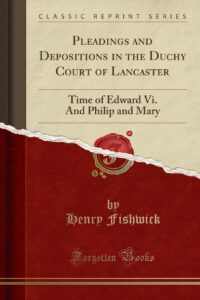
The Lancashire Library is a bibliographical and historical work by Henry Fishwick, the Lancashire local historian and antiquarian who lived from 1835 to 1914. Fishwick was one of the leading figures of late nineteenth century Lancashire antiquarianism and produced a substantial body of scholarly work on the history, records, and bibliography of his native county across a long working life.
The book is essentially a bibliographical guide to the printed and manuscript literature relating to Lancashire history, geography, biography, and culture as it stood at the time Fishwick prepared the work. The kind of county bibliography that Fishwick produced was a recognized form of late Victorian local historical scholarship, building on the substantial earlier work of county historians and bibliographers and providing serious researchers with the organized list of available sources that systematic local historical work required.
The contents typically cover the various categories of material that would be useful to a serious Lancashire historian. There are sections on the major published county histories from the earliest works through the nineteenth century, on parish registers and other ecclesiastical records that had been printed or were available for consultation in manuscript, on the various antiquarian and historical society publications that had appeared in Lancashire and Cheshire across the nineteenth century, on biographical works treating Lancashire figures, on topographical and geographical descriptions, on the records of various legal and administrative bodies with Lancashire jurisdiction, and on the substantial body of more general historical and literary material that touched on Lancashire subjects.
Fishwick was a founding member and long active participant in several of the Lancashire and Cheshire historical and antiquarian societies, and his bibliographical work reflects the scholarly standards of those organizations during the period when British local historical scholarship was developing rapidly. The book is mostly of interest now to historians working on Lancashire and to bibliographers studying the development of English local historical scholarship in the late nineteenth century.
The book runs to several hundred pages in the typical printing and is meant to be used as a reference work rather than read straight through. It pairs naturally with Fishwick’s other Lancashire publications and with the broader nineteenth century county bibliography tradition.
About the Author
Download free books by Henry Fishwick on BDeBooks. Read Henry Fishwick’s works online or download as PDF/EPUB — part of our growing free eBook collection.
See all books by Henry Fishwick →