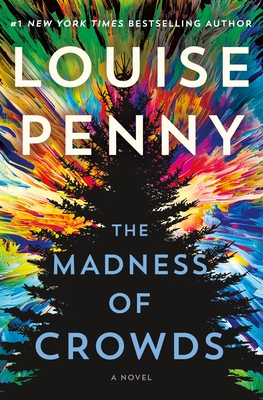
The Madness of Crowds
The Madness of Crowds is the seventeenth novel in Louise Penny’s Inspector Armand Gamache series, set in the small Quebec village of Three Pines and the wider Quebec countryside the series has explored across nearly two decades. By this entry the regular cast feels like family to longtime readers. Armand Gamache, head of homicide for the Surete du Quebec. His wife Reine Marie. His son in law and second in command Jean Guy Beauvoir. The eccentric residents of Three Pines who keep getting pulled into cases despite their best efforts to live quiet lives.
In this novel, set in the immediate aftermath of a global pandemic that closely mirrors COVID 19, a controversial Canadian academic named Abigail Robinson is invited to give a lecture at a small university near Three Pines. Robinson has built a public following advocating for what she calls a new compassion, but her actual proposals turn out to involve euthanizing the disabled and the elderly in the name of national efficiency. The lecture goes ahead despite Gamache’s strong recommendations against allowing it, and shortly afterward someone tries to assassinate Robinson. Soon enough an actual murder follows, and Gamache has to unravel the case while wrestling with questions about free speech, dangerous ideas, and the responsibility of a society to confront them.
Louise Penny writes mysteries that take ideas seriously. The Robinson character is closely modeled on real philosophers and propagandists who have gained dangerous public followings, and Penny does not pull her punches in showing how appealing such ideas can be to people exhausted and frightened by crisis. The Three Pines setting gives the heavy material its counterweight, with the regular cast providing the warmth that has always balanced the darker themes Penny is willing to explore.
For longtime fans, The Madness of Crowds is one of the stronger late entries. For new readers, the series rewards being started from the beginning with Still Life, but the novel can be read as a standalone with some loss of context.
About the Author
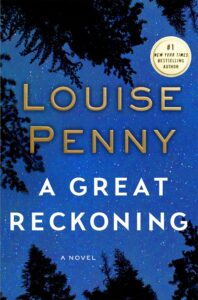
Read and download 3 free books by Louise Penny on BDeBooks. Browse the complete collection of Louise Penny’s works available as free PDF and EPUB downloads. Discover novels, fiction, and other writings by Louise Penny in our online eBook library.
See all books by Louise Penny →