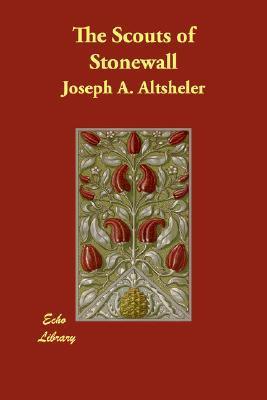
The Scouts of Stonewall
The Scouts of Stonewall is the third book in Joseph Alexander Altsheler’s Civil War series, published in 1914. The series follows the parallel stories of two young Kentucky cousins, Harry Kenton on the Confederate side and Dick Mason on the Union side, through the major engagements of the American Civil War from First Bull Run to Appomattox. This volume returns to Harry’s Confederate perspective and follows him through the Valley campaign of 1862, the great victory that established Stonewall Jackson as the most famous Confederate commander of the war.
The novel covers the campaign from March to June 1862, when Jackson with a relatively small force in the Shenandoah Valley defeated three larger Union armies in succession and tied up Union forces that should have been reinforcing McClellan’s army outside Richmond. Altsheler treats the campaign in detail. The opening operations at Kernstown, the long marches through the Valley, the actions at McDowell, Front Royal, Winchester, Cross Keys and Port Republic, are all given their place. Harry Kenton serves as a member of Jackson’s staff and is therefore close to the actual decisions, allowing Altsheler to use him as a focal point for the strategic moves of the campaign.
The portrait of Jackson himself is the most interesting thing in the book. Altsheler is clearly an admirer of Jackson and gives him the full weight of a great commander, but he also tries to convey the strangeness of the man, his religious intensity, his hardness toward subordinates, his peculiar personal habits. The historical figures around Jackson, including Turner Ashby the cavalry commander and the various brigade commanders, are also handled with care. The campaign itself was so unusual that Altsheler did not have to invent very much. The actual movements are dramatic enough to carry a novel without much fictional decoration.
The book runs about three hundred and fifty pages. For readers following the Civil War series, it sits between The Guns of Shiloh and The Sword of Antietam, switching back from the western theater to Virginia. For readers interested in the Valley campaign as fiction, this is one of the better treatments of the period. It pairs naturally with the actual contemporary accounts of the campaign by John Imboden and others.
About the Author
Joseph A. Altsheler was an American author of historical and adventure novels for young readers, popular in the early 20th century for series set during America’s wars and on the frontier.
See all books by Joseph Alexander Altsheler →