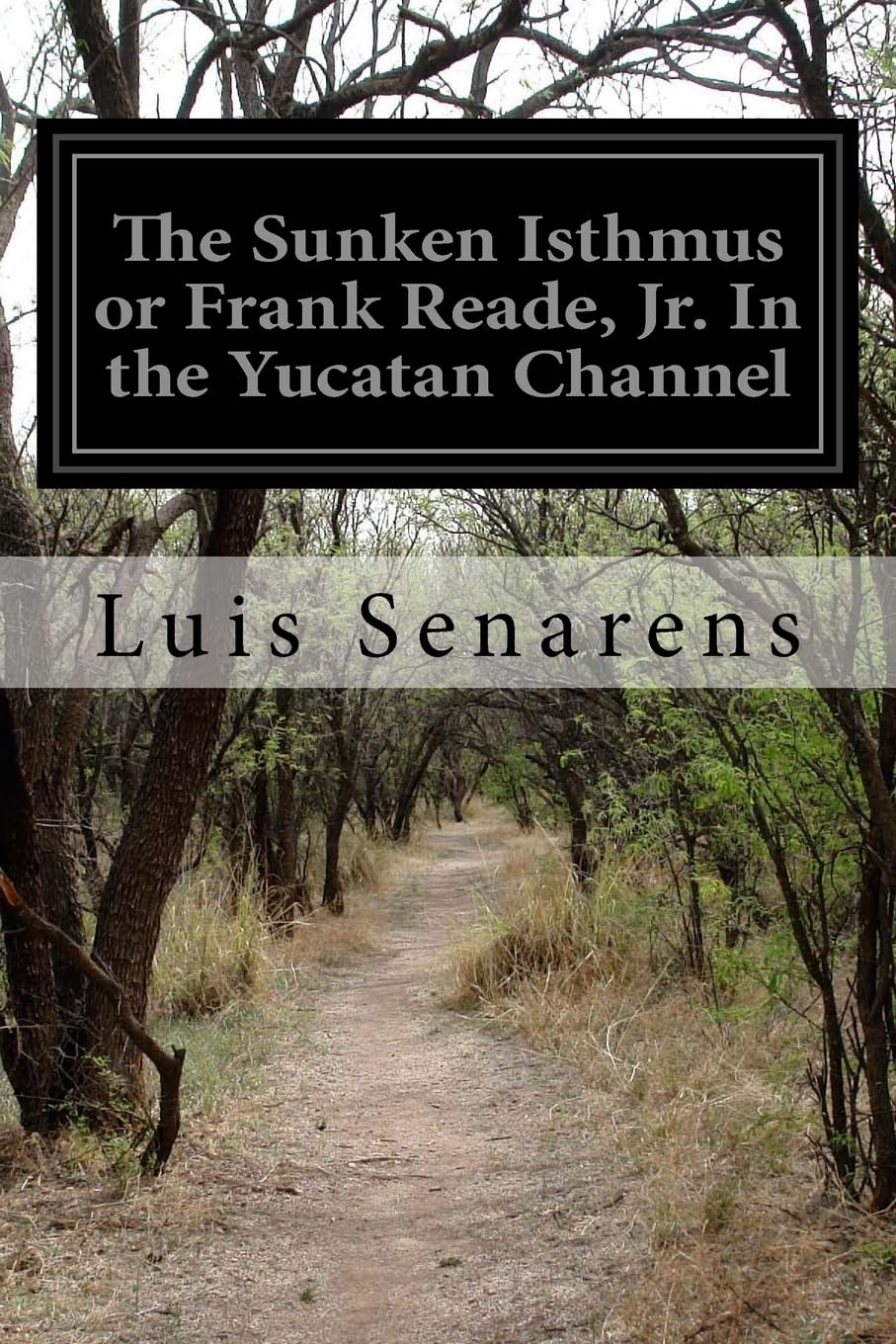
The Sunken Isthmus
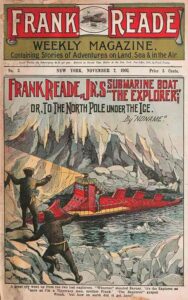
The Sunken Isthmus is one of Luis Senarens’s many Frank Reade dime novels from the late nineteenth and early twentieth centuries, working in the proto science fiction adventure mode that made him one of the most influential American genre writers of his era. Senarens wrote hundreds of stories about young inventor Frank Reade and his various sons and assistants, often under the pen name Noname, and the cumulative output established many of the conventions that would later define the science fiction genre proper.
The Frank Reade stories typically follow a young American inventor and his crew of friends and engineers as they build a remarkable new machine, an electric airship, a submarine, a steam powered land vehicle of some kind, and use it to explore some remote and dangerous corner of the world. The stories combined adventure plotting with an interest in plausible engineering speculation, which made them important precursors to the science fiction that would emerge as a distinct genre in the early twentieth century. Senarens corresponded for years with Jules Verne, who admired the American writer’s work, and the influence ran in both directions across the Atlantic.
The Sunken Isthmus fits into this larger pattern of Frank Reade adventure stories. The premise typically involves the discovery of some strange unmapped region of the world or some unusual natural phenomenon that the inventor’s machine is uniquely suited to investigate. A sunken isthmus, a piece of land that once connected larger bodies of land but has now been submerged, gives the story its central setting. The kind of lost geography premise that would become a staple of pulp fiction in the decades after Senarens. The prose is brisk, the action moves, and the period assumptions about race, empire, and the American frontier are very much present in ways modern readers will need to navigate.
For scholars of early American popular literature, of the prehistory of science fiction, or of the dime novel as a publishing phenomenon, Senarens’s work is essential. For general readers, his stories are now historical curiosities more than living literature, but they retain real interest as artifacts of a particular moment in American imaginative life. Many of his stories are now in the public domain.
About the Author
Download free books by Luis Senarens on BDeBooks. Read Luis Senarens’s works online or download as PDF/EPUB · part of our growing free eBook collection.
See all books by Luis Senarens →