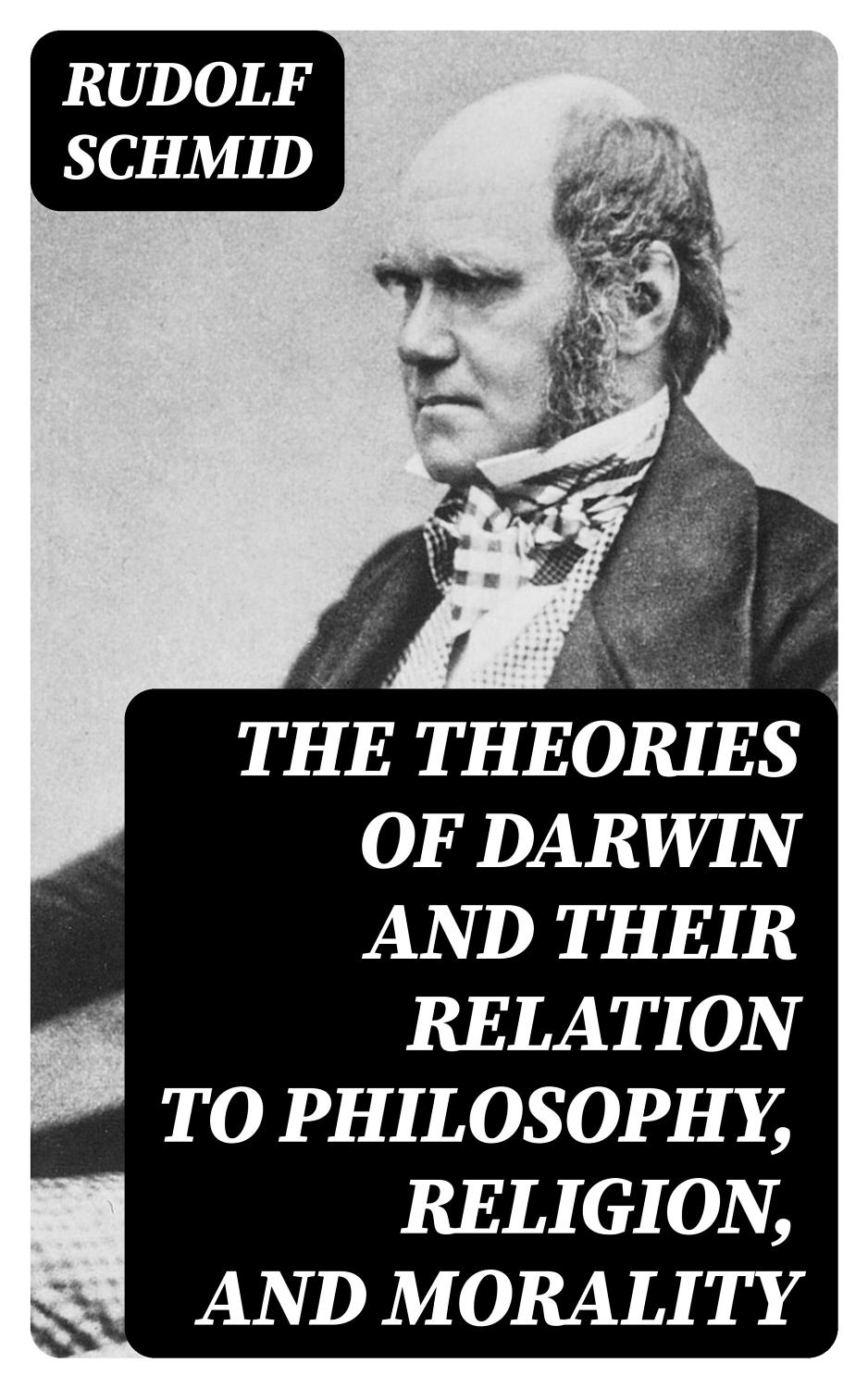
The Theories of Darwin and Their Relation to Philosophy, Religion, and Morality
Writing in 1876 as a town pastor in Friedrichshafen, Schmid set out to judge Darwin without the materialism that German popularizers like Haeckel and Büchner had bolted onto him. His method is separation. He first treats descent, evolution, and selection as scientific questions, weighing Darwin against Lamarck, Moriz Wagner, and Albert Wigand, and finds selection a failure as the universal key it was advertised to be. The philosophical add-ons, the origin of consciousness, sensation, and life, and the metaphysical jump to monism, he handles as separate claims needing separate proof. Part Two asks what religion and morality have to fear. His answer: nothing from science itself, whatever it finds, and everything from one metaphysical move, the elimination of design from nature. The 1883 English translation carries an introduction by the Duke of Argyll, whose sons Schmid had tutored.