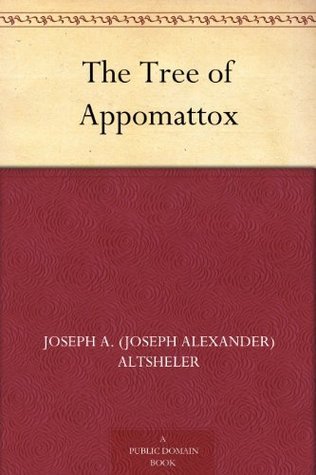
The Tree of Appomattox
The Tree of Appomattox is one of Joseph Alexander Altsheler’s books in his Civil War series, the long running historical adventure sequence that took young protagonists through the major events of the war for a generation of American boys reading in the early twentieth century. The tree of Appomattox of the title refers to the apple tree under which Robert E. Lee was reported to have rested while waiting for Ulysses S. Grant to arrive for the surrender meeting at Appomattox Court House on April 9, 1865, the meeting that effectively ended the Civil War.
Altsheler had built his reputation writing historical adventure novels for boys, and the Civil War series brought his approach to the war that still shaped American memory in the years he was writing. The novel takes the young protagonists of the series toward the climactic moment of the entire war, with Appomattox functioning both as the literal end of the major military operations and as the symbolic moment when the long Civil War narrative came to its formal conclusion. Altsheler put a lot of effort into rendering the actual military and political history with reasonable accuracy for a young readers’ adventure novel, with attention to the specific events of the final Confederate campaigns, the closing operations of the Army of the Potomac, and the wider military situation that brought the two armies to the small Virginia village where the surrender occurred.
The wider Civil War series gave Altsheler room to develop a connected cast across multiple novels, with the same young protagonists moving through the various major events of the war. The Tree of Appomattox brings the series to its conclusion, with the various plot threads that the previous books had developed reaching their resolution alongside the larger historical resolution that the surrender represented. The novel is one of the more emotionally weighted entries in the series because of the moment it covers, with the end of the war producing the kind of mixed feelings of relief, exhaustion, and grief that the actual participants in the conflict reported.
Altsheler’s prose is brisk and his action sequences move at the pace his young readers expected. The moral lessons about courage, loyalty, and the costs of war are delivered through the narrative rather than imposed in lectures. Modern readers should be aware that the period assumptions about race and the moral character of the various participants in the war are very much present in Altsheler’s Civil War fiction in ways that have not aged well.
For scholars of early twentieth century American children’s literature, of how the Civil War was translated into adventure fiction for the young, or of the wider career of Joseph Alexander Altsheler, the Civil War series is essential. The Tree of Appomattox brings the series to its powerful conclusion.
About the Author
Joseph A. Altsheler was an American author of historical and adventure novels for young readers, popular in the early 20th century for series set during America’s wars and on the frontier.
See all books by Joseph Alexander Altsheler →