

Utopia
- Downloads
- Under 100
- First published
- 1516
- Pages
- 108
Listen to Utopia Audiobook Free
-
Introduction
8:25 -
Discourses of Raphael Hythloday, of the Best State of a Commonwealth
26:54 -
Discourses (pt 2)
28:13 -
Discourses (pt 3)
19:45 -
Of Their Towns, Particularly of Amaurot
5:27 -
Of Their Magistrates
3:10 -
Of Their Trades, and Manner of Life
10:10 -
Of Their Traffic
11:29 -
Of the Travelling of the Utopians
43:05 -
Of Their Slaves, and Of Their Marriages
19:26 -
Of Their Military Discipline
20:01 -
Of the Religions of the Utopians
37:43
Utopia (1516) is a public domain work.
The audio edition streams in the page. There is no audio file to download.
About this book
A traveler describes a distant island commonwealth called Utopia, where property is held in common, gold is despised, work is shared, and religious tolerance prevails, an imagined ideal society that throws the injustices of More's own England into sharp relief. Witty, ambiguous, and endlessly debated, the book coined the very word 'utopia' (meaning both 'good place' and 'no place') and launched a whole genre of imagined perfect societies. Is it a serious blueprint, a satire, or a thought experiment? Readers have argued for five centuries. Brilliant and provocative, Utopia remains a foundational work of political philosophy and a mirror in which every age examines its own dreams and failings.
From the opening pages
Henry VIII., the unconquered King of England, a prince adorned with all the virtues that become a great monarch, having some differences of no small consequence with Charles the most serene Prince of Castile, sent me into Flanders, as his ambassador, for treating and composing matters between them. I was colleague and companion to that incomparable man Cuthbert Tonstal, whom the King, with such universal applause, lately made Master of the Rolls; but of whom I will say nothing; not because I fear that the testimony of a friend will be suspected, but rather because his learning and virtues are too great for me to do them justice, and so well known, that they need not my commendations, unless I would, according to the proverb, “Show the sun with a lantern.” Those that were appointed by the Prince to treat with us, met us at Bruges, according to agreement; they were all worthy men. The Margrave of Bruges was their head, and the chief man among them; but he that was esteemed the wisest, and that spoke for the rest, was George Temse, the Provost of Casselsee: both art and nature had concurred to make him eloquent: he was very learned in the law; and, as he had a great capacity, so, by a long practice in affairs, he was very dexterous at unravelling them. After we had several times met, without coming to an agreement, they went to Brussels for some days, to know the Prince’s pleasure; and, since our business would admit it, I went to Antwerp. While I was there, among many that visited me, there was one that was more acceptable to me than any other, Peter Giles, born at Antwerp, who is a man of great honour, and of a good rank in his town, though less than he deserves; for I do not know if there be anywhere to be found a more learned and a better bred young man; for as he is both a very worthy and a very knowing person, so he is so civil to all men, so particularly kind to his friends, and so full of candour and affection, that there is not, perhaps, above one or two anywhere to be found, that is in all respects so perfect a friend: he is extraordinarily modest, there is no artifice in him, and yet no man has more of a prudent simplicity. His conversation was so pleasant and so innocently cheerful, that his company in a great measure lessened any longings to go back to my country, and to my wife and children, which an absence of four months had quickened very much.
Contents
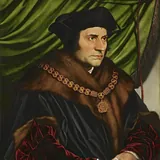
About the author
More from this genre
See all- H HesperusHesperus
- I In the Blue PikeIn the Blue Pike
- O An Obscure ApostleAn Obscure Apostle
- Elsie Lindtner
- M Mimi's MarriageMimi's Marriage
- l The little BarefootThe little Barefoot
Books like this one

Reviews and discussion
No ratings yet. Be the first reader to rate this book.
Rate this book
Pick a star, then sign in. Only readers who confirmed their email can rate.
No comments yet. Share a thought, a question or a favourite passage.
Copyright concern? Read our DMCA policy
Read or download
Public domain book This work is in the public domain and free of copyright. Anyone may read, download and share it.
- EPUB 103 KB
-
KINDLE Send to Kindle Send
- Download the EPUB file to this device.
- Open Amazon's Send to Kindle page, sign in, and add the file. Open Send to Kindle (opens in a new tab)
On a phone: open the downloaded EPUB and share it to the Kindle app.
You can also email the file to your Kindle address (it ends in @kindle.com) from an email address you approved in your Amazon account.
- PDF 542 KB
Downloads start right away. How to open EPUB on your phone
Book facts
- Author
- Thomas More
- First published
- 1516
- Reading time
- About 3 hours
- Pages
- 108
- Language
- English
- Genre
- World Classics
- Formats
- PDF, EPUB, Read online, Audiobook
- Audio read by
- Jenilee