


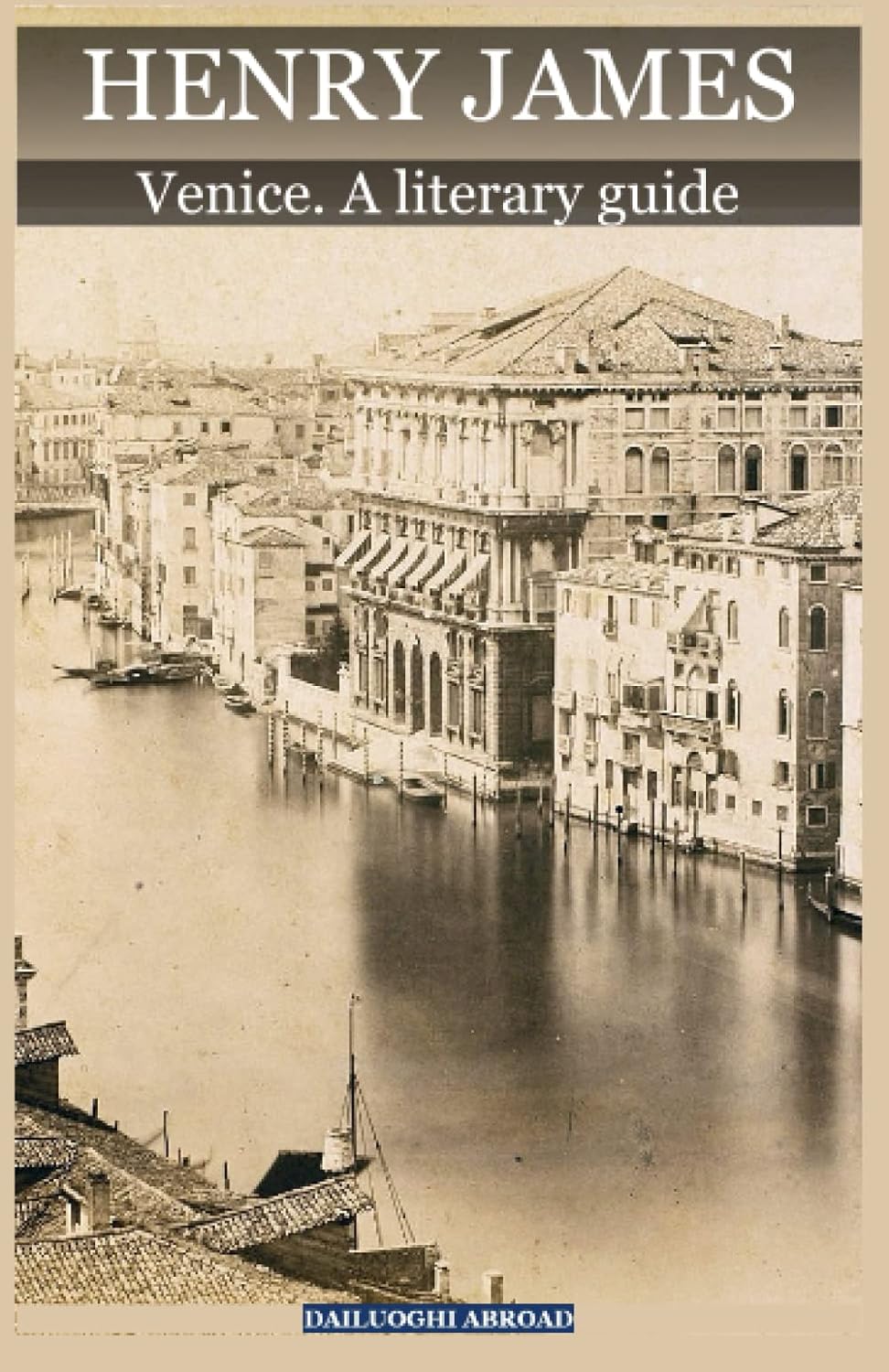
Venice
Henry James

Venice is a long essay by Henry James, originally published in The Century Magazine in November 1882 and later collected in his Italian Hours in 1909. It is one of the central pieces of his Italian writing and one of the most quoted accounts of Venice from the late nineteenth century by an English language writer.
The essay is not a guidebook in the conventional sense. James was not interested in providing the kind of practical information that Baedeker or Murray’s handbooks supplied. What he wanted to do was record the actual experience of being in Venice as an observer who had returned to the city repeatedly over many years and who had watched it through different seasons and moods. The essay moves freely through the major sites, with extended observations on Saint Mark’s Square, on the Doge’s Palace, on the side canals, on the surrounding lagoon islands, and on the various churches and palaces that visitors then and now would want to see. But the descriptions are never simply topographical. James is always also recording the quality of light, the feel of a particular hour of day, the sound of the city behind the famous buildings.
What makes the essay still readable after more than a century is the writing. James was at the height of his early powers when he wrote it, before the late style had become difficult, and the sentences here have the kind of patient detailed observation that the major novels would carry into fiction. The essay also has a current of melancholy. James was clearly aware that the Venice he was describing was changing rapidly under tourism, modernization, and economic pressure, and there is a quiet recognition throughout that what he is recording will not last.
The essay runs about fifty pages on its own and longer in the Italian Hours edition where it sits alongside the other pieces on Italian cities. For readers who love Venice or who love James, this is essential reading. It pairs naturally with his other Italian Hours essays, particularly the pieces on Rome and on Florence, and with the Italian sections of The Wings of the Dove, where Venice returns as a fictional setting in his late period.