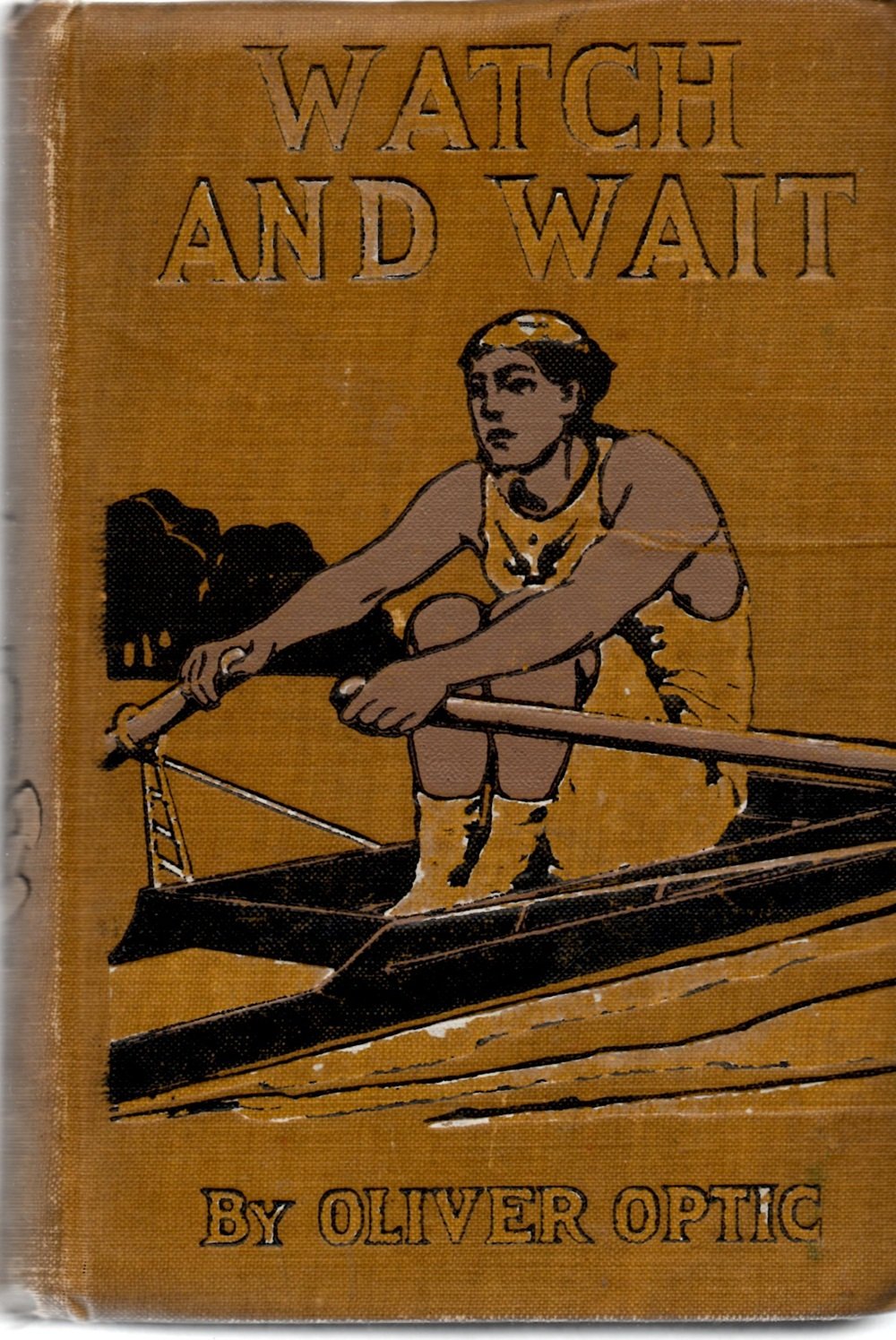
Watch and Wait
Watch and Wait is one of Oliver Optic’s many novels for boys, working in the kind of adventure and moral instruction territory that earned the author one of the largest readerships in mid to late nineteenth century American children’s fiction. Oliver Optic was the pen name of William Taylor Adams, a Massachusetts writer who became one of the most prolific producers of boys’ fiction in the period, with a total output running into more than a hundred novels.
Watch and Wait is part of the kind of story sequence Optic was known for, with a young protagonist facing a difficult situation and having to demonstrate both patience and active courage to bring it to a successful resolution. The watch and wait of the title points to one of the recurring themes in Optic’s fiction. The young hero must often endure a period of seemingly fruitless waiting before the opportunity for action arrives, and the moral lesson is that patience under difficult circumstances is itself a kind of active virtue. The actual plot of the novel typically involves the kind of escalating dangers and last minute deliverances that the genre demanded, with the protagonist’s perseverance through the difficult middle stretch being rewarded in the closing chapters.
Optic’s prose is brisk and his action sequences move at the pace his young readers expected. The moral lessons are delivered through the narrative rather than imposed in lectures. Modern readers should be aware that the period assumptions about race, class, and gender are very much present in Optic’s fiction in ways that have not aged well. His books were so popular in their time that he was eventually censured by the Boston Public Library and other respectable institutions for being too exciting and not sufficiently improving, with critics arguing that his adventure focused stories did not deliver the explicit moral instruction that some other writers of children’s books were considered to provide. Modern scholarship has tended to take Optic’s craft more seriously than the high Victorian critics did.
For scholars of nineteenth century American children’s literature, of the dime novel and story paper traditions, or of the wider print culture that shaped American boyhood in the post Civil War decades, Optic’s work is essential. Many of his books are now in the public domain.
About the Author
Oliver Optic was the pen name of William Taylor Adams, a hugely popular 19th-century American author of adventure and travel stories for young readers, who wrote well over a hundred books and edited several children’s magazines.
See all books by Oliver Optic →