Jared Diamond
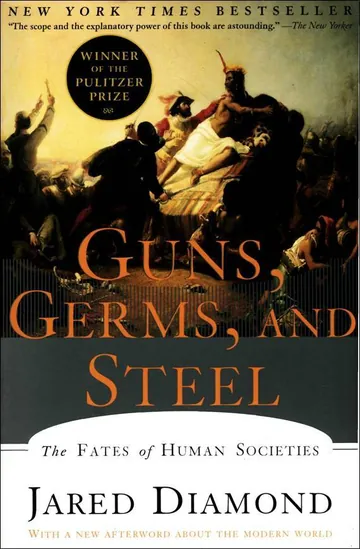
Diamond trained in physiology and spent decades doing bird fieldwork in New Guinea, and a question a New Guinean politician put to him there, about why Europeans ended up with so much cargo, is what Guns, Germs, and Steel spends five hundred pages answering. The case is geographic: the shape of the continents, which plants and animals could be domesticated, and the diseases that came of living beside livestock decided who conquered whom, and nothing about the people did. It took a Pulitzer in 1998. Anthropologists and historians have argued with it steadily since, saying it flattens human agency into terrain and moves too quickly over the evidence. He teaches geography at UCLA. The later books apply the same wide lens elsewhere: Collapse asks why some societies destroy the resource base they depend on while neighbours facing the same conditions do not, and The Third Chimpanzee, written first, treats human beings as one more great ape with an unusually dangerous set of habits. The pattern of the criticism is consistent across all three, that the argument is arresting at the scale of continents and thin wherever a specialist knows the ground.
- Books
- 1