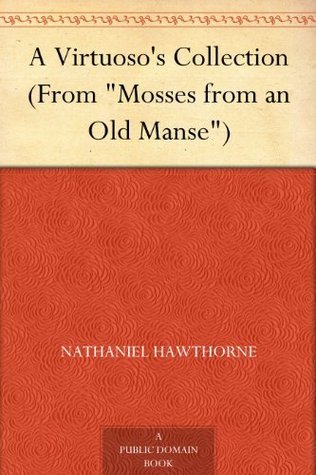
A Virtuoso’s Collection
A Virtuoso’s Collection is one of Nathaniel Hawthorne’s allegorical sketches, originally published in his 1846 collection Mosses from an Old Manse. The piece is a fantasy in the mode that Hawthorne worked in across many of his shorter pieces, where the central conceit is the visit of a narrator to a strange museum or collection that contains items of legendary, mythological, or literary significance rather than the sorts of artifacts that real museums of the era actually held.
The collection in the sketch is presided over by the Virtuoso himself, a strange figure whose own identity is part of the slowly unfolding mystery of the piece, and whose collection includes items like the wolf that suckled Romulus and Remus, the lyre that Apollo gave to Orpheus, the flag that was raised at the storming of the Bastille, the talisman of the Wandering Jew, and many other objects that exist as ideas in the cultural imagination rather than as physical realities the narrator could actually encounter in any other context. Hawthorne uses the collection to develop a long meditation on the relationship between the literary and historical past and the present, with the various items in the collection serving as occasions for reflection on what survives and what is lost as time moves forward.
What makes the sketch interesting beyond its initial fantastic conceit is what it reveals about Hawthorne as a reader and as an inheritor of the Western literary tradition. The objects in the Virtuoso’s collection function as a kind of tour through the texts and traditions that Hawthorne himself had read, with the ironic and melancholy tone that runs through the sketch suggesting that the relationship between the modern reader and the classical, biblical, and medieval inheritance is more complicated than simple celebration would allow. The Virtuoso himself, in the closing chapters of the sketch, turns out to be a figure whose identity gives the entire piece its final twist.
Readers coming to Hawthorne through The Scarlet Letter and The House of the Seven Gables may find the sketch slighter than they expect, but the allegorical mode is one Hawthorne worked in throughout his career. For students of nineteenth century American literature or of Hawthorne’s wider catalogue, A Virtuoso’s Collection is worth knowing. The sketch is short and rewards a single careful reading.
About the Author
Nathaniel Hawthorne was a 19th-century American novelist and short-story writer central to the Dark Romantic movement. He is best known for The Scarlet Letter and The House of the Seven Gables, with their themes of sin, guilt, and Puritan New England.
See all books by Nathaniel Hawthorne →