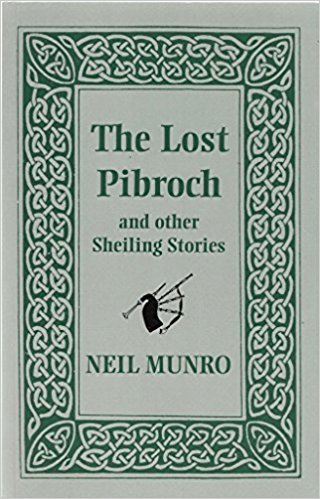
The Lost Pibroch, and other Sheiling Stories
The Lost Pibroch and other Sheiling Stories is Neil Munro’s 1896 collection of short stories, one of his earliest published volumes and the book that helped establish his reputation as a serious writer of Scottish fiction before the Para Handy stories made him a household name across Britain. The collection takes its title from the central story, with the wider volume containing other Highland Scottish tales that share Munro’s particular setting and his characteristic ear for Scottish speech and culture.
The pibroch of the title is the classical music form for the Highland bagpipes, a slow and elaborate composition typically built around a theme that is then elaborated through a series of variations of increasing complexity. The classical pibroch tradition was the highest form of Highland piping, with master pipers spending years studying the repertoire and the technical skills that the form required. By the late nineteenth century when Munro was writing, the pibroch tradition was already in some danger of being lost as the wider Highland culture that had sustained it was being transformed by industrialization, emigration, and the various other pressures that nineteenth century Scotland was working through. The lost pibroch of the title points to this wider cultural loss as well as to the specific story that the title piece tells.
The sheiling of the subtitle refers to the small summer pasture huts that Highland communities used during the seasonal movement of livestock to higher pastures. The sheilings were the structural anchor for a particular form of Highland communal life, with the women and children of the community spending the summer months in the sheilings while the men remained in the lower settlements. Munro uses the sheiling setting and the wider Highland communal traditions as the foundation for the various stories in the collection, with each tale working in some corner of the Highland culture that Munro understood deeply and rendered with affection.
Neil Munro had a real ear for the language and rhythms of Highland speech, and his prose captures the particular quality of Scottish Gaelic culture in ways that few English language writers of his era could match. The pacing is slower than modern short fiction and the prose is in the formal late Victorian style, but readers who settle into the rhythm find a strong, atmospheric collection that takes its time with its themes.
For readers interested in Scottish literature, in Highland Gaelic culture, or in Neil Munro’s catalogue beyond the Para Handy stories, The Lost Pibroch is essential. The collection shows Munro at his most directly engaged with the Highland traditions that the late Victorian era was working through, and the stories have continued to be admired by readers of Scottish literature.
About the Author
Download free books by Neil Munro on BDeBooks. Read Neil Munro’s works online or download as PDF/EPUB · part of our growing free eBook collection.
See all books by Neil Munro →