
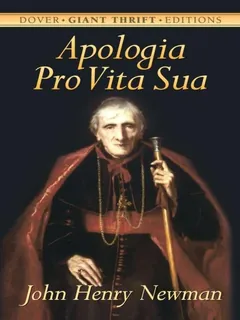
Apologia Pro Vita Sua
Ix.—the Diocese of Hobart Town.
"Hobart Town, Tasmania, November 22, 1864.
"Very Rev. and Dear Sir,
"By the last month's post we at length received your admirable book, entitled, 'Apologia pro Vitâ suâ,' and the pamphlet, 'What then does Dr. Newman mean?'
"By this month's mail, we wish to express our heartfelt gratification and delight for being possessed of a work so triumphant in maintaining truth, and so overwhelming in confounding arrogance and error, as the 'Apologia.'
"No doubt, your adversary, resting on the deep-seated prejudice of our fellow-countrymen in the United Kingdom, calculated upon establishing his own fame as a keen-sighted polemic, as a shrewd and truth-loving man, upon the fallen reputation of one, who, as he would demonstrate,—yes, that he would,—set little or no value on truth, and who, therefore, would deservedly sink into obscurity, henceforward rejected and despised!
"Aman of old erected a gibbet at the gate of the city, on which an unsuspecting and an unoffending man, one marked as a victim, was to be exposed to the gaze and derision of the people, in order that his own dignity and fame might be exalted; but a divine Providence ordained otherwise. The history of the judgment that fell upon Aman, has been recorded in Holy Writ, it is to be presumed, as a warning to vain and unscrupulous men, even in our days. There can be no doubt, a moral gibbet, full 'fifty cubits high,' had been prepared some time, on which you were to be exposed, for the pity at least, if not for the scorn and derision of so many, who had loved and venerated you through life!
"But the effort made in the forty-eight pages of the redoubtable pamphlet, 'What then does Dr. Newman Mean?'—the production of a bold, unscrupulous man, with a coarse mind, and regardless of inflicting pain on the feelings of another, has failed,—marvellously failed,—and he himself is now exhibited not only in our fatherland, but even at the Antipodes, in fact wherever the English language is spoken or read, as a shallow pretender, one quite incompetent to treat of matters of such undying interest as those he presumed to interfere with.
"We fervently pray the Almighty, that you may be spared to His Church for many years to come,—that to Him alone the glory of this noble work may be given,—and to you the reward in eternal bliss!
"And from this distant land we beg to convey to you, Very Rev. and Dear Sir, the sentiments of our affectionate respect, and deep veneration."
(The Subscriptions follow, of the Bishop Vicar-General and eighteen Clergy.)
"The Very Rev. Dr. Newman, &c. &c. &c."