Canadian Scenery, Volume II
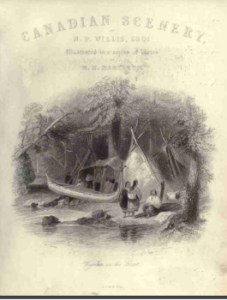
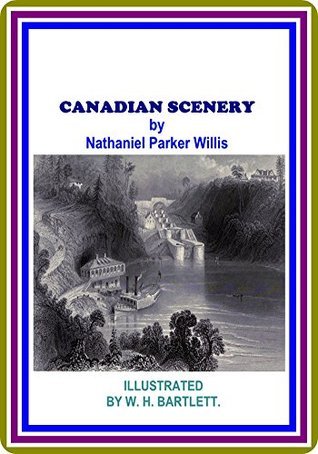
Canadian Scenery, Volume II is the second volume of the illustrated topographical book published in 1842 with steel engravings by William Henry Bartlett and text mostly by Nathaniel Parker Willis. The second volume continues the geographical coverage begun in the first, with additional engravings of British North American locations and additional descriptive prose.
The second volume extends the project into regions less covered by the first. The Maritime provinces of Nova Scotia and New Brunswick receive more attention, with Bartlett’s engravings of Halifax, Saint John, and various smaller coastal locations. The Eastern Townships of Lower Canada and the central Ontario lakes and rivers also get fuller treatment. Various views from the Ottawa River valley appear, including engravings of the early lumber towns that were turning the Ottawa into one of the major industrial corridors of British North America.
Bartlett worked in the picturesque topographical tradition that English engravers had developed across the eighteenth and early nineteenth centuries. His method placed substantial weight on atmospheric handling of light, weather, and seasonal change, with careful compositional arrangement that turned ordinary views into idealized landscape scenes. The engravings show the Canadian landscape as a Victorian English audience wanted to see it rather than as a flat documentary record.
Willis’s text provides historical and descriptive background for each view. He had not personally toured the British North American provinces and worked largely from Bartlett’s drawings, from the existing English-language sources on Canadian history and geography, and from the kind of secondary research that a professional magazine writer of the period could conduct without leaving New York. The text is competent rather than original, but it served the purpose of the illustrated book well.
The two-volume set was a commercial success in both Britain and North America. For modern readers, the engravings preserve a visual record of pre-Confederation British North America that no other source provides at comparable quality. Many of the locations Bartlett drew have been transformed by industrial development and urban expansion. The book pairs naturally with American Scenery and with Bartlett’s other illustrated travel volumes.
About the Author
Read and download 3 free books by Nathaniel Parker Willis on BDeBooks. Browse the complete collection of Nathaniel Parker Willis’s works available as free PDF and EPUB downloads. Discover novels, fiction, and other writings by Nathaniel Parker Willis in our online eBook library.
See all books by Nathaniel Parker Willis →