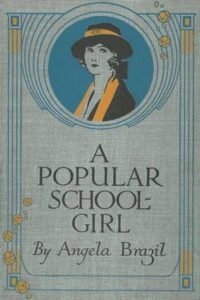
For the Sake of the School
For the Sake of the School is a girls’ boarding school novel by Angela Brazil, first published in 1915. The novel is set at The Woodlands, an English girls’ boarding school of the kind that had been proliferating in England during the late Victorian and Edwardian periods and that Brazil had made the central setting of most of her substantial body of school fiction.
The plot follows the typical Brazil patterns. There are intense friendships among the girls, rivalries that produce dramatic complications and that resolve through moments of mutual recognition and reconciliation, sporting events that allow the girls to demonstrate their physical courage and team spirit, academic activities that reward intellectual seriousness, and various smaller dramas involving family connections, misunderstandings, and the small but important questions of personal honour that the school story characteristically explored. The for the sake of the school of the title refers to the moments where individual girls must subordinate their personal interests to the collective good of the school community.
Brazil was one of the principal architects of the English girls’ school story as a substantial literary form and she had been refining her methods across many novels by the time For the Sake of the School appeared. The novel reflects the genre conventions she had largely created. The school itself is presented as a coherent moral community with its own traditions, customs, and ethical framework, within which the various individual stories unfold. The girls are presented as capable, energetic, and morally serious young people whose school experiences are preparing them for adult lives of substantial responsibility.
The novel was published in the early years of the First World War, and although it does not deal directly with the war, the sense of national crisis is felt in the background. The girls’ school of the period was being shaped by the broader cultural mood of national service and shared sacrifice, and the for the sake of the school ethical framework that gives the novel its title connects naturally to the for the sake of the nation framework that was dominating wider British public discourse during the war years.
The novel runs about three hundred pages and is best read straight through. For readers interested in early twentieth century English girls’ school fiction, this is a representative Brazil novel from her most productive period. It pairs naturally with her other school stories.
About the Author
Read and download 2 free books by Angela Brazil on BDeBooks. Browse the complete collection of Angela Brazil’s works available as free PDF and EPUB downloads. Discover novels, fiction, and other writings by Angela Brazil in our online eBook library.
See all books by Angela Brazil →