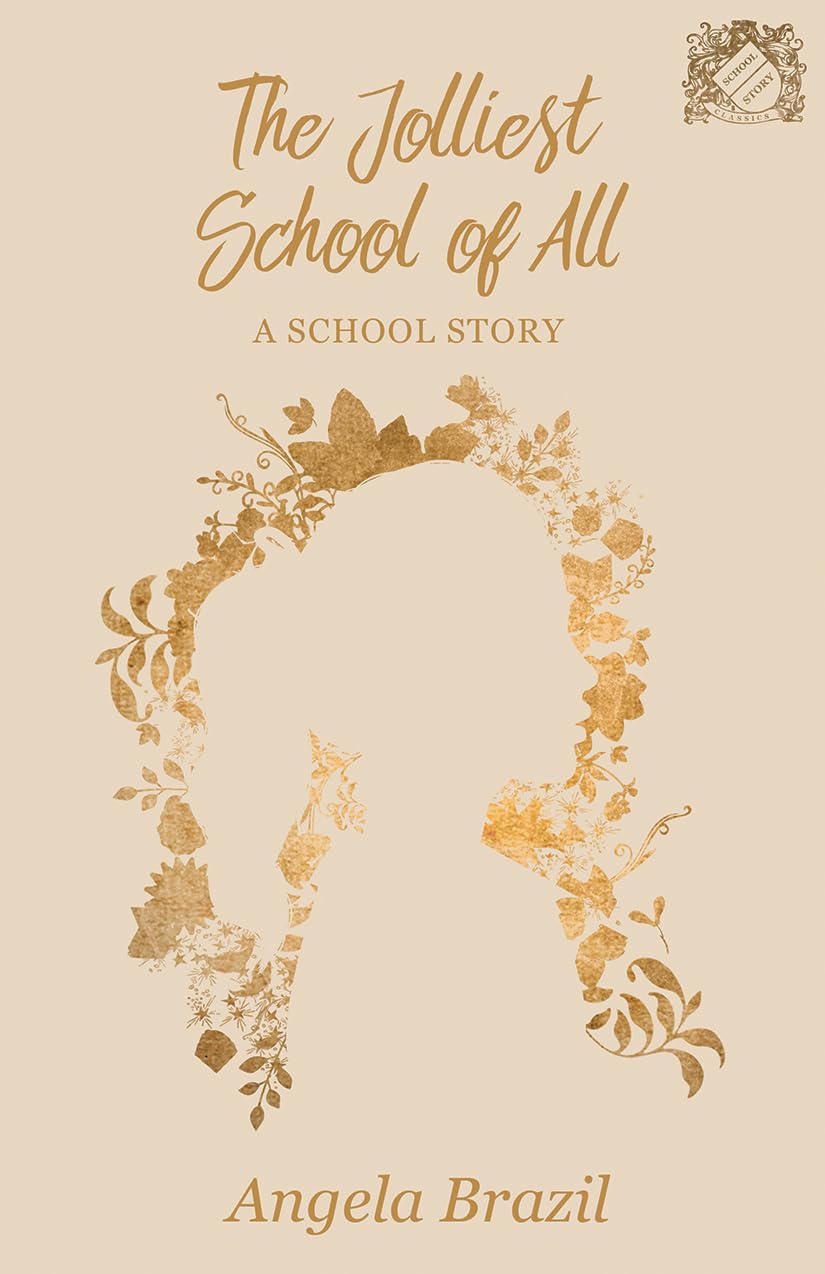
The Jolliest School of All
The Jolliest School of All is a girls’ boarding school novel by Angela Brazil, first published in 1922. The novel belongs to Brazil’s substantial postwar output of school stories and brings the conventional Brazil school story formula into a setting in the early 1920s, with various subtle adjustments to reflect the changed cultural climate that the postwar years had produced.
The novel is set at a girls’ boarding school called Lindenlea and follows a group of students through a particular school year. The plot involves the standard Brazil ingredients. There are intense friendships among the girls that develop and shift across the school year. There are rivalries that produce dramatic complications and that resolve through moments of mutual recognition. There are sporting events that allow the girls to demonstrate their physical capabilities and team spirit. There are academic activities, school plays, and various other communal events that give the novel its rhythm across the school terms.
The particular character of the novel reflects Brazil’s interest in the international dimension that the postwar years had brought into English girls’ education. The school in this novel includes girls from various international backgrounds, with the various national differences treated as opportunities for the kind of mutual understanding and broadening of horizons that Brazil consistently valued. The treatment of the international material is shaped by the assumptions of early 1920s British educational culture and is in places dated to modern eyes, but Brazil’s basic sympathy with international understanding is clear throughout.
The novel is one of Brazil’s more cheerful school stories. The jolliest school of all of the title is not ironic. The school is presented as a genuinely happy community where the girls find substantial fulfillment in their studies, their friendships, and their various activities. The various complications of the plot are real but are handled within an overall framework of essential good will and optimism that gives the novel its characteristic Brazilian warmth.
The novel runs about three hundred pages and is best read straight through. For readers interested in early 1920s English girls’ fiction, this is a representative Brazil novel from her peak productive period. It pairs naturally with her other school stories from the same decade and with the broader tradition of postwar English girls’ fiction.
About the Author
Read and download 2 free books by Angela Brazil on BDeBooks. Browse the complete collection of Angela Brazil’s works available as free PDF and EPUB downloads. Discover novels, fiction, and other writings by Angela Brazil in our online eBook library.
See all books by Angela Brazil →
Listen to The Jolliest School of All Audiobook Free
Listen to The Jolliest School of All by Angela Brazil free online. The full audiobook (9 hr 10 min, 21 chapters, read by VORich24) streams free on this page.
The Jolliest School of All (1922) is a public domain work.
| # | Chapter | Length | |
|---|---|---|---|
| 1 | Off to Italy | 26:36 | |
| 2 | The Villa Camellia | 19:29 | |
| 3 | Hail, Columbia! | 24:41 | |
| 4 | A Secret Sorority | 18:57 | |
| 5 | Fairy Godmothers, Limited | 24:09 | |
| 6 | Among the Olive Groves | 26:37 | |
| 7 | Lorna's Enemy | 22:04 | |
| 8 | At Pompeii | 33:02 | |
| 9 | Reprisals | 22:41 | |
| 10 | The School Carnival | 27:39 | |
| 11 | Up Vesuvius | 27:14 | |
| 12 | Tar and Feathers | 29:42 | |
| 13 | Peachy's Pranks | 28:07 | |
| 14 | The Villa Bleue | 42:32 | |
| 15 | Peachy's Birthday | 28:31 | |
| 16 | Concerning Juniors | 21:22 | |
| 17 | The Anglo-Saxon League | 24:18 | |
| 18 | Greek Temples | 27:04 | |
| 19 | In Capri | 26:04 | |
| 20 | The Cameron Clan | 28:34 | |
| 21 | The Blue Grotto | 21:00 |
Prefer reading? Read The Jolliest School of All online free or download the PDF and EPUB above.