Principles of Political Economy
Principles of Political Economy is a major work of nineteenth century American economic theory by Henry Charles Carey, originally published in three volumes between 1837 and 1840 and substantially revised in his later works. Carey, who lived from 1793 to 1879, was the most influential American economist of the mid nineteenth century and the leading exponent of the so called American School of economic thought that argued for protective tariffs and economic nationalism in opposition to the free trade doctrines of the British classical economists.
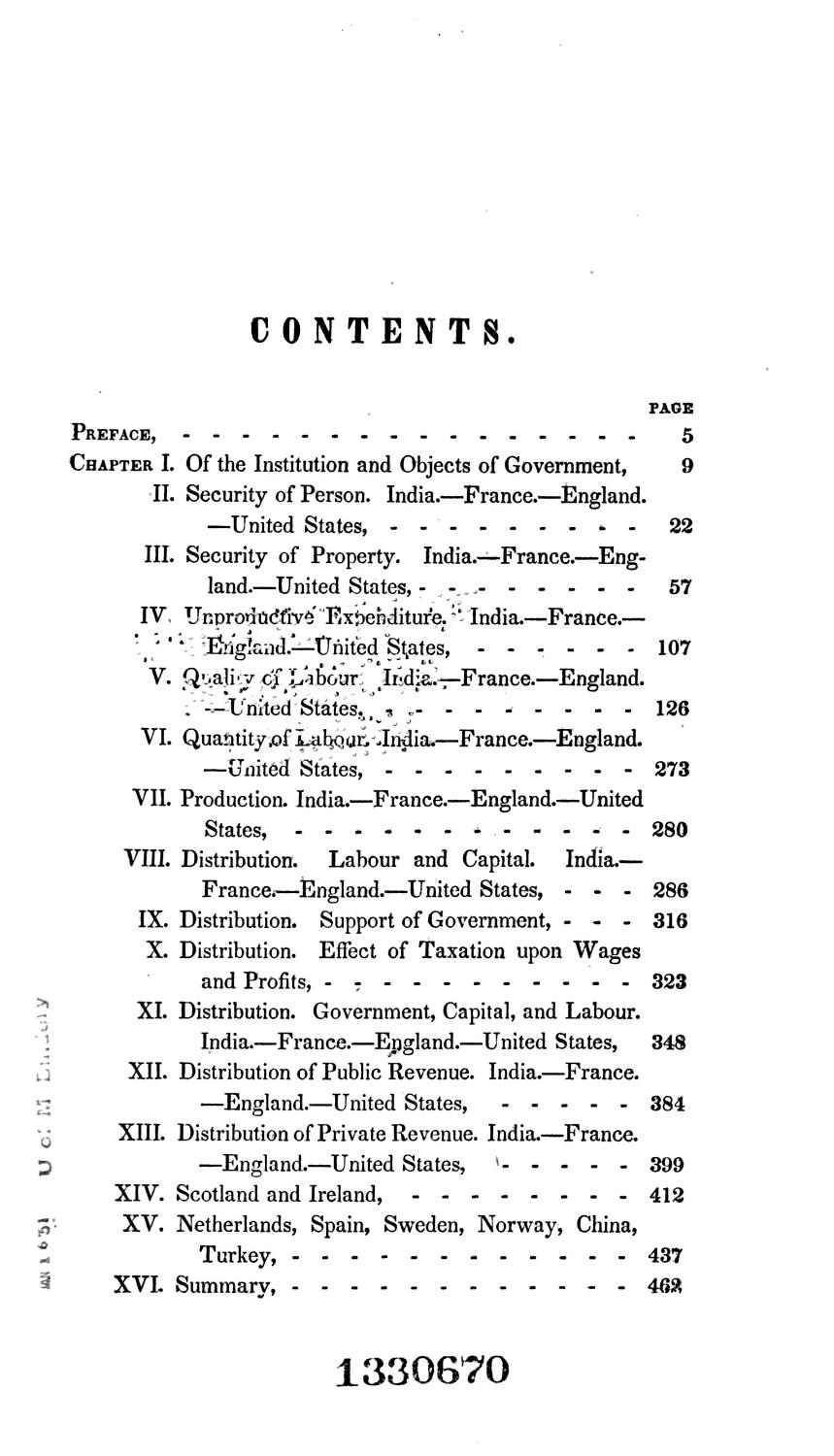
The Principles is Carey’s first major theoretical work and lays out the foundations of his economic system. He begins with a long critique of the classical economists, particularly Ricardo on rent and Malthus on population, and argues that their gloomy conclusions about the inevitable decline of wages and the inevitable struggle between landlords, capitalists, and labourers were based on faulty premises. Carey’s alternative is much more optimistic. He argues that economic development, properly understood, leads to a gradual harmonization of interests among all classes, with the natural tendency of advancing civilization being to raise wages, lower rents in real terms, and increase the share of national income going to labour.
The book also develops Carey’s distinctive theory of value, which differs from both the labour theory of Smith and Ricardo and from the utility theory that would later dominate economics. Carey argues that the value of any good is determined by the cost of reproducing it under current conditions, not by the labour originally spent on it. This reproduction cost theory has implications for many other economic questions and was Carey’s most original contribution to economic theory.
The political conclusions of the work are characteristically nationalist. Carey argues that protective tariffs are needed to allow young industrial economies to develop the diverse productive structure that is the basis of national prosperity. He explicitly attacks British free trade doctrine as a policy designed to benefit the most developed economy at the expense of those still developing. These arguments became the basis of Republican economic policy in the United States for much of the late nineteenth century.
The book runs to several hundred pages across its volumes and is essential reading for the history of American economic thought. It pairs naturally with Carey’s later The Harmony of Interests and Principles of Social Science.
About the Author
Read and download 2 free books by Henry Charles Carey on BDeBooks. Browse the complete collection of Henry Charles Carey’s works available as free PDF and EPUB downloads. Discover novels, fiction, and other writings by Henry Charles Carey in our online eBook library.
See all books by Henry Charles Carey →