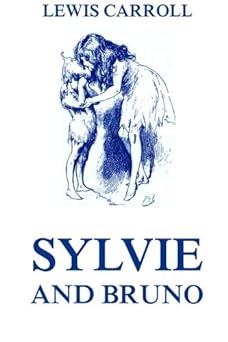
Sylvie And Bruno Illustrated
Sylvie and Bruno is a novel by Lewis Carroll, the pseudonym of the English mathematician and writer Charles Lutwidge Dodgson who lived from 1832 to 1898. The novel was originally published in 1889 with a sequel Sylvie and Bruno Concluded appearing in 1893. The illustrated edition referenced here is one of various editions that have appeared with the original illustrations by Harry Furniss, who provided the substantial body of illustrations for the original publications.
The novel was Carroll’s most ambitious literary project after the Alice books for which he is now overwhelmingly remembered. Sylvie and Bruno is a substantially different kind of work from Alice’s Adventures in Wonderland and Through the Looking Glass, combining a complicated double plot that alternates between a contemporary realistic narrative set in Victorian England and a fantasy narrative set in Outland, a fairy tale kingdom inhabited by the two title characters who are themselves fairy children.
The contemporary plot follows the relationships among various Victorian characters including the narrator, his older friend Doctor Arthur Forester, Lady Muriel Orme, and various others whose romantic and social lives provide the realistic material of the novel. The fantasy plot follows Sylvie and Bruno through various adventures in Outland and in their occasional appearances in the contemporary English settings of the realistic plot. Carroll combines the two plots through various dreamlike transitions that allow characters and motifs from one plot to appear in the other.
The novel is much longer than the Alice books and is generally considered less successful as a literary work, although it has continued to find readers who admire its complicated structure, its willingness to handle serious philosophical and theological material, and its various comic and absurdist passages that show Carroll’s distinctive imagination at full strength. The famous Mad Gardener’s Song is one of the pieces included in the novel and has remained one of Carroll’s better known shorter works.
The book runs to several hundred pages combined with the sequel. For readers approaching Carroll beyond the Alice books, Sylvie and Bruno is the obvious next step and rewards the patient reader with material that the Alice books did not contain. It pairs naturally with the Alice books and with Carroll’s various mathematical and logical works.
About the Author
Download free books by Lewis Carroll on BDeBooks. Read Lewis Carroll’s works online or download as PDF/EPUB — part of our growing free eBook collection.
See all books by Lewis Carroll →