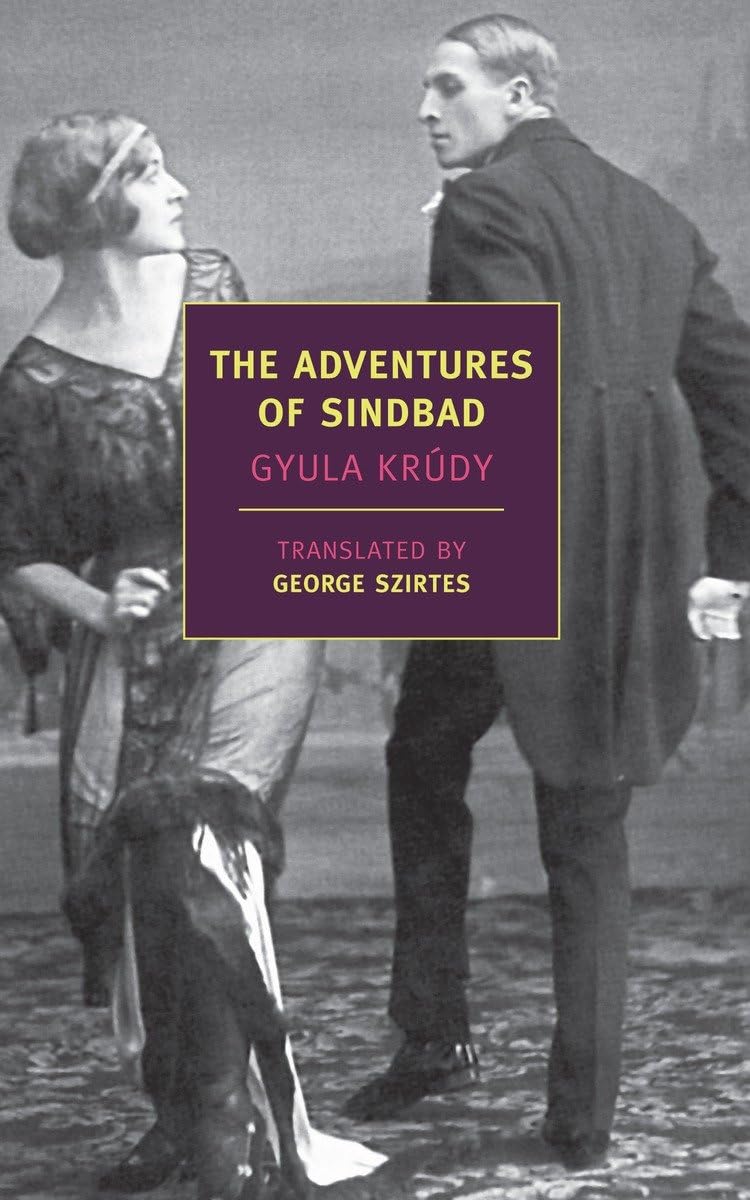
The Adventures of Sindbad
The Adventures of Sindbad is a cycle of fictions by Gyula Krúdy, the Hungarian novelist who lived from 1878 to 1933 and who is one of the central figures of twentieth century Hungarian literature. The Sindbad fictions were produced across many years and various collections from the early 1910s onward, eventually forming a substantial body of work that has come to be recognized as Krúdy’s masterpiece and as one of the strangest achievements of central European fiction.
The Sindbad of the title is a contemporary Hungarian man who shares only his name with the legendary sailor of the Arabian Nights. Krúdy’s Sindbad is a wanderer through the small towns, country houses, and provincial cities of pre war and interwar Hungary, whose adventures consist almost entirely of romantic affairs with women he encounters in his various wanderings and of meals taken at the inns, restaurants, and private houses along his routes. He is at times described as a young man, at times as middle aged, at times as an old man, at times as a ghost or revenant returning to places he had loved in earlier phases of his life. The chronology of the stories is deliberately unstable, with Sindbad moving freely between different moments of his own past in a way that gives the whole cycle its dreamlike quality.
The stories are atmospheric rather than plotted. Krúdy’s interest is not in dramatic action but in the slow accumulation of small sensory details, the texture of particular Hungarian places at particular hours of the day in particular seasons of the year, the specific tastes and smells of particular foods and wines, the gestures and conversations of particular women remembered across long stretches of imagined time. The cumulative effect is one of the most distinctive prose voices in twentieth century European literature, and Krúdy’s influence on later Hungarian writers including Sándor Márai and Péter Esterházy has been substantial.
The Sindbad cycle has been translated into English in various selections, with George Szirtes among the leading translators. The translations have brought Krúdy to international attention and have established his reputation as one of the central European writers most deserving of wider readership outside Hungary.
The collection runs to several hundred pages depending on the selection and is best read in small doses rather than straight through, since the cumulative atmospheric effect benefits from being absorbed slowly. For readers interested in twentieth century central European literature, this is essential reading.
About the Author
Download free books by Gyula Krúdy on BDeBooks. Read Gyula Krúdy’s works online or download as PDF/EPUB · part of our growing free eBook collection.
See all books by Gyula Krúdy →